Individual historic ship · Southampton
SS Shieldhall
Steam machinery, urban sanitation and an unexpected social history
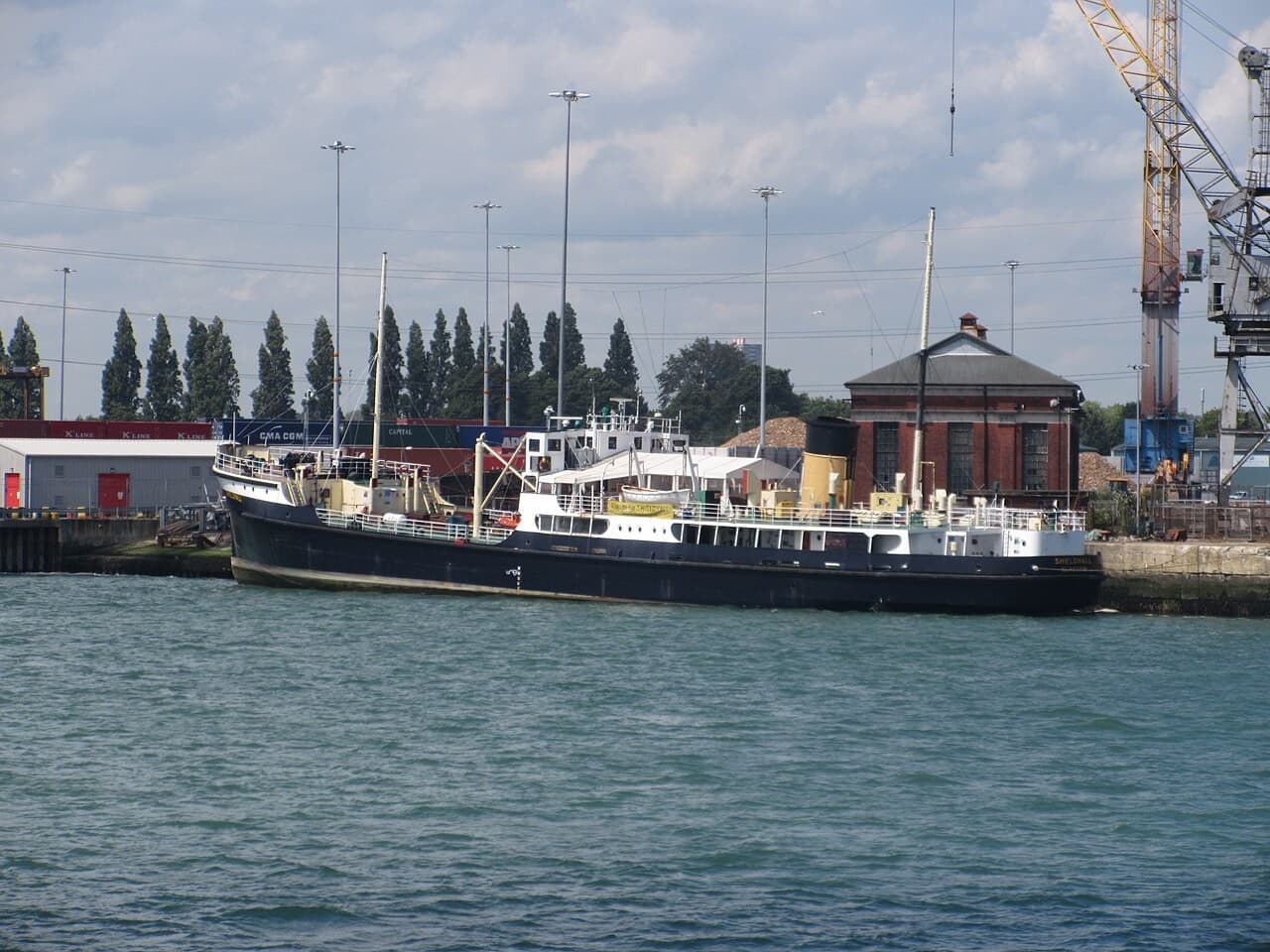
SS Shieldhall at Southampton: the preserved steamship in its later home port.
Djm-leighpark / Wikimedia Commons · CC BY-SA 4.0 · Image shown uncropped.
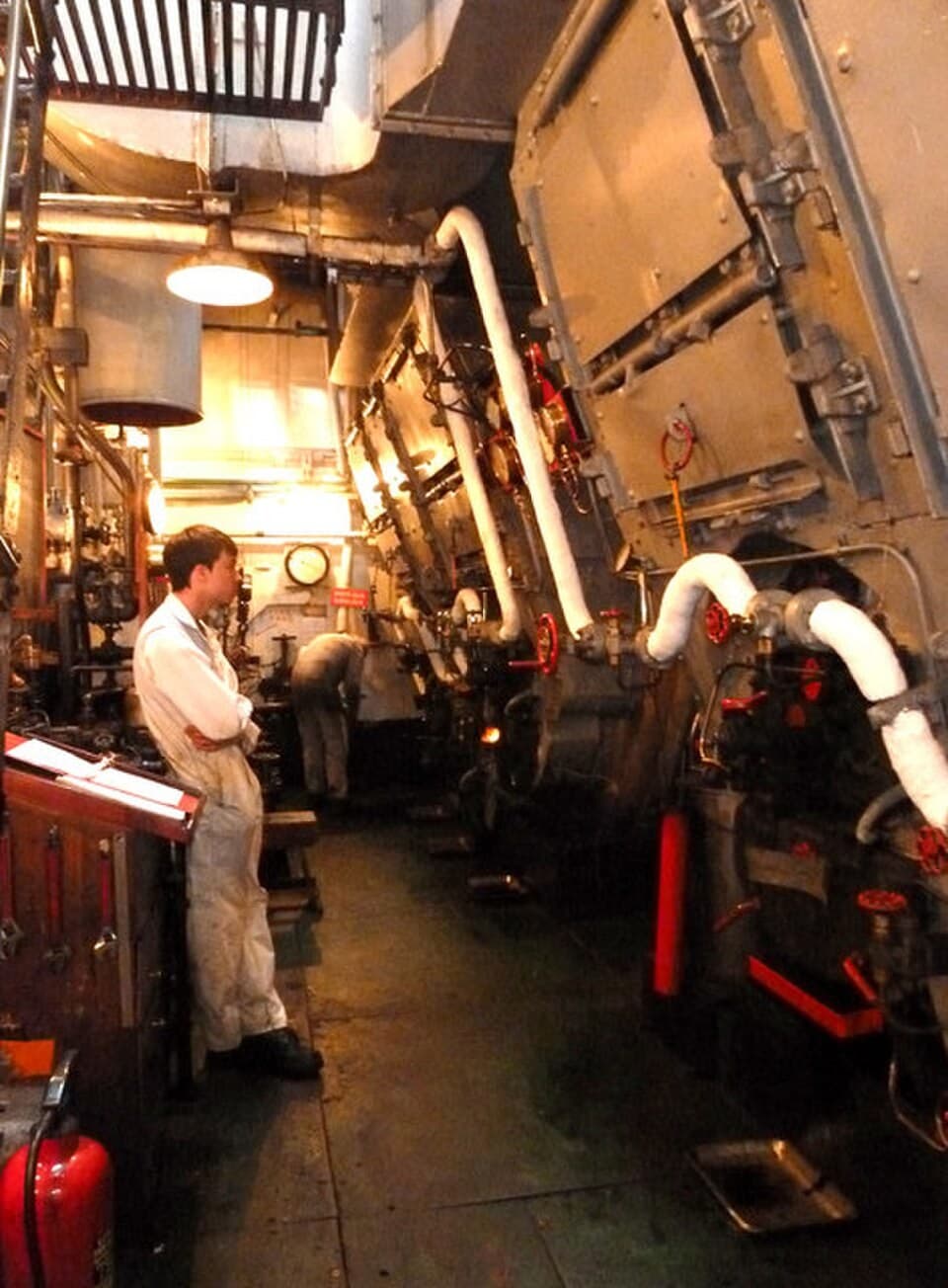
A working-space view aboard SS Shieldhall, photographed on Southampton Water.
Chris Allen / Wikimedia Commons · CC BY-SA 2.0 · Image shown uncropped.
Documented history
An essential urban service
Shieldhall's official history records construction by Lobnitz at Renfrew for Glasgow Corporation, launch on 7 July 1955 and entry into service that October. Her original work was carrying sewage sludge for disposal. Naming that role directly is important. A working ship can reveal systems that a city prefers to keep out of view, and its heritage significance need not depend on glamorous cargo, aristocratic ownership or a famous voyage.
Sources: [1]
Passengers aboard a utility vessel
The operator's history also describes a passenger role alongside the disposal work, with capacity for eighty day passengers and outings for wounded veterans and disadvantaged families. This unusual combination links municipal infrastructure with social provision. It should not be confused with the ship's present excursion arrangements. The historical account concerns a particular civic practice, and understanding it requires keeping both the vessel's practical task and its passenger spaces within the picture.
Sources: [1]
From service to preservation
The operator and National Historic Ships trace later work for Southern Water, followed by purchase for preservation in 1988. The vessel's subsequent Southampton identity forms another chapter in a life that began on the Clyde. Preservation has kept attention on steam engineering as well as the hull. Current operation, maintenance and public access depend on the responsible organisation; a historical description alone cannot establish a sailing programme.
Our reading · Editorial interpretation
Reading the ship and its setting
Start with the original cargo before looking at the polished machinery. That order prevents preservation from tidying away the reason the ship existed. Urban sanitation, engineering and leisure briefly occupied the same vessel in an arrangement that challenges familiar categories. The present heritage setting can make those connections visible. It also allows a broader question: which kinds of municipal labour receive monuments, and which are usually left out of a city's public story? A preserved utility ship makes that question unusually concrete.
Visit & explore · Editorial recommendation
Follow the story
Consult Shieldhall's official programme for current Southampton visits or sailings and the access conditions for each event. Check directly with the operator before booking. Historic service dates and preserved machinery do not establish a departure, passenger entitlement or current certification within this editorial dossier.
Steamship Shieldhall — History of the ship ↗