Individual historic ship · Portsmouth
Mary Rose
A Tudor warship understood through archaeology and sustained conservation
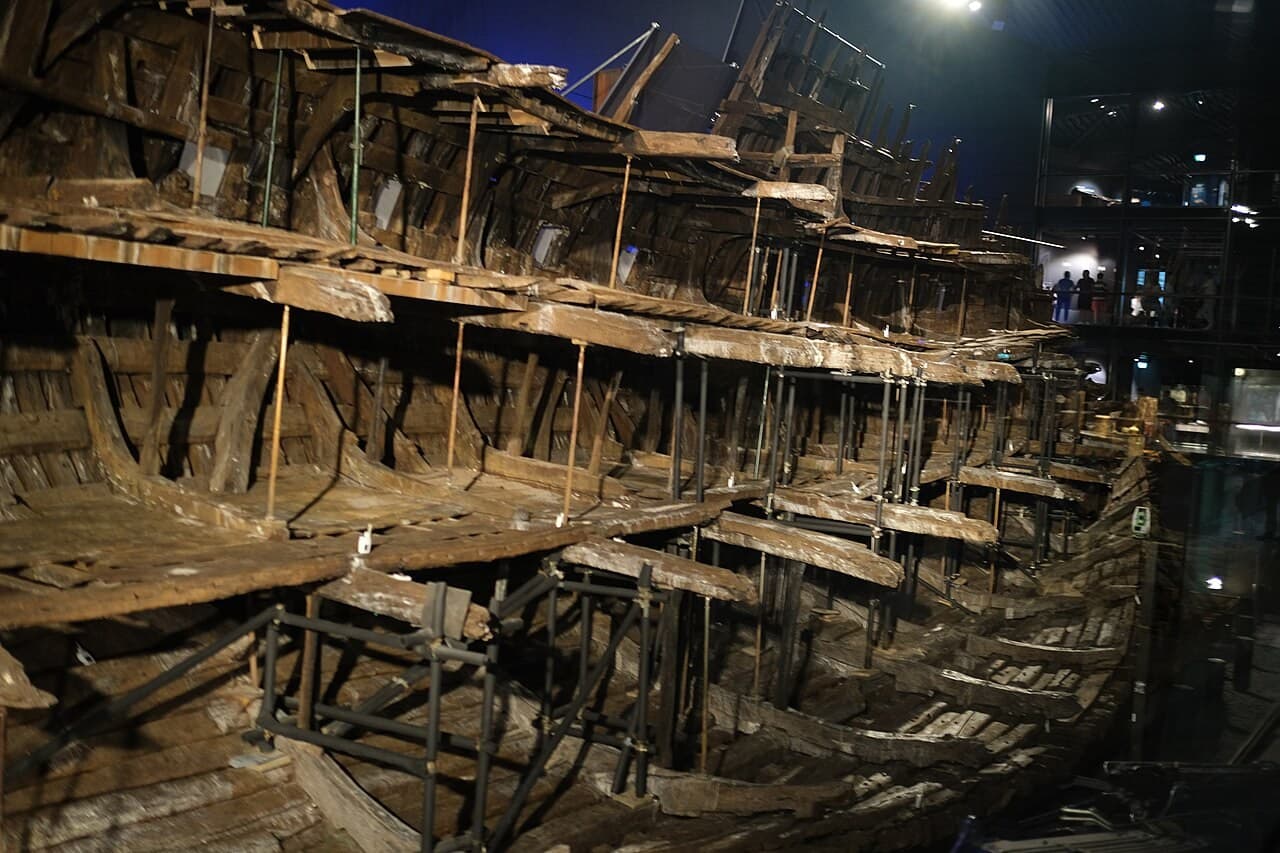
A second view of the surviving Mary Rose hull; archaeological remains rather than a complete reconstructed sailing ship.
Bob Harvey / Wikimedia Commons · CC BY-SA 2.0 · Image shown uncropped.
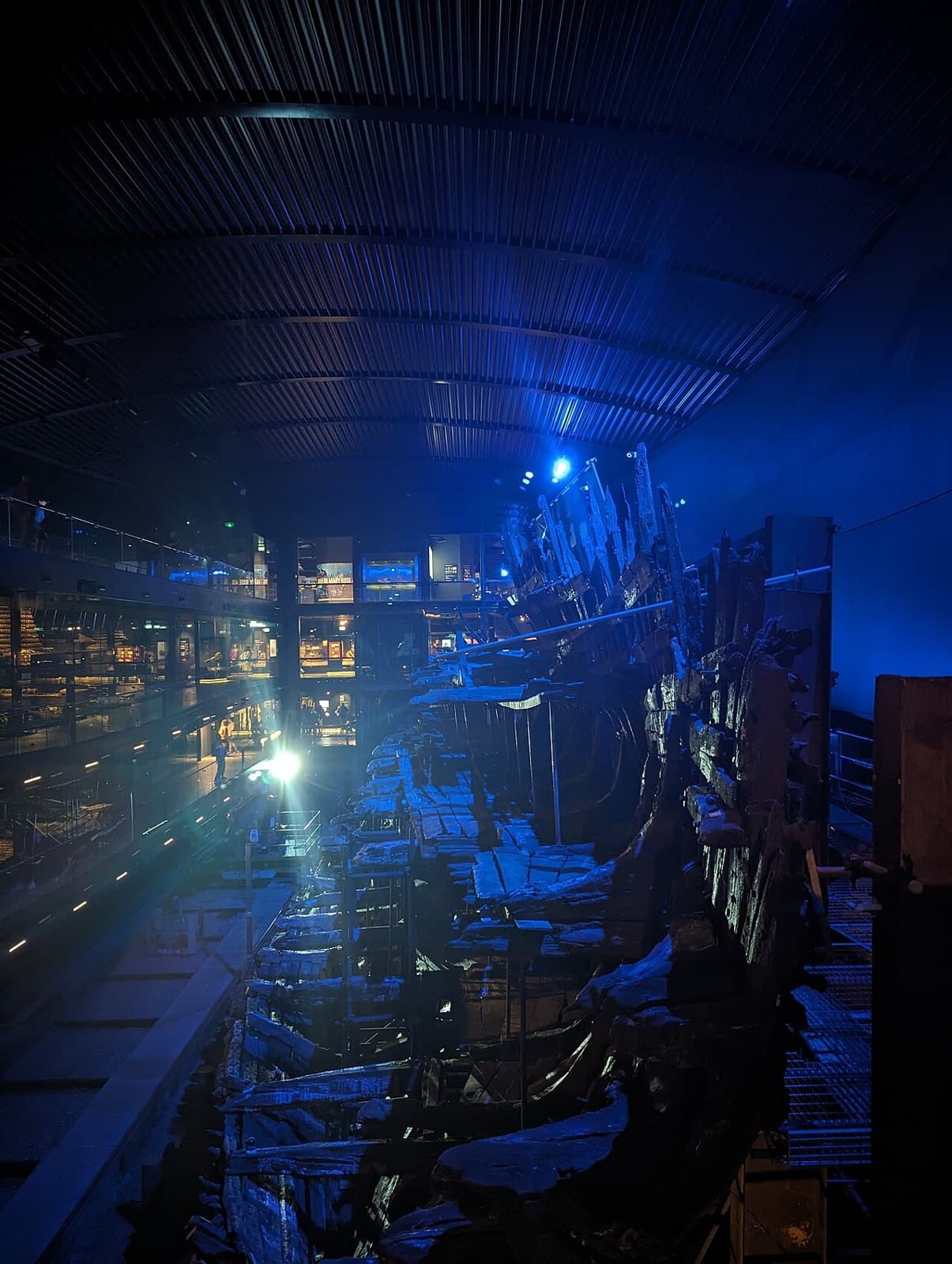
The surviving hull of Mary Rose in its museum conservation setting.
Bob Harvey / Wikimedia Commons · CC BY-SA 2.0 · Image shown uncropped.
Histoire documentée
A Tudor vessel with a working life
Royal Museums Greenwich dates the building of Mary Rose at Portsmouth to 1509–1511 and records rebuilding in 1536. Her sinking in the Solent on 19 July 1545 came after decades of service. This chronology matters because the surviving evidence does not belong to an untouched ship at the moment of first construction. Changes in the vessel's own lifetime are part of the historical problem that archaeology and documentary research seek to understand.
Sources : [1]
Finding and raising the evidence
The Mary Rose Trust's account follows the search and archaeological work that preceded the raising of the hull on 11 October 1982. Recovery was not simply a spectacular lift. It depended on identifying, recording and excavating a submerged site. The date of raising is consequently one milestone within a longer investigation. Objects and structural remains are most useful when their positions and relationships have been recorded, rather than considered as isolated treasures.
Sources : [2]
Conservation after recovery
The Trust explains conservation as a sequence extending from treatment after the raising to preventive care today. Waterlogged timber presents a different challenge once removed from the seabed. The hull's survival in a museum therefore depends on sustained scientific and practical work. This history belongs within the public account of the ship: the material being viewed and the conditions in which it can be shown are inseparable from decisions made after excavation.
Sources : [3]
Notre lecture · Interprétation éditoriale
Lire le navire et son contexte
Approach the hull as archaeological evidence rather than as a complete vessel waiting to sail. Its incompleteness is informative: it makes the distinction between surviving structure and historical reconstruction visible. The strongest questions concern how people worked aboard, how objects relate to spaces and what remains uncertain. Conservation adds another human history to the Tudor one. Neither the drama of sinking nor the spectacle of recovery should obscure the patient work that allows material evidence to be studied and shared.
Visiter et découvrir · Recommandation éditoriale
Suivre le récit
Consult the Mary Rose Museum's current Portsmouth visitor guidance, including access and any changes to galleries. Treat reconstructions as interpretations supported by evidence. This dossier does not settle disputed explanations for the sinking or substitute for the museum's detailed archaeological account.
Royal Museums Greenwich — Mary Rose history ↗