Individual historic ship · Dundee
RRS Discovery
A Dundee-built research ship with an Antarctic working history
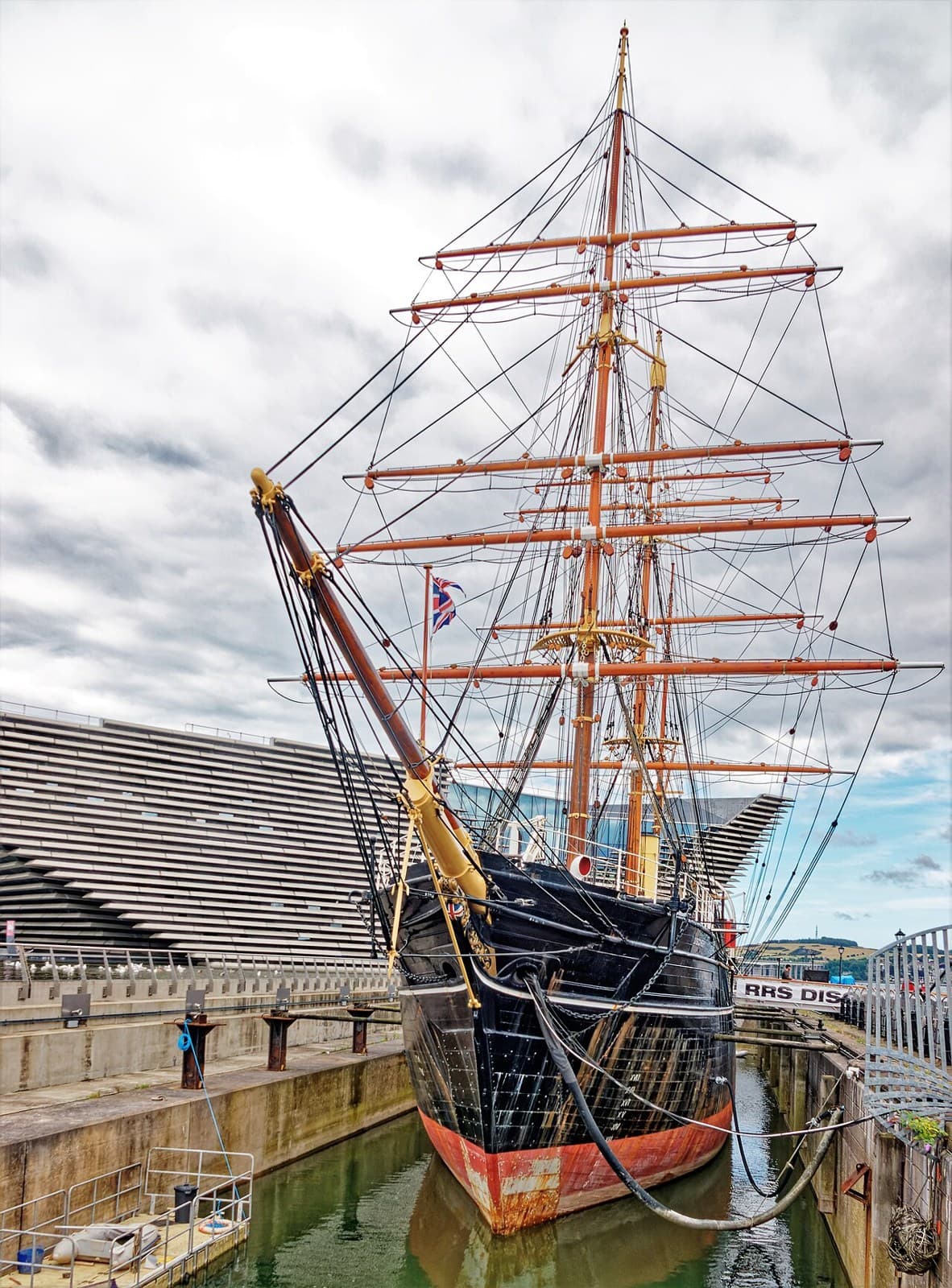
RRS Discovery at Dundee: the 1901 expedition ship in its museum setting.
Holger Uwe Schmitt / Wikimedia Commons · CC BY-SA 4.0 · Image shown uncropped.
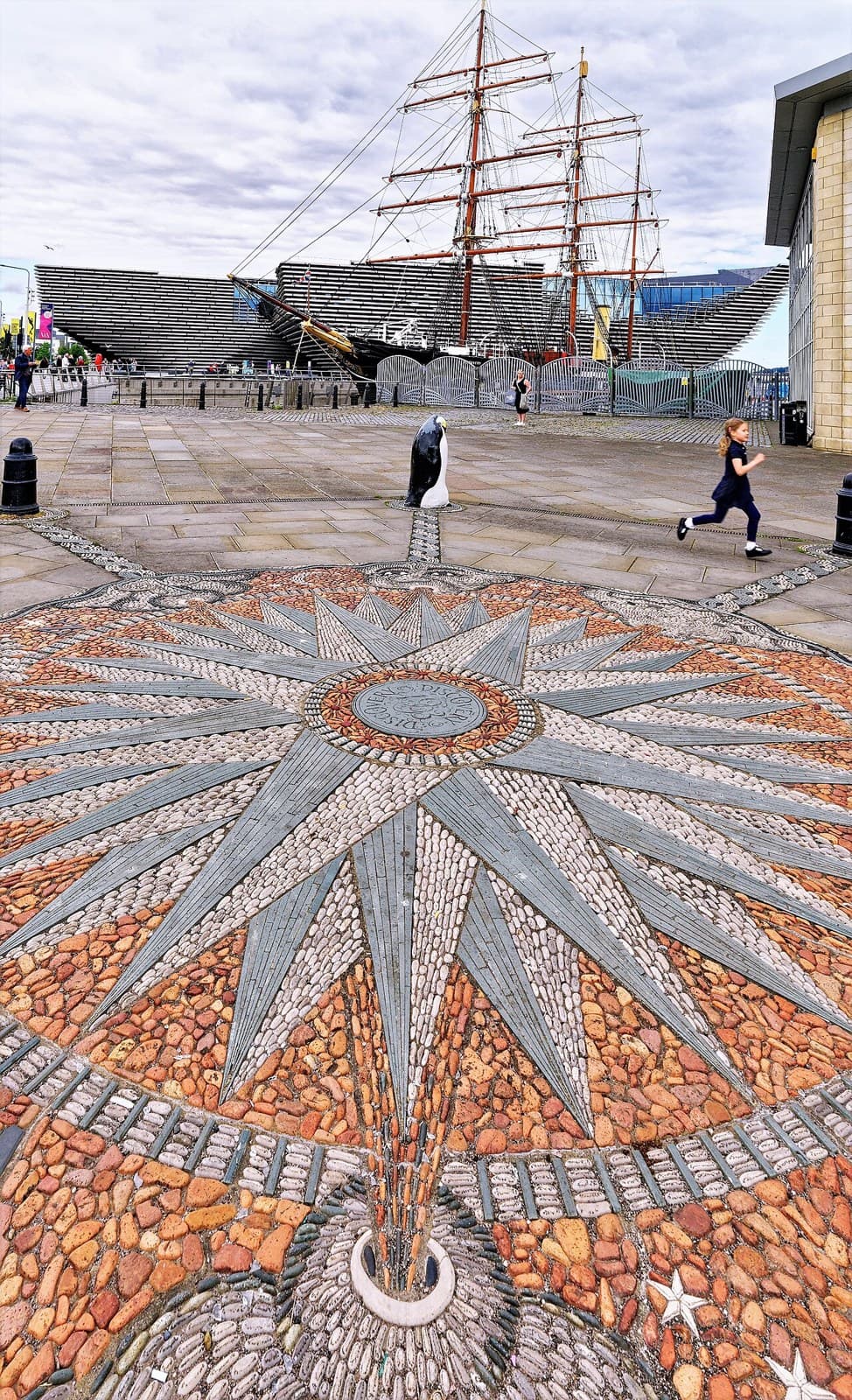
Discovery and the paved waterfront at Dundee: the vessel within its present city setting.
Holger Uwe Schmitt / Wikimedia Commons · CC BY-SA 4.0 · Image shown uncropped.
Gedocumenteerde geschiedenis
A ship commissioned for research
National Historic Ships records Discovery as built by the Dundee Shipbuilders' Company in 1901 and designed for the National Antarctic Expedition of 1901–1904. The register identifies a wooden hull, a three-masted rig and steam machinery. These elements belong to a particular expedition vessel, not to a generic picture of polar travel. The Dundee building context connects the project with a town's established maritime skills.
Bronnen: [1]
Several systems aboard one vessel
The register's construction record lists sail and a steam engine within the same ship. This is a useful reminder that maritime technology rarely moves through neat, exclusive stages. The rig and machinery answered different needs within one arrangement. Their presence does not establish how either was used at every point in the voyage; the specific expedition history and surviving evidence are needed to explain that relationship.
Bronnen: [1]
From expedition to museum object
The Science Museum Group's collection account identifies Discovery's association with Robert Falcon Scott and follows the vessel through later roles before preservation as a museum ship. That broader biography matters when encountering her at Dundee. An expedition's fame can make later service disappear from view, while a museum's interpretation has to account for changes, survival and the decisions that brought the ship into public care.
Bronnen: [2]
Onze lezing · Redactionele duiding
Het schip en zijn omgeving lezen
Start with the research purpose and then consider the practical space required to carry it out. Instruments, stores, people and propulsion had to coexist within the hull. This makes the ship a workplace as well as a vehicle for a famous journey. The museum setting is most rewarding when it connects that complexity with Dundee's building culture, rather than isolating exploration from the industries and people that made the vessel possible.
Bezoek en ontdek · Redactionele aanbeveling
Volg het verhaal
Use the current Discovery visitor information linked through the National Historic Ships record to confirm opening, location and access. Check which areas are included in a visit. This dossier is historical interpretation, not guidance on polar navigation or an offer of a voyage aboard the vessel.
National Historic Ships — RRS Discovery, register 39 ↗