Individual historic ship · Portsmouth
HMS Warrior
Iron, armour, steam and sail within one nineteenth-century warship
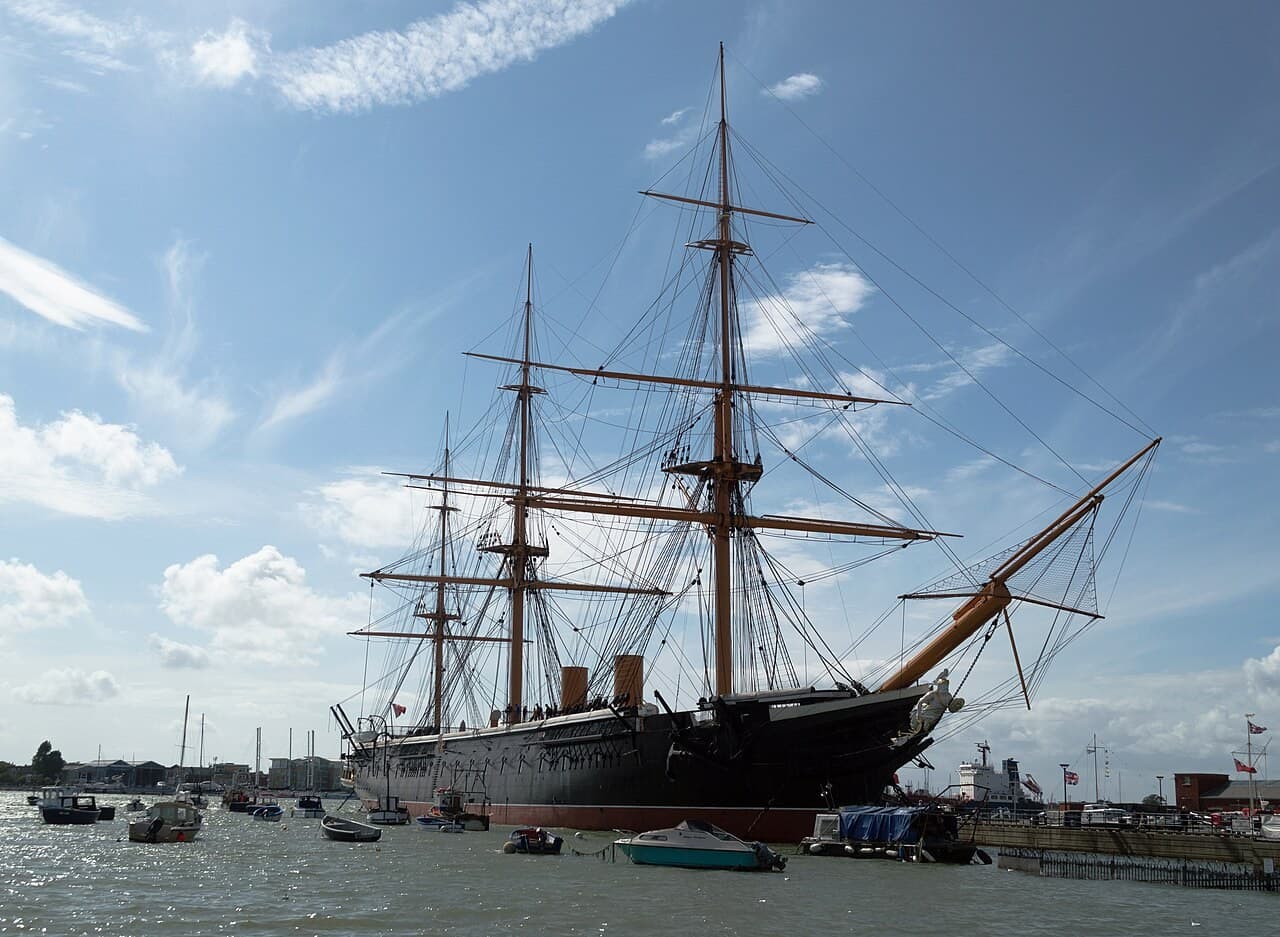
HMS Warrior at Portsmouth in 2014: the 1860 iron-hulled warship.
Lewis Hulbert / Wikimedia Commons · CC BY-SA 4.0 · Image shown uncropped.
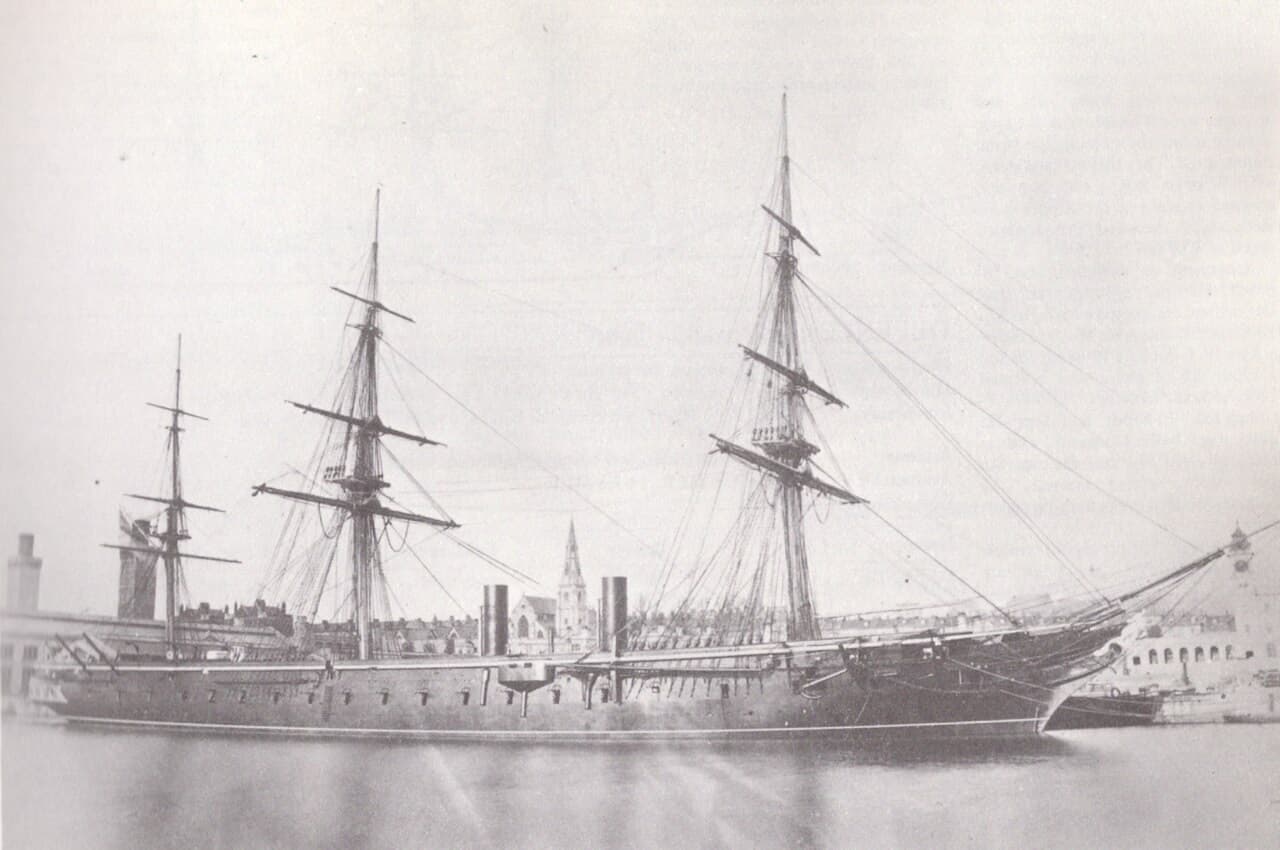
HMS Warrior in an archival photograph; the image does not represent the present visitor arrangement.
unattributed; probably Royal Navy / Wikimedia Commons · Public domain · Image shown uncropped.
Histoire documentée
A different construction system
National Historic Ships records Warrior's construction at Thames Ironworks in Blackwall in 1860. The National Museum of the Royal Navy's annual report distinguishes the iron hull and completion in 1861. Launch and completion are different milestones, and neither should disappear into a convenient single date. The vessel represents a substantial change in naval construction, while also relying on established shipbuilding organisation, dockyard work and seafaring skills.
Several technologies together
The museum describes Warrior through the combination of iron construction, armour and ocean-going naval service. Sail and steam belonged to the same vessel. This coexistence complicates a simple progression from one technology to its successor. A visitor can ask how different systems occupied space and how they affected the work aboard. The presence of a tall rig does not make the hull a wooden sailing ship, just as machinery did not immediately eliminate sail.
A preservation project with its own dates
The museum records acquisition by the Maritime Trust in 1979 and restoration between 1979 and 1987. Those dates belong to a second major undertaking: recovering and interpreting the vessel for public understanding. They should be read alongside the service history, not hidden behind it. Restoration establishes a relationship between surviving evidence and a chosen presentation, and the museum's explanation is needed to understand that relationship.
Sources : [2]
Notre lecture · Interprétation éditoriale
Lire le navire et son contexte
Compare the visible rig with the structural story of the hull. Their different associations are precisely what makes this ship interesting. Naval technology changes through overlapping arrangements, not through perfectly separated textbook chapters. The preservation setting also offers a chance to consider the industrial resources concentrated in a warship. Read armour, machinery and accommodation as connected decisions, then ask how the modern presentation explains them. That yields a richer encounter than treating the vessel as an impressive silhouette alone.
Visiter et découvrir · Recommandation éditoriale
Suivre le récit
Use the National Museum of the Royal Navy and Portsmouth Historic Dockyard for current opening and access details. Check which areas are available during conservation or events. This historical dossier does not certify the condition of the vessel or imply that she operates public sailing trips.
National Historic Ships — HMS Warrior ↗