Individual historic ship · Portsmouth
HMS Victory
A Portsmouth flagship and the long history of maintaining a wooden warship
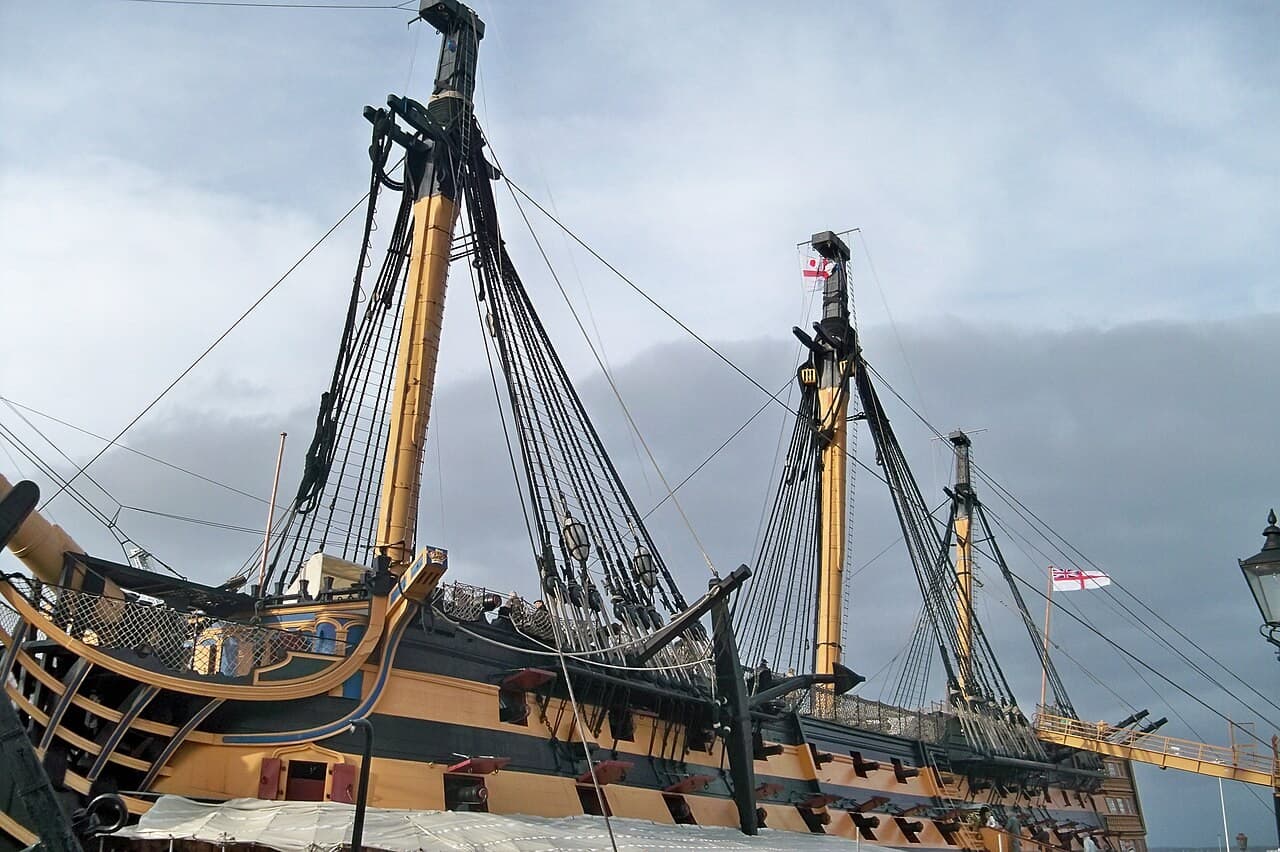
Masts and deck structures aboard HMS Victory at Portsmouth.
Colin Babb / Wikimedia Commons · CC BY-SA 2.0 · Image shown uncropped.
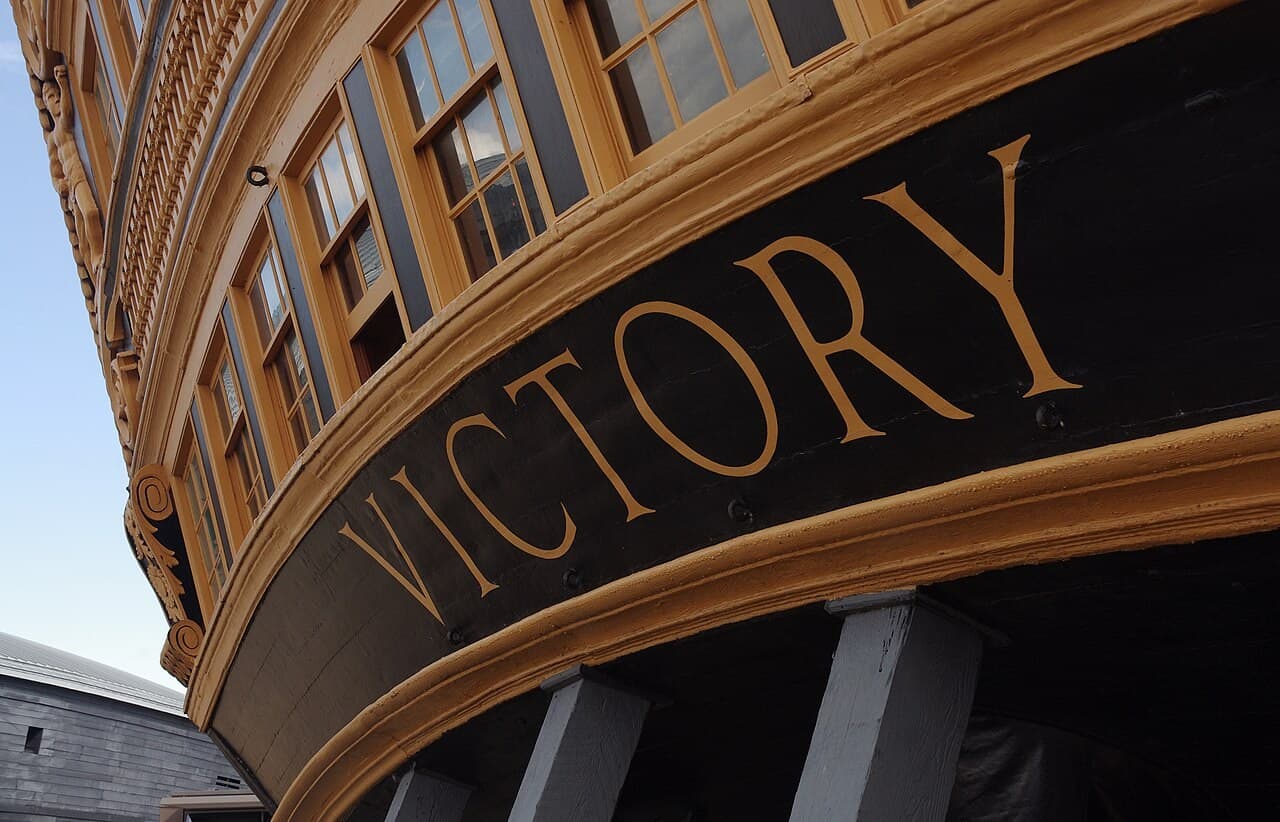
The stern nameboard of HMS Victory: a closer view within the historic dockyard.
mattbuck ( category ) / Wikimedia Commons · CC BY-SA 4.0 · Image shown uncropped.
Histoire documentée
A ship before the famous battle
The National Museum of the Royal Navy identifies Victory's launch at Chatham in 1765 and her later role as Nelson's flagship at Trafalgar in 1805. Forty years separate those dates. That interval matters: a famous engagement is one chapter in a much longer working life. Starting with construction and service helps restore the ship's scale as a naval project, involving dockyards, materials and many people beyond the officers whose names dominate public memory.
Sources : [1]
Repair as part of the history
The museum's account of Victory describes substantial repair campaigns and rebuilding before Trafalgar. A wooden ship's identity cannot therefore be reduced to the survival of every original timber. Maintenance was necessary to keep the vessel in service, and later conservation introduces further choices. The question is not simply whether the ship is old, but which elements survive from which periods and how those distinctions are documented.
Sources : [2]
Reading material evidence
The museum's conservation log discusses evidence from different stages of the ship's life, including early deck material and guns associated with Trafalgar. Such records connect the public image of a flagship with particular objects and structures. They also explain why conservation can change the visitor's view. Scaffolding, investigation and replacement work belong to the present care of a difficult historic object rather than to an interruption without historical value.
Sources : [3]
Notre lecture · Interprétation éditoriale
Lire le navire et son contexte
Begin with the labour needed to keep the ship afloat and operational. Timber, rope, stores and skilled repair form a useful counterpoint to the drama of battle. In the museum setting, look for explanations of dating and replacement rather than assuming a single moment has been frozen intact. This approach allows admiration for the surviving vessel while keeping the human and material costs of naval power within the account. The setting is strongest when those questions remain open to examination.
Visiter et découvrir · Recommandation éditoriale
Suivre le récit
Check Portsmouth Historic Dockyard and the museum's current Victory information before travelling. Conservation may affect access and sightlines. Confirm arrangements for steep steps and enclosed spaces. This entry provides historical context and does not establish unrestricted access to every part of the vessel.
National Museum of the Royal Navy — Annual report 2024–25 ↗