Regional ship type · Komiža, island of Vis
Falkuša
A Komiža fishing tradition with two working configurations
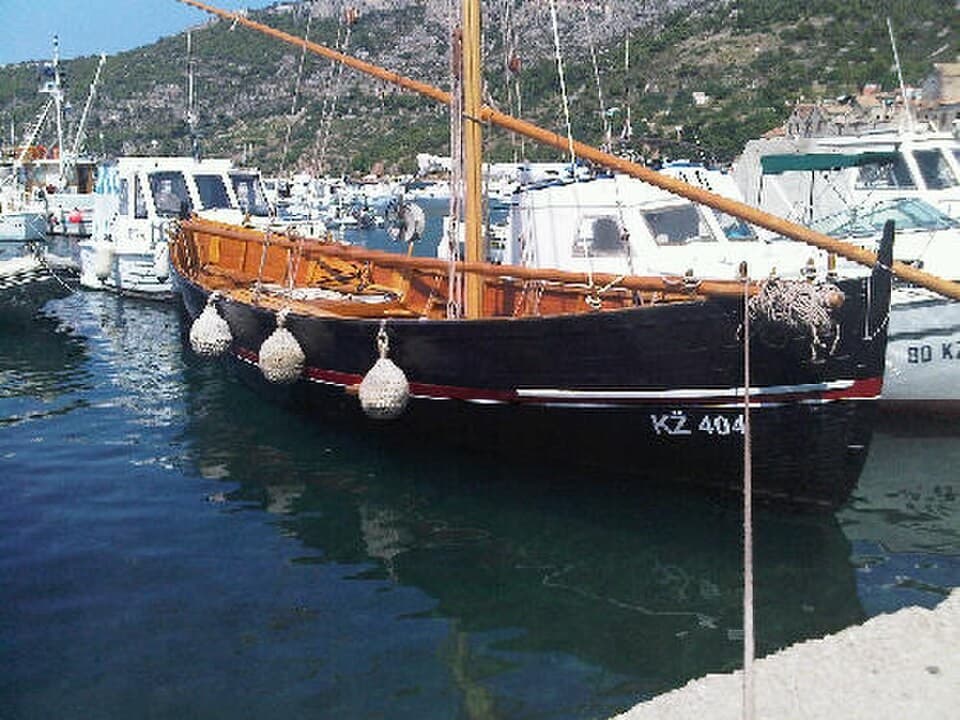
The gajeta falkuša Mikula: a named modern heritage example, not a claim that this hull survives unchanged from the historic fishery.
marin ostojic / Wikimedia Commons · CC BY-SA 2.0 · Image shown uncropped.
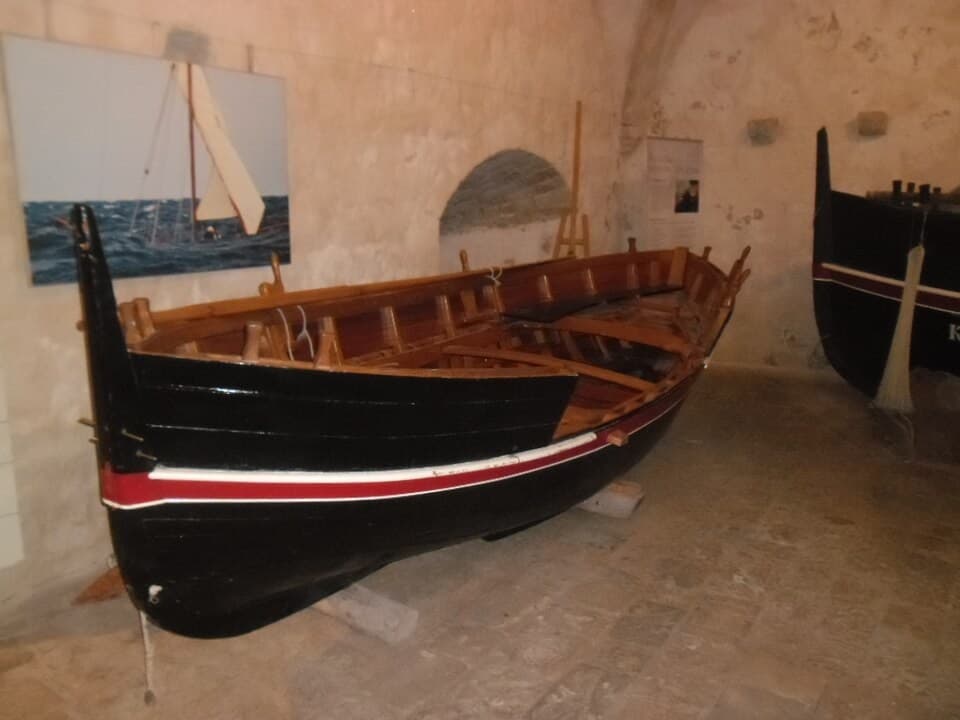
A museum display at Komiža illustrating a falkuša hull. This display is not evidence of an unchanged surviving fishing vessel.
August Dominus / Wikimedia Commons · CC BY-SA 4.0 · Image shown uncropped.
Documented history
A boat for Komiža’s fishing world
Komiža's municipal development account identifies the gajeta falkuša with the town's offshore fishing history. It explains the vessel through two working configurations: a lower boat useful when rowing and handling nets, and a higher-sided form for sailing and carrying loads. The removable side pieces, falke, give the type its name. This is a practical relationship between fishing, movement and the conditions of a particular coastal community.
Sources: [1]
The meaning of a modern rebuilding
The municipal account records the loss of the last example then known and the 1997 reconstruction developed through the cultural research project Ars Halieutica for the 1998 Lisbon exposition. Those dates mark an important revival. A present-day falkuša should therefore be identified through its own construction record, rather than assumed to be an untouched historic hull merely because it demonstrates older techniques.
Sources: [1]
Knowledge kept in use
The Komiža operator's account presents the continuing gajeta falkuša tradition through sailing, equipment and organised cultural experiences. It offers a contemporary route into the boat's story. Its promotional claims about performance or uniqueness are not adopted here as technical facts. The historical significance of the craft is strong enough to be explained through its working arrangements, documented reconstruction and the people who maintain the practice.
Sources: [2]
Our reading · Editorial interpretation
Reading the ship and its setting
The removable side boards are a useful starting point because they make the boat's adaptation visible. Rather than separating fishing and carrying into two unrelated stories, consider how one hull could answer both. Then ask how reconstruction has helped recover the knowledge of using it. A demonstration becomes most informative when it explains what is known from records and what modern builders and crews had to work out. The town, boat and surrounding islands can then be read as one cultural landscape.
Visit & explore · Editorial recommendation
Follow the story
Consult the Komiža-based operator for current interpretation and sailing arrangements, and verify which named vessel is involved. The municipal account provides historical context. This dossier does not certify performance, operating limits or availability, and it makes no claim of a UNESCO inscription.
City of Komiža — Development strategy ↗