Regional ship type · Rovinj / Rovigno, Istria
Batana
A wooden boat, a town and a community’s safeguarding project
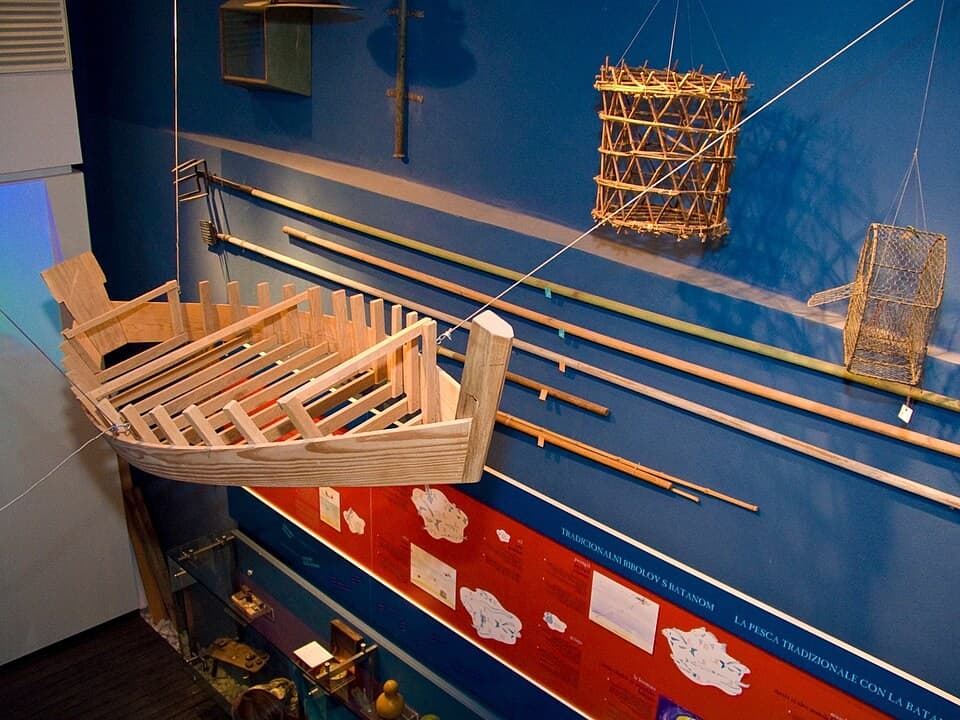
A construction model and boatbuilding display at Rovinj, photographed in 2008. A model illustrates the tradition; it is not a full-size working batana.
Roberta F. / Wikimedia Commons · CC BY-SA 3.0 · Image shown uncropped.
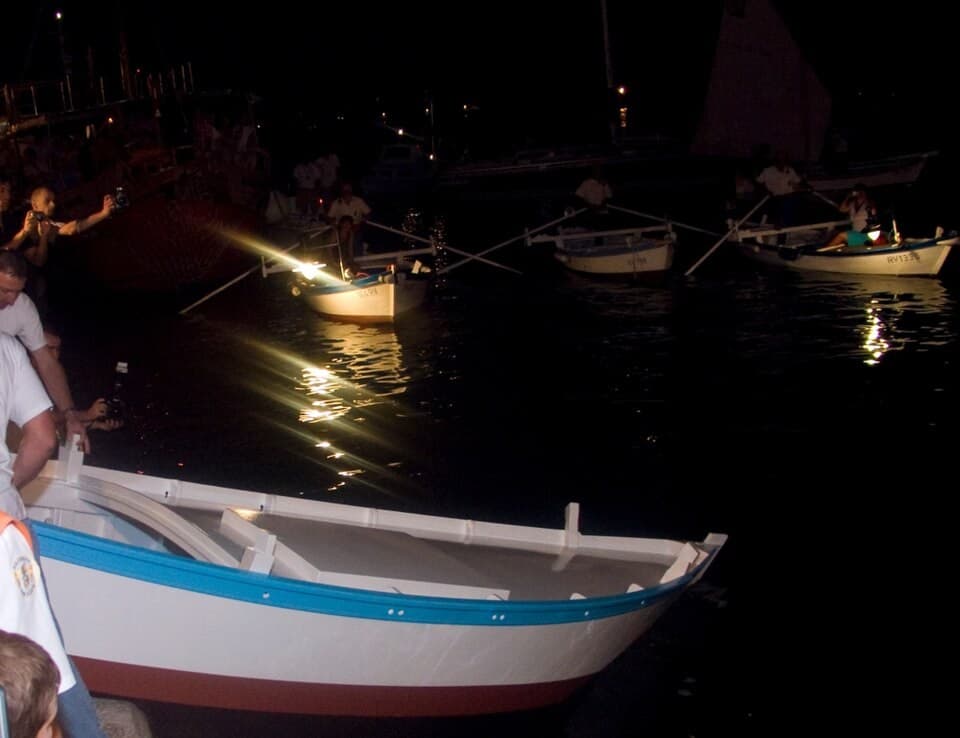
Batana boats at Rovinj in 2008: a dated photograph of the living local tradition.
Roberta F. / Wikimedia Commons · CC BY-SA 3.0 · Image shown uncropped.
Documented history
A town seen from a small boat
The Batana Ecomuseum identifies the wooden batana with Rovinj's everyday maritime life and with the community which chose it as a symbol. The museum's waterfront interpretation connects boats, owners, landing places and repair yards. This gives the craft a social geography rather than presenting it only as a museum specimen. The type is a way of entering the town's relationship with the sea.
Sources: [1]
What a safeguarding programme preserves
UNESCO's account describes how the popularity of industrial boats threatened the tradition, and how a local association formed in 2004 to help safeguard the batana and associated practices. The work extends beyond a hull to skills, dialect and songs. It therefore treats heritage as something people continue to do, with institutions and community participation helping to support the conditions in which that practice can survive.
Sources: [2]
Understanding the recognition precisely
The community's Batana Ecomuseum project was selected in 2016 for UNESCO's Register of Good Safeguarding Practices. This concerns the project and its approach, not World Heritage status for each individual boat. A photographed batana still needs its own identification, builder and condition record. The strength of the recognition is the attention it brings to the shared work of making, maintaining and interpreting a living tradition.
Sources: [2]
Our reading · Editorial interpretation
Reading the ship and its setting
Start at the water's edge and follow the route towards a place of repair. The batana makes sense through that short connection between boat, owner and town. A museum encounter can be enriched by listening for the language and stories associated with the craft rather than concentrating only on construction. The subject also offers a useful lesson across Europe: a modest working object can become a focus for a sophisticated heritage project when the community's own knowledge remains central.
Visit & explore · Editorial recommendation
Follow the story
Use the Batana Ecomuseum's current information for exhibitions, waterfront interpretation and any organised boat activities. Check the season and actual arrangements before travelling. Inclusion in this series does not establish public access to every batana or confer a heritage designation on a private vessel.
Batana Ecomuseum — Official account ↗