Individual historic ship · Greenwich, London; built at Dumbarton
Cutty Sark
A composite clipper at the meeting of sail, trade and conservation
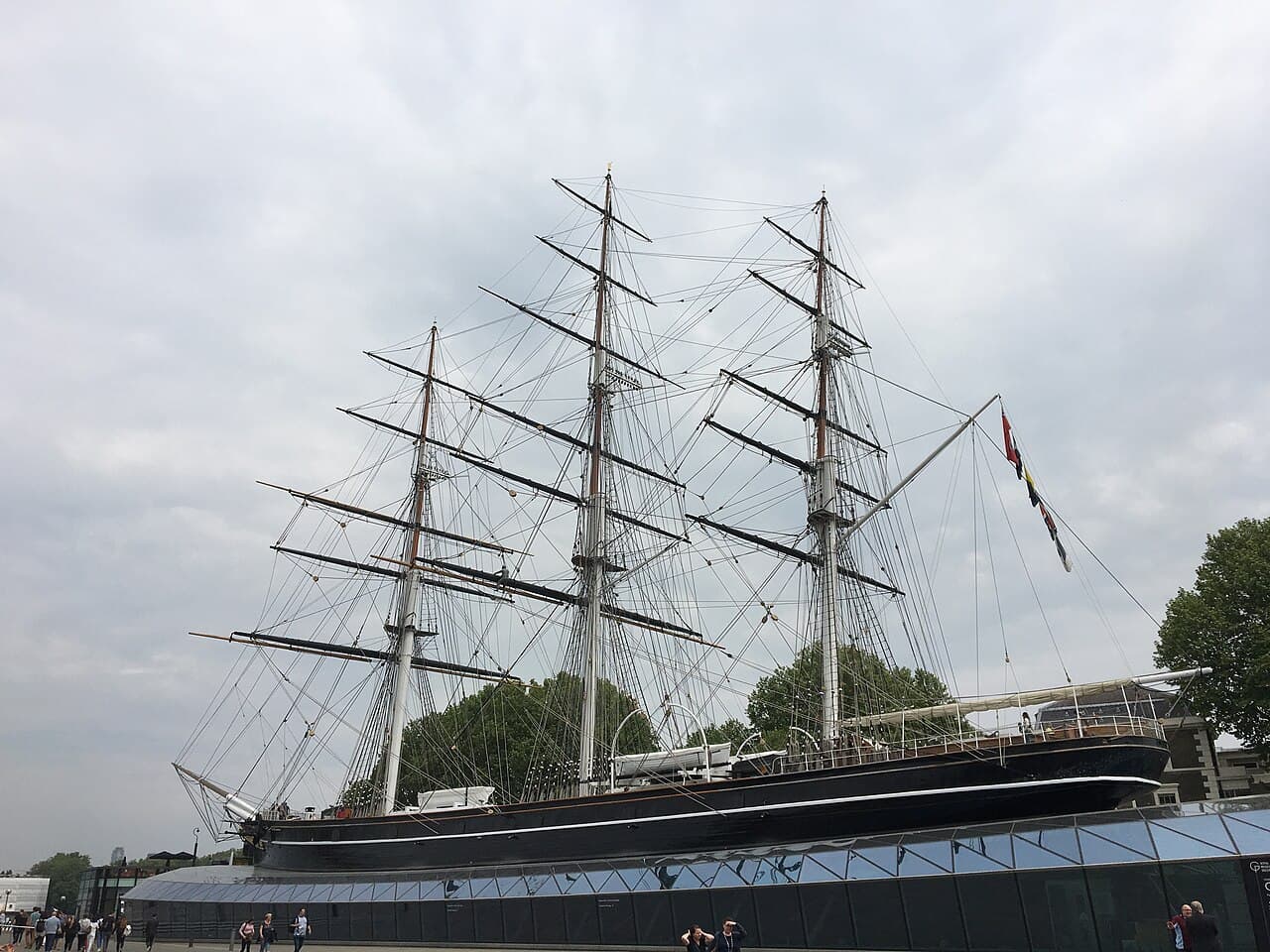
Cutty Sark in Greenwich, May 2018: the individual museum ship, photographed by Mlanni98.
Mlanni98 / Wikimedia Commons · CC BY-SA 4.0 · Image shown uncropped.
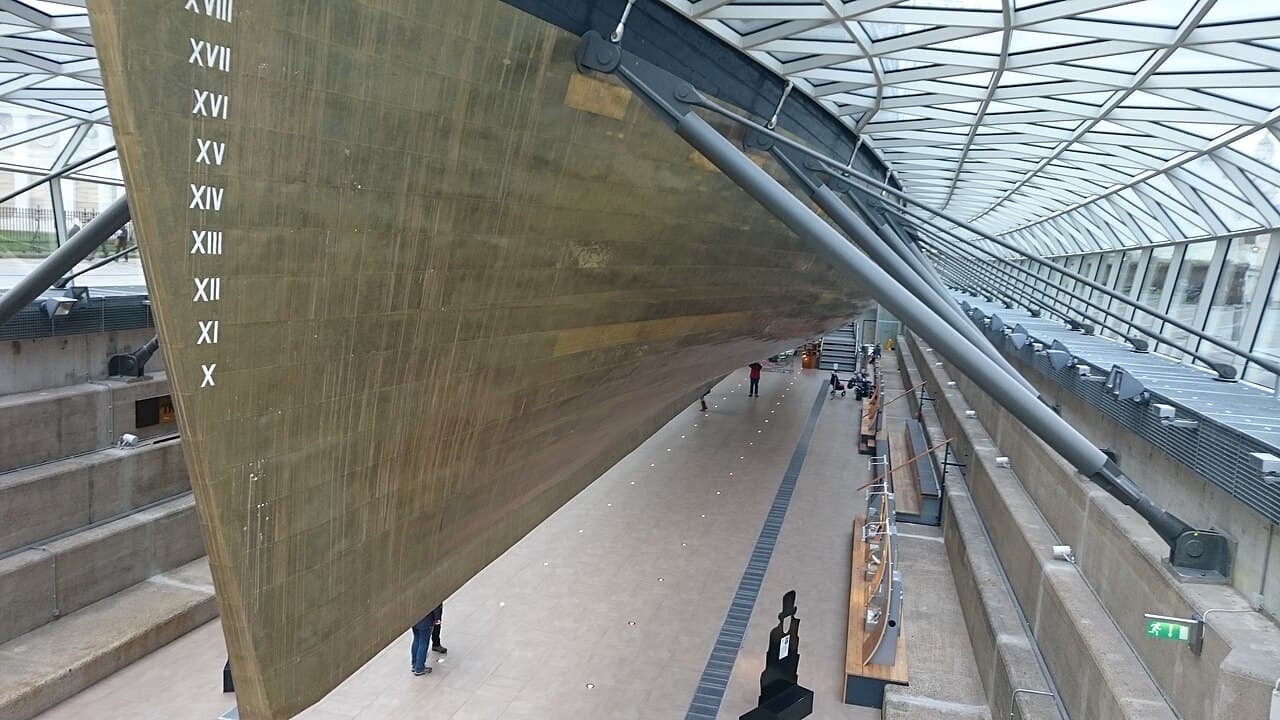
The hull of Cutty Sark in its museum display. Conservation presents a view that would be hidden below the waterline at sea.
LondonHistoryatHome / Wikimedia Commons · CC BY-SA 4.0 · Image shown uncropped.
Gedocumenteerde geschiedenis
Speed as a commercial requirement
Cutty Sark was built at Dumbarton in 1869 for John Willis and the China tea trade. Royal Museums Greenwich identifies Hercules Linton as the designer and records the first departure from London for Shanghai in February 1870. The ship later found another role in the Australian wool trade. Its working history is therefore a sequence of commercial adaptations, rather than the story of one unchanging route.
Bronnen: [1]
The structure beneath the image
The museum’s object record describes an iron framework carrying wooden hull planks of teak and rock elm, with copper-alloy sheathing below the waterline. This composite construction is central to the vessel’s identity. The museum’s conservation interpretation explains how the framework saved space compared with an entirely wooden structure. A lifted display now allows visitors to see the hull from beneath and understand its form beyond the familiar view of masts and rigging.
An archive of repairs
National Historic Ships records repeated campaigns of repair and conservation, including work in the 1950s and the major project begun in 2006. Its assessment emphasises the survival of much of the original wrought-iron structure. The ship is no longer operational. Understanding what survives, what has been repaired and how the hull is supported is part of understanding the historic object, not a distraction from it.
Bronnen: [4]
Onze lezing · Redactionele duiding
Het schip en zijn omgeving lezen
The most revealing encounter may be below the hull. From that position, speed becomes a question of shape and construction rather than a romantic adjective. Then return to the deck and consider the relationship between that structure, cargo and the people who sailed it. A European-built ship that worked across oceans also asks the reader to look outward: the maritime story extends beyond the place of construction. We present the surviving vessel as material evidence of trade and technical choices, while leaving the sources visible for readers who want to pursue its history further.
Bezoek en ontdek · Redactionele aanbeveling
Volg het verhaal
Check the museum’s current admissions and accessibility information before visiting. Allow time for both the hull display and the deck. Cutty Sark is a museum visit, not a sailing or charter offer; no commercial association with the museum is claimed.
Royal Museums Greenwich — Cutty Sark ↗