Historic harbour & citadel port · Region of Murcia
Cartagena
A Spanish Mediterranean port where archaeology meets a continuing maritime city
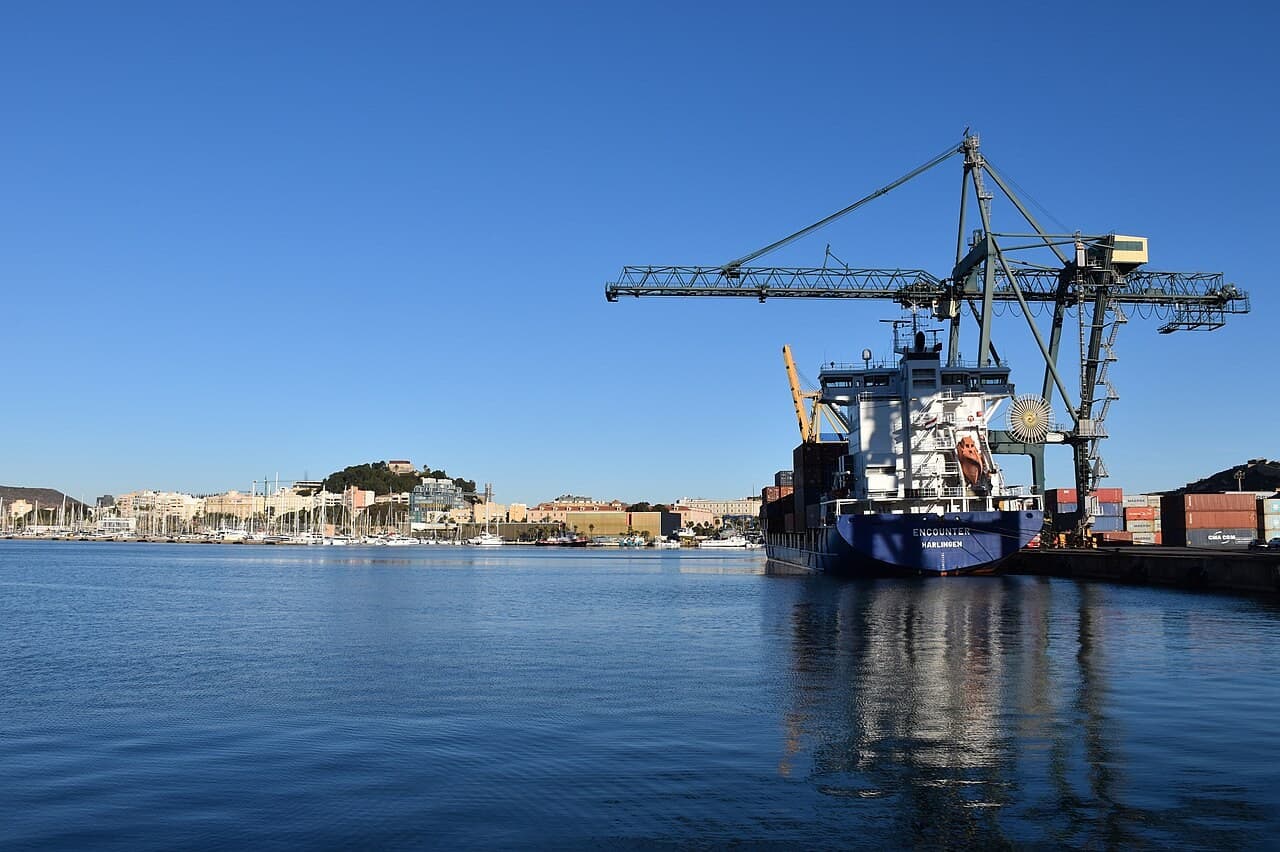
Working quays at Cartagena, Spain, photographed in 2022: a contemporary port view.
Niels Johannes / Wikimedia Commons · CC BY-SA 4.0 · Image shown uncropped.
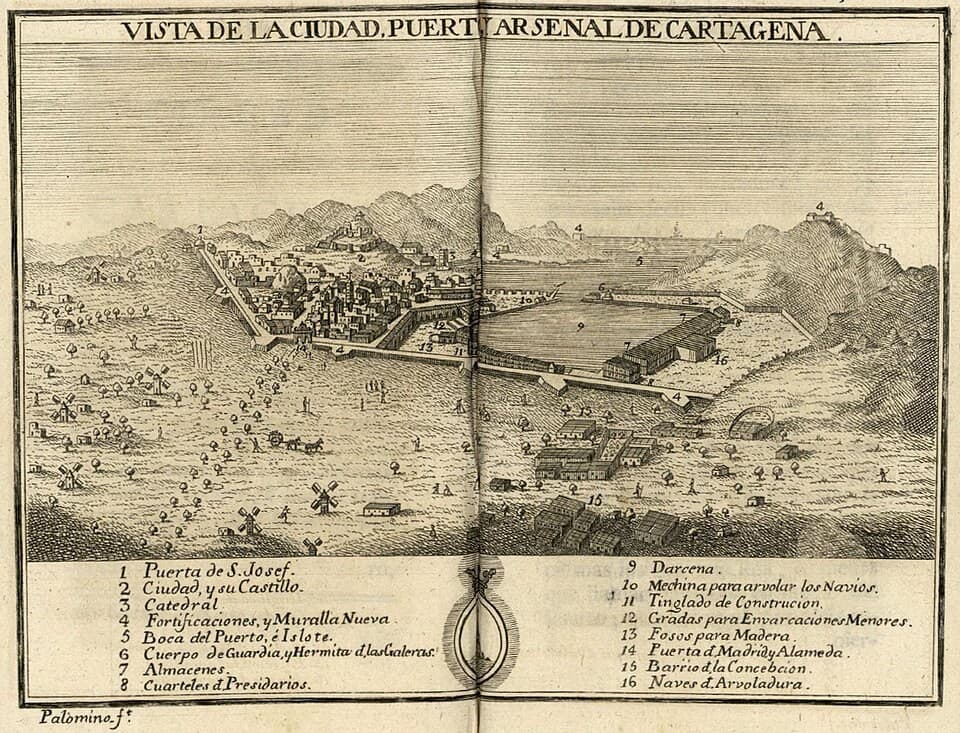
Cartagena, its port and arsenal in an archival view by Juan Fernando Palomino, 1778. A historical depiction, not a contemporary photograph.
Juan Fernando Palomino / Wikimedia Commons · Public domain · Image shown uncropped.
Gedocumenteerde plaats en geschiedenis
A port valued across periods
Spain's national tourism authority traces Cartagena's importance as a harbour to Carthaginian times and identifies the later Roman name Cartago Nova. The city's position on the Murcia coast drew successive cultures and institutions. This makes the port a useful starting point for an archaeological reading of the town. Its significance lies in continuing use and change, rather than a single founding moment frozen beside the Mediterranean.
Bronnen: [1]
The city at its sea wall
The same authority identifies the eighteenth-century Muralla del Mar, commissioned under Charles III, as an edge of the historic quarter. It also connects the city's museums with naval construction, trade and navigation. These references help join monumental and maritime histories. A public walk along the port can introduce the subject, while the archaeological and museum evidence explains aspects that a distant view of the waterfront cannot establish on its own.
Bronnen: [1]
Onze lezing · Redactionele duiding
De kust en haar omgeving lezen
Move from the open port frontage towards one carefully chosen archaeological site or museum. The shift reveals how much of the maritime story is held inland, in structures and objects rather than in boats alone. Cartagena is particularly rewarding when its historical layers are kept distinct but connected. Let the present port remain in view: contemporary movement and infrastructure belong to the same geographical opportunity that made the place important in earlier periods.
Bezoek en ontdek · Redactionele aanbeveling
Volg het verhaal
Use the national and local visitor information to combine a public waterfront walk with selected museum or archaeological interiors. Confirm the current openings of those sites separately. Operational port areas are different from the public promenade; keep to designated visitor routes and choose a manageable itinerary rather than trying to cover every historical period in one visit.
Spain.info — Cartagena ↗