Individual historic ship · Stockholm
Vasa
A royal warship whose brief voyage became a long conservation story
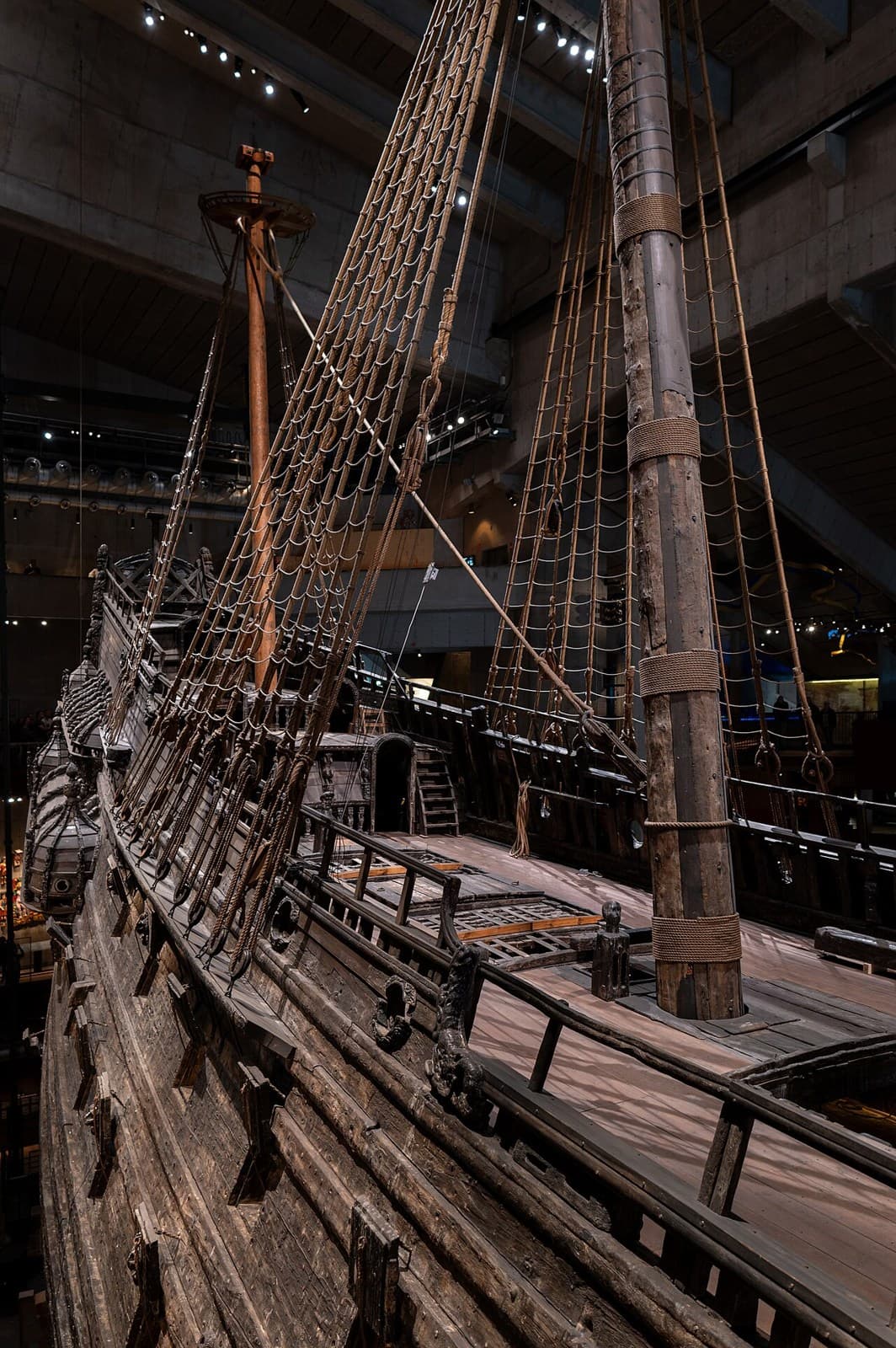
The surviving Vasa hull displayed inside the Vasa Museum in Stockholm.
Jules Verne Times Two / Wikimedia Commons · CC BY-SA 4.0 · Image shown uncropped.
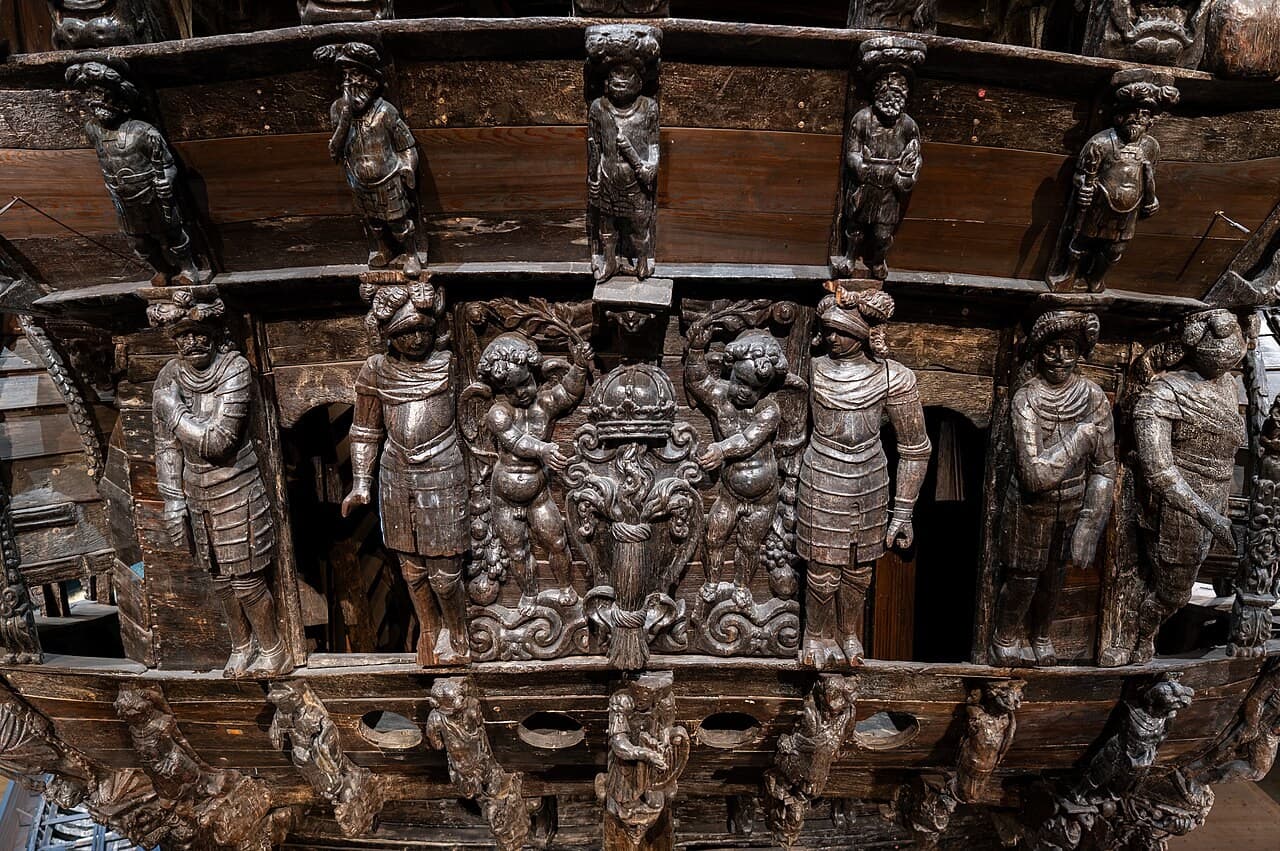
The stern of Vasa: a closer view of the surviving ship and its carved structure.
Jules Verne Times Two / Wikimedia Commons · CC BY-SA 4.0 · Image shown uncropped.
Histoire documentée
A ship for royal ambition
The Vasa Museum records the vessel as commissioned by Gustav II Adolf in 1625 and built between 1626 and 1628. The name refers to the royal family's sheaf emblem. These details place the ship within the exercise of state power, not simply within a history of decorative woodworking. The surviving hull is evidence of a large undertaking in which design, materials, labour and royal expectations came together.
Sources : [1]
A catastrophic first passage
On 10 August 1628, Vasa sank in Stockholm harbour shortly after setting sail. The museum explains the instability through the balance between the upper and lower parts of the ship, with water entering through open lower gunports when she heeled. The account avoids reducing the event to one picturesque anecdote. It connects a dramatic loss with the construction and arrangement of the vessel itself.
Recovery was a beginning
The museum's timeline records Vasa's emergence above the water on 24 April 1961, followed by work to conserve and reassemble the ship and its recovered components. The preservation timeline follows the subsequent care of the material. Raising a wreck and keeping it stable in a museum are different challenges. The object encountered today is therefore also evidence of archaeological recording, engineering and generations of conservation work.
Notre lecture · Interprétation éditoriale
Lire le navire et son contexte
Move from the imposing whole towards a small structural or carved detail, then ask what makes it possible to see that material now. This route keeps craftsmanship and conservation in the same frame. The ship's short first voyage can dominate its story, but the much longer period of recovery and care deserves equal attention. Vasa is especially revealing when considered as an ongoing responsibility: a historical object whose visibility depends on contemporary research and decisions about support, environment and repair.
Visiter et découvrir · Recommandation éditoriale
Suivre le récit
Use the Vasa Museum's current visiting and accessibility information before travelling. Allow time for the surrounding interpretation as well as the hull. This is a museum encounter with a recovered warship, not a visit aboard an operational sailing vessel.
Vasa Museum — Facts about Vasa ↗