Individual historic ship · Bygdøy, Oslo
Fram
A purpose-built polar ship and the changing meaning of preservation
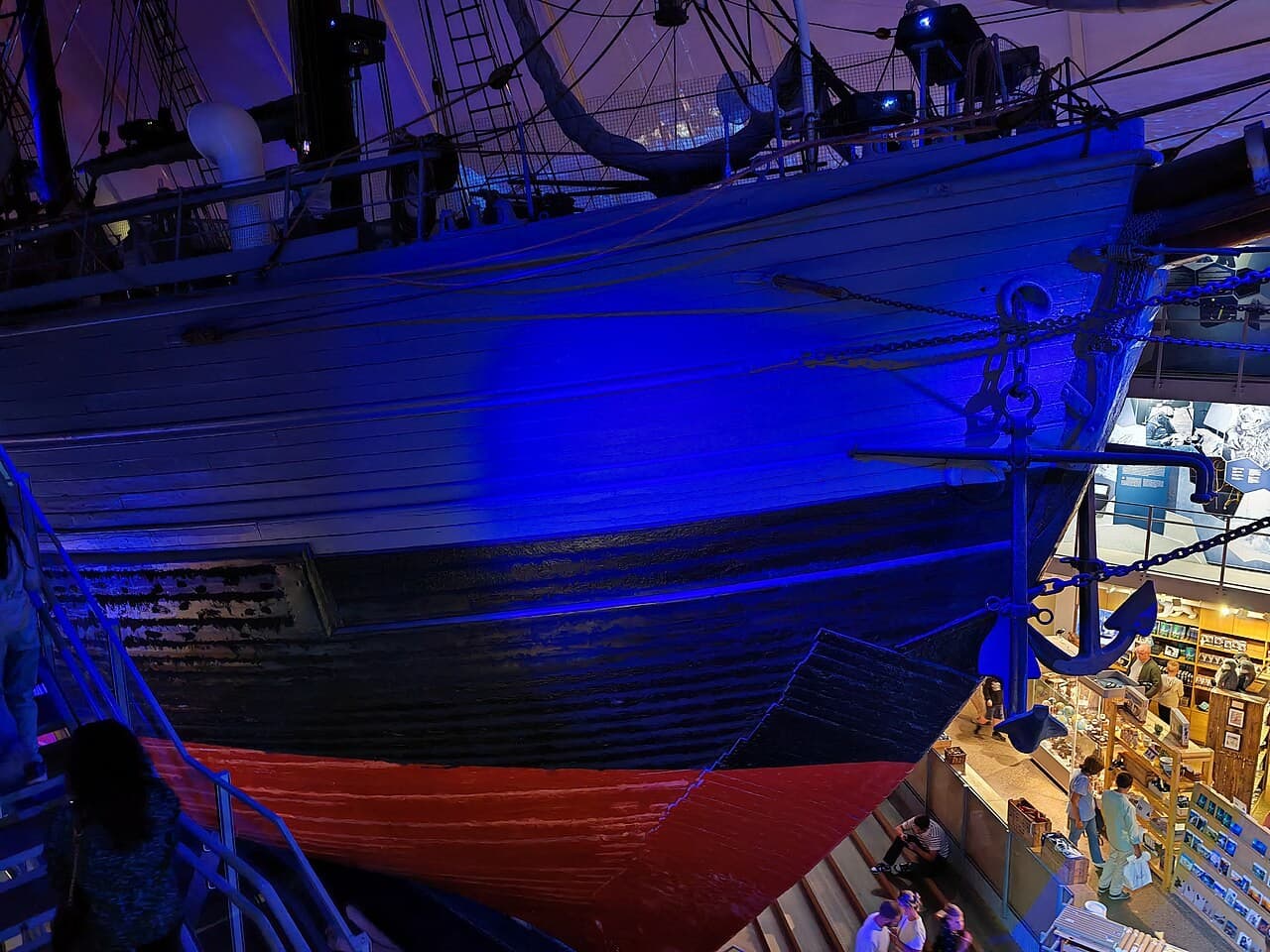
Fram displayed inside the Oslo museum, photographed in August 2024.
Dwxn / Wikimedia Commons · CC BY-SA 4.0 · Image shown uncropped.
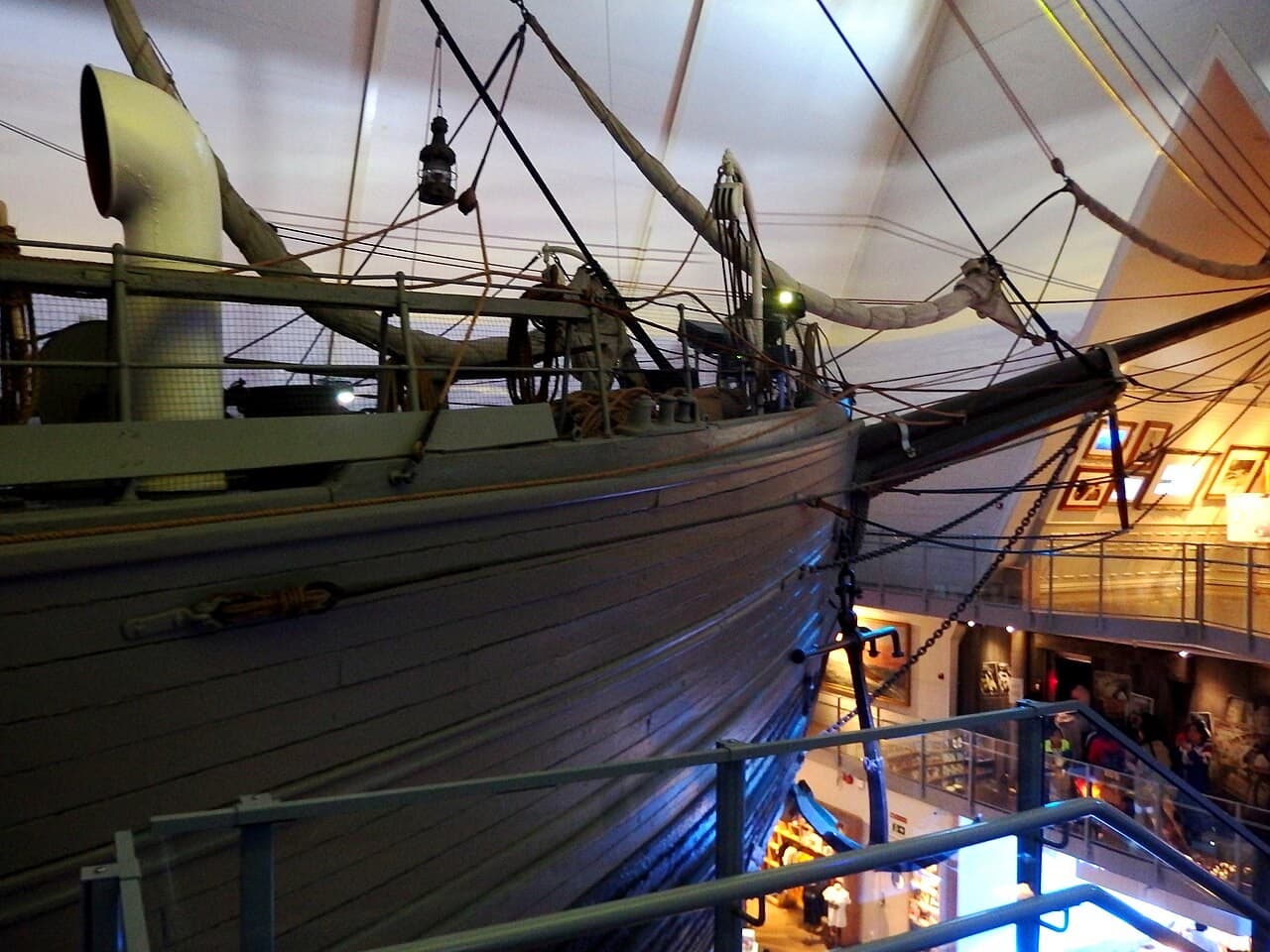
A second view of the preserved Fram, showing the hull and rig within the museum building.
Palickap / Wikimedia Commons · CC BY-SA 4.0 · Image shown uncropped.
Documented history
A ship designed around a research problem
The Fram Museum describes Fram as Norway's first ship specially built for polar research. Constructed by Colin Archer at Larvik, she was launched in 1892 for Fridtjof Nansen's project. The point was not simply to make a strong merchant hull travel farther north. A research purpose helped determine the vessel from the beginning, connecting shipbuilding decisions with a particular way of investigating the polar environment.
Sources: [1]
From Nansen to Amundsen
Museene i Akershus places Fram's construction in the context of Nansen's Arctic drift of 1893–1896 and follows her later association with Roald Amundsen. The ship consequently carries several expedition histories rather than one isolated voyage. It is useful to keep those projects distinct: the same vessel could acquire different equipment, people and meanings over time, even while retaining its identity as Fram.
Sources: [2]
The decision to keep the ship
The Akershus museum account also records the use of material from Fram during preparations for Maud and the later decision to restore and preserve the older ship. The Fram Museum presents the surviving vessel at Bygdøy in Oslo. This history makes preservation visible as a sequence of decisions, rather than an automatic reward for a famous voyage. A museum ship is something people chose to retain and continue to care for.
Our reading · Editorial interpretation
Reading the ship and its setting
Begin with the research question that shaped the boat, then move towards the human space inside it. This connects the technological object with the daily reality of a long expedition. The later preservation story adds another perspective: fame did not remove the possibility of dismantling or loss. Looking at Fram as a vessel which changed purpose, contributed material elsewhere and was eventually kept for public interpretation makes the museum encounter richer than a simple celebration of exploration.
Visit & explore · Editorial recommendation
Follow the story
Consult the Fram Museum's current information for access to the ship and exhibitions at Bygdøy. Compare the vessel with the expedition interpretation before drawing conclusions about any particular fitting. This dossier does not describe Fram as operational or promise access to every interior space.
Fram Museum — The polar ship Fram ↗