Regional ship type · Aegean & Greek coastal waters
Trechantiri
Greek wooden boatbuilding explained through hulls, models and tools
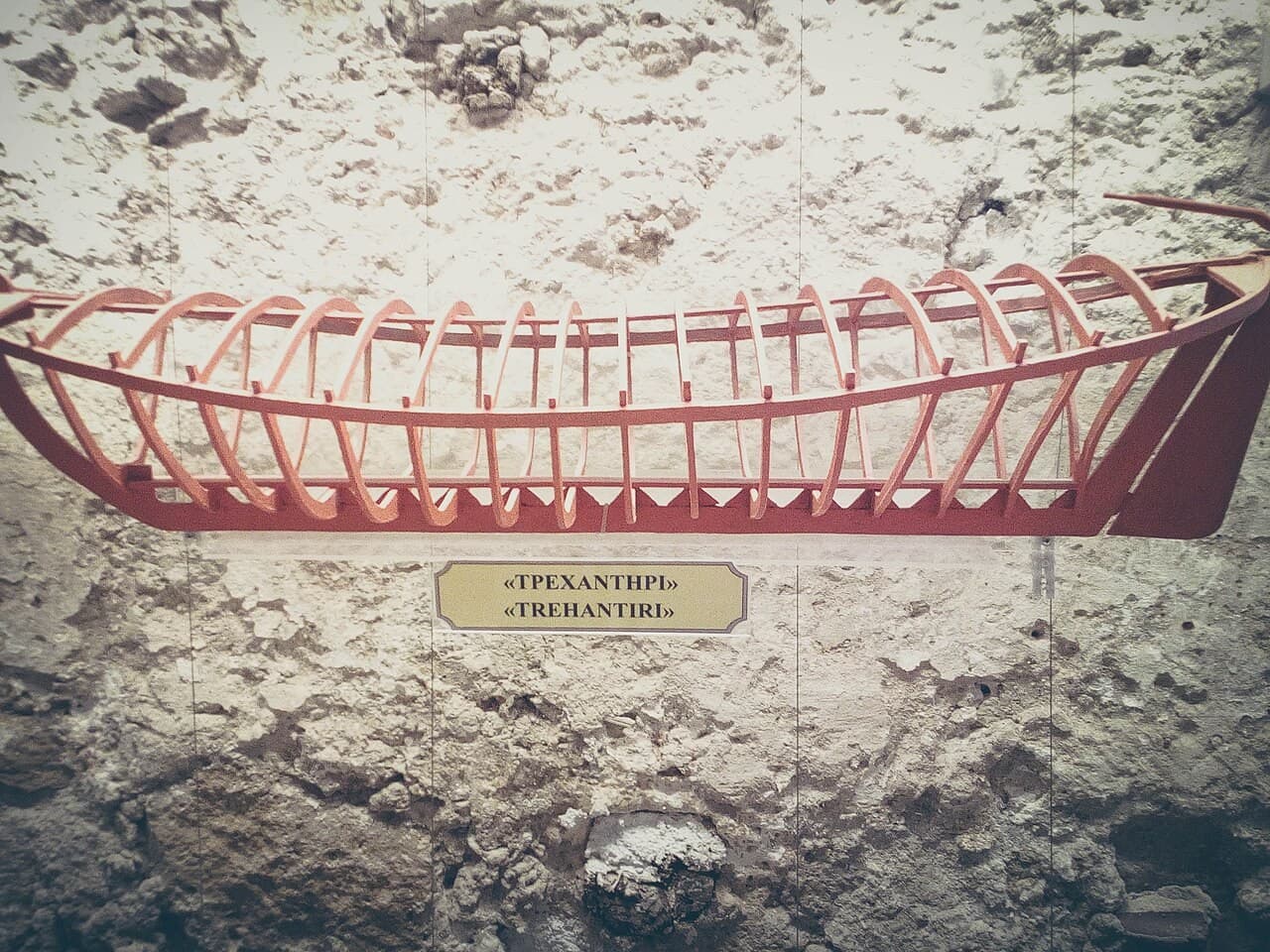
A trechantiri model photographed at the Maritime Museum of Crete in Chania. This is a miniature, not a full-size surviving hull.
Unuplusunu / Wikimedia Commons · CC BY-SA 4.0 · Image shown uncropped.
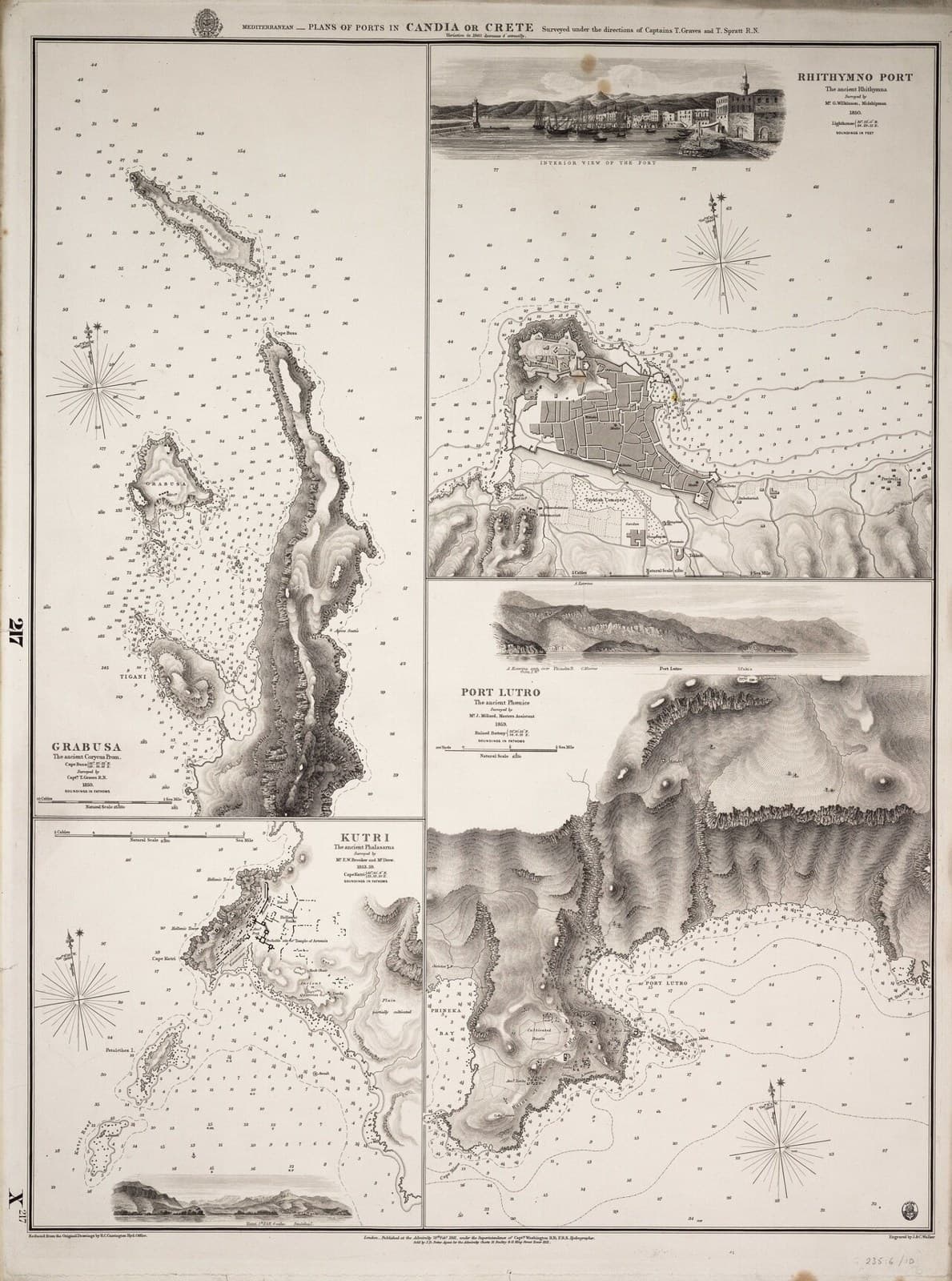
Admiralty harbour plans of Crete, published in 1861, Royal Museums Greenwich F0436. A contextual archival chart, not a drawing of a trechantiri.
Captain T. Graves; Hydrographic Office / Wikimedia Commons · Public domain · Image shown uncropped.Dokumentierte Geschichte
A type within a wider boatbuilding culture
The Hellenic Maritime Museum includes the trechandiri among the traditional craft made by Greek boatbuilders in the islands and coastal areas of the eastern Mediterranean. Its exhibition places these forms within nineteenth- and twentieth-century sailing and shipbuilding. The type should be read alongside other regional craft, rather than used as a name for every small Greek fishing boat. Local terminology and an individual boat's record remain important.
Quellen: [1]
A model that reveals the structure
The museum identifies a large trehandiri model with exposed construction details as a central exhibit, made by the Perama boatbuilder Pachos Papastefanou. Its workshop interpretation uses a shipyard setting to explain building techniques. A model has a different evidential role from a full-sized survivor: it can show connections otherwise hidden by planking, while its scale and purpose should be made clear to the visitor.
Quellen: [1]
A full-sized comparison at Kavala
Kavala's official visitor information lists a traditional fishing trehantiri dating from 1961 among the local naval museum's exhibits, alongside photographs, instruments and reconstructed boats. This offers a separate, dated object through which to approach the type. Its year belongs to that example, not to the boat family. Comparing a full-sized hull with a structural model can make both more informative.
Quellen: [2]
Unsere Lesart · Redaktionelle Einordnung
Das Schiff und sein Umfeld lesen
Move between surface and structure. A boat on the waterfront gives an immediate sense of scale and working space; a cutaway or exposed-frame model can help explain how that form was made. Together they direct attention to the shipwright's decisions rather than to a generic image of the Aegean. The question is not how to identify a timeless Greek boat at a glance, but how a particular construction tradition was taught, adapted and carried by people in specific coastal communities.
Besuchen und entdecken · Redaktionelle Empfehlung
Der Geschichte folgen
Consult the Hellenic Maritime Museum and Kavala's official information for current displays and access. Check which objects are full-sized vessels and which are models or reconstructions. This type introduction does not establish a photographed boat's ownership, construction date or availability for public sailing.
Hellenic Maritime Museum — Traditional shipbuilding and ships ↗