Regional ship type · Friesland
Skûtsje
Cargo, household and competitive sailing in Friesland
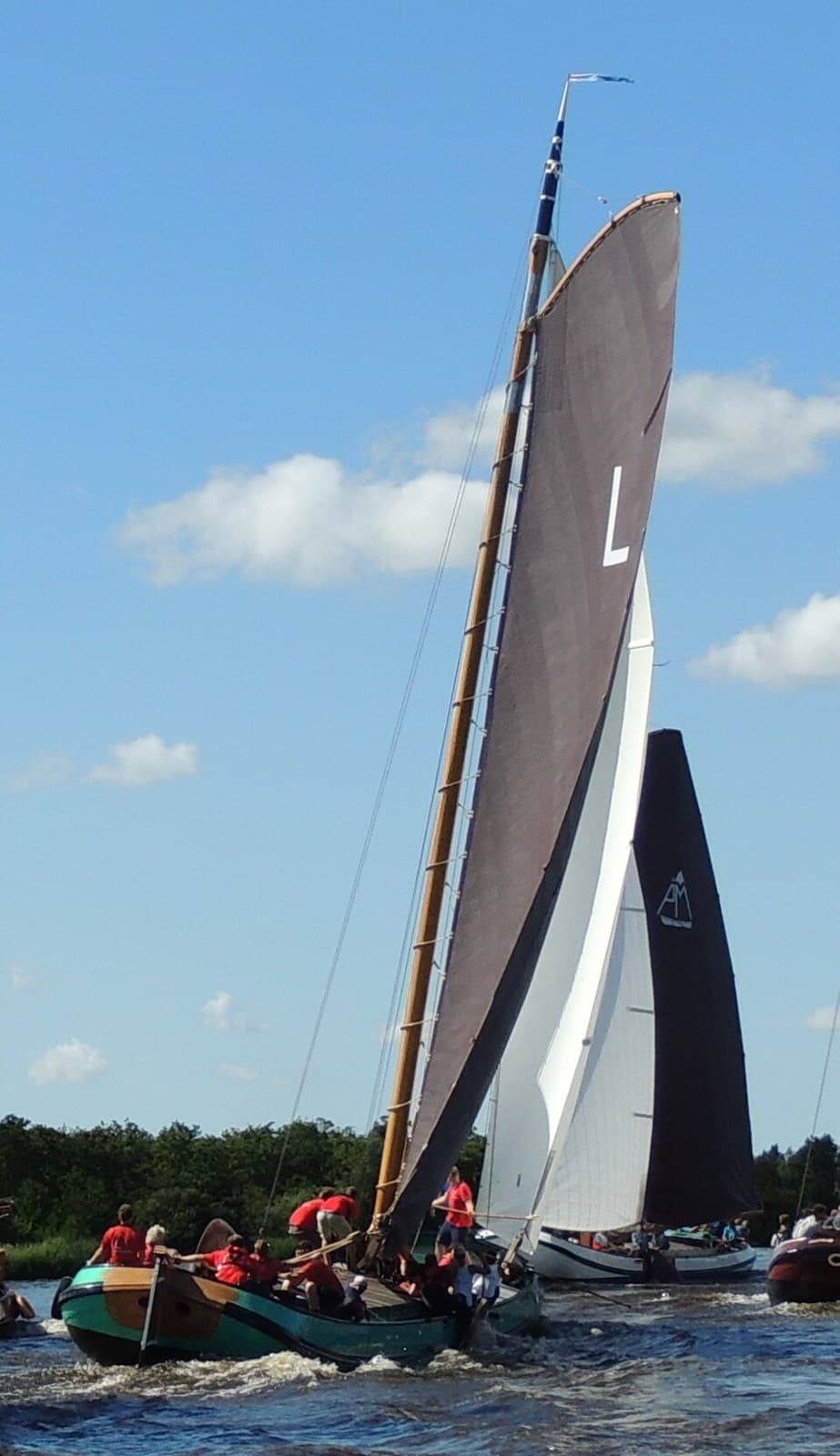
The Lemmer skûtsje photographed in 2015: a working boat tradition continued through sailing.
Baykedevries / Wikimedia Commons · CC BY-SA 4.0 · Image shown uncropped.
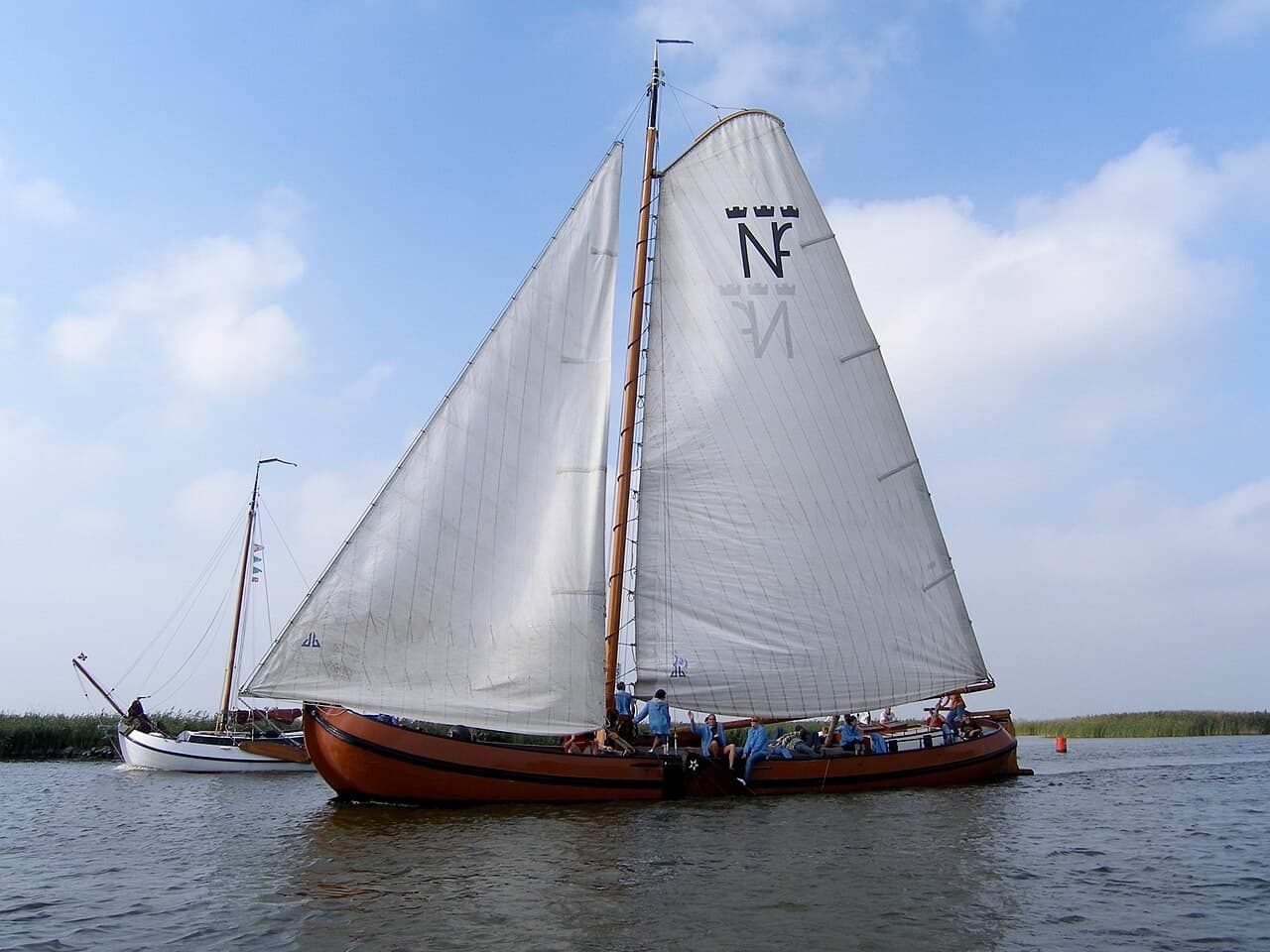
The skûtsje Risico near the Fluessen in Friesland: a named example of the type.
User:China_Crisis / Wikimedia Commons · CC BY-SA 3.0 · Image shown uncropped.
Histoire documentée
A Frisian branch of a larger family
The SSRP places the skûtsje within the tjalk-related family of Dutch inland craft. Its discussion of the name notes that early twentieth-century descriptions could use Fries roefschip, while skûtsje also circulated in everyday speech. Names do not always behave like modern model numbers. A useful account therefore connects terminology with working use, place and period rather than insisting that every historical document used the same label.
Sources : [1]
The things that racing can leave behind
The Skûtsjemuseum's own history describes how its founders collected old equipment as more skûtsjes entered competitive sailing. Materials no longer wanted aboard racing boats could still carry important evidence of their earlier lives. The museum opened in Earnewâld in 1998. Its origin makes the collection more than a display of attractive objects: it responds to changes within a continuing boat culture.
Sources : [2]
Different boats, different evidence
The museum also documents the creation of the wooden skûtsje Æbelina as a heritage project. A newly built traditional craft and an older converted working hull offer different kinds of evidence. Both may help explain skills, but they should not be described as the same historical object. This dossier covers the regional type; photographs of a particular racing or museum boat are examples, not a specification for all skûtsjes.
Sources : [3]
Notre lecture · Interprétation éditoriale
Lire le navire et son contexte
Look beyond the large sail and ask where the cargo and domestic spaces once fitted. Competitive sailing foregrounds speed and teamwork; a museum collection can bring tools, family life and earlier arrangements back into view. Those perspectives enrich one another when their dates and purposes remain clear. The most productive comparison is not between an authentic past and an inauthentic present, but between documented stages in a boat's use. Each conversion or restoration deserves its own explanation.
Visiter et découvrir · Recommandation éditoriale
Suivre le récit
Begin with the Skûtsjemuseum in Earnewâld and check its current programme. For regattas or sailing, use the relevant organiser's information. Do not assume that a competition boat is open for boarding, or that its present layout reproduces its cargo-carrying years.
SSRP — The term Skûtsje ↗