Individual historic ship · Lake Mjøsa
Skibladner
Steam-powered passenger history on Norway’s inland waters
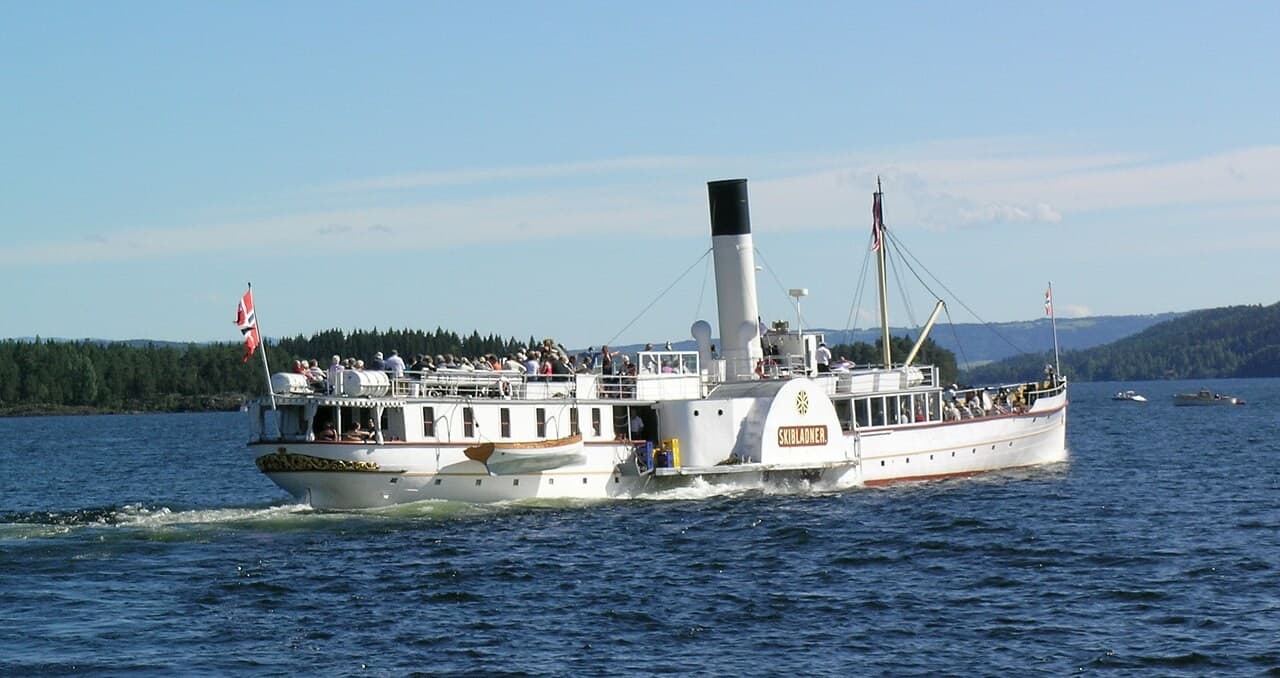
Skibladner underway: the individual paddle steamer associated with Lake Mjøsa.
User:Mahlum / Wikimedia Commons · Public domain · Image shown uncropped.
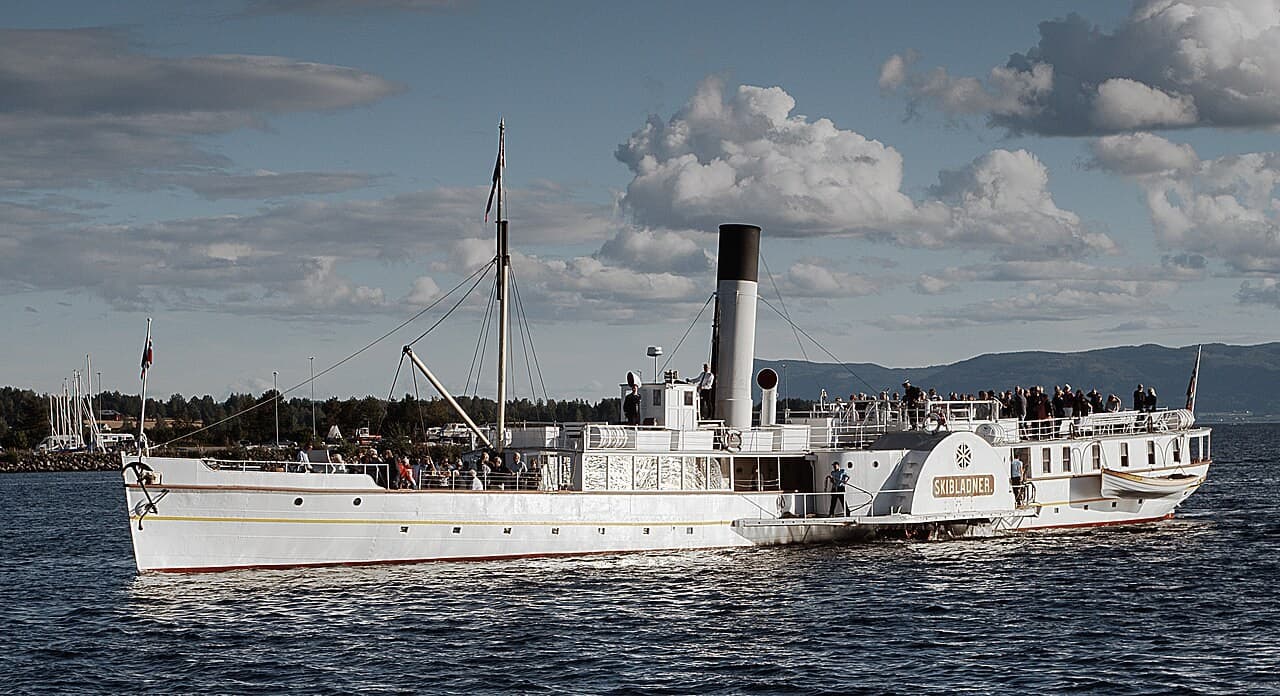
Skibladner at Hamar in 2015: a dated harbour view.
Andrez1 / Wikimedia Commons · CC BY-SA 4.0 · Image shown uncropped.
Dokumentierte Geschichte
A lake as a transport corridor
Skibladner's operator describes the vessel as built for passenger and goods traffic on Lake Mjøsa. Construction involved the Motala yard in Sweden and assembly at Minnesund in Norway in 1854–1856, with a maiden voyage in August 1856. The ship's international building connection and inland role complicate the idea that maritime history necessarily begins at an ocean port. A lake could also support a significant transport system.
Quellen: [1]
A vessel altered in service
The operator records a major refit and lengthening at Minnesund in 1888, together with an engine built by Aker. Later boiler replacement is also part of the published technical history. The date 1856 therefore identifies a beginning, not an assertion that every component remains from that year. A preserved steam vessel can retain its identity while its working machinery and structure reflect several periods of maintenance and change.
Quellen: [1]
From express service to living museum
The operator's interpretation follows Skibladner from express transport along the lake to a heritage passenger role. It foregrounds the continuing presence of steam machinery and paddle wheels. That is a different form of preservation from a static museum hull: the experience depends on people, maintenance and an operating programme. Current sailings must still be checked independently of the historical account.
Quellen: [2]
Unsere Lesart · Redaktionelle Einordnung
Das Schiff und sein Umfeld lesen
Look between the machinery and the shoreline. The ship's cultural value is not confined to an attractive saloon or the movement of a paddle wheel; it also lies in the lake communities it connected. A visit becomes richer when the vessel is read as infrastructure as well as craft. The 1888 changes provide a useful starting point for asking how a working ship can be old without being materially unchanged, and how continued use creates its own demands on conservation.
Besuchen und entdecken · Redaktionelle Empfehlung
Der Geschichte folgen
Consult Skibladner's official seasonal programme and confirm boarding place, accessibility and cancellations before travelling. Historical technical figures are not operating instructions. This dossier does not guarantee a particular departure or imply that an inland heritage sailing is available throughout the year.
Skibladner — About us ↗