Regional ship type · Séné & the Golfe du Morbihan
Sinagot
A shallow-water fishing boat from Séné and the Morbihan
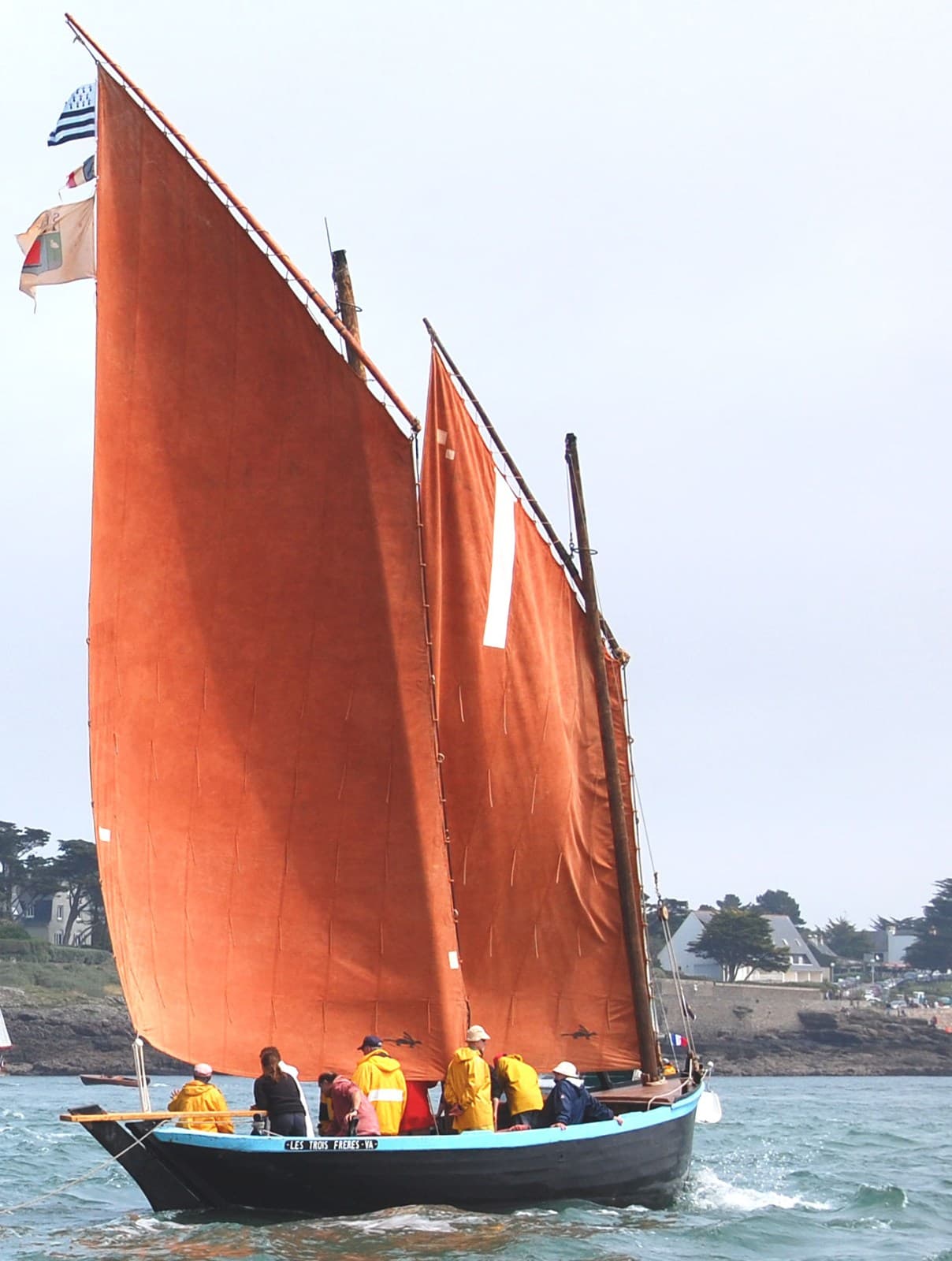
Les Trois Frères: a named sinagot illustrating the Séné boat tradition.
Pline / Wikimedia Commons · CC BY-SA 3.0 · Image shown uncropped.
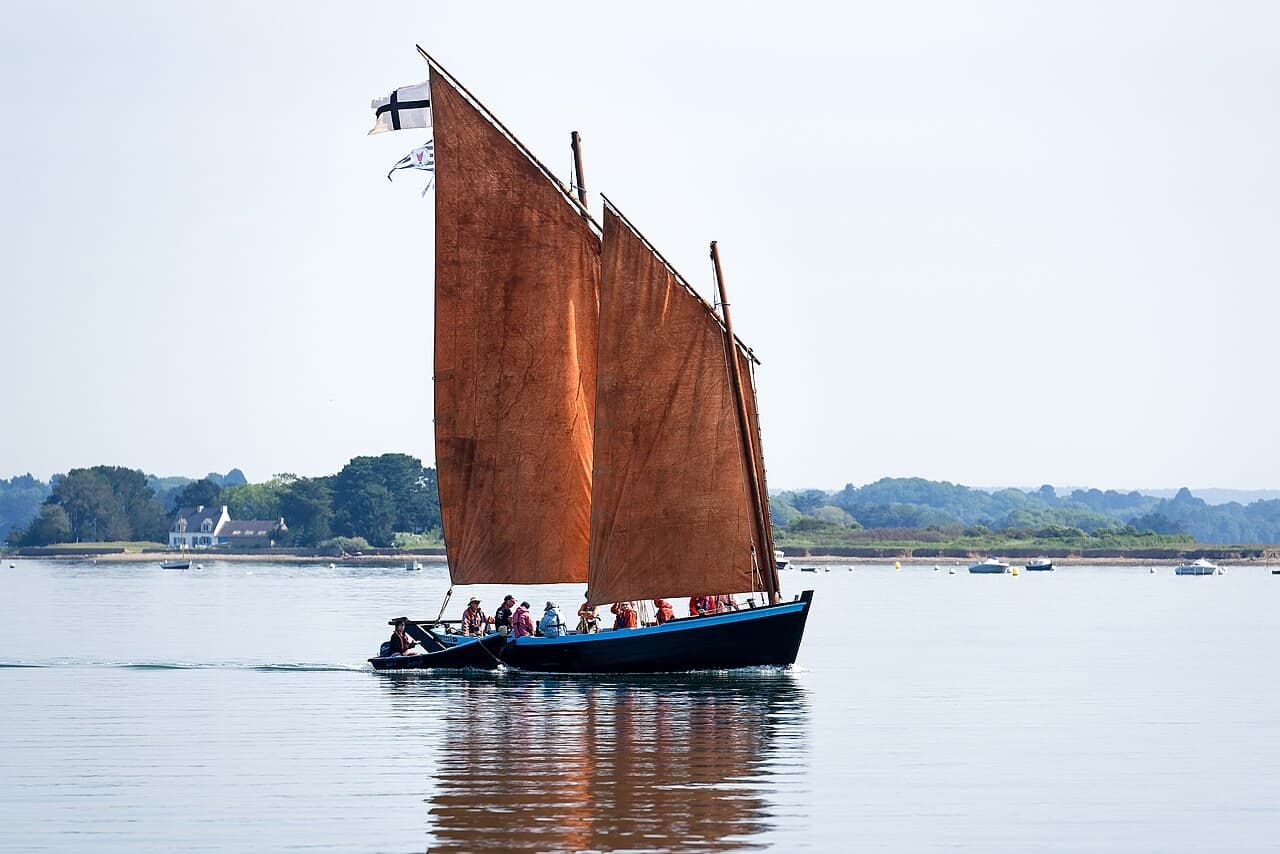
A sinagot under sail in the Golfe du Morbihan.
François de Dijon / Wikimedia Commons · CC BY-SA 4.0 · Image shown uncropped.
Dokumentierte Geschichte
A boat within a tidal gulf
The Golfe du Morbihan regional park describes the sinagot as an undecked fishing chaloupe with two lug sails on unstayed masts. Its shallow draft and manoeuvrability suited work in the gulf's currents and relatively inaccessible areas. The account associates the type with oyster dredging, shrimp fishing and other seasonal methods. This is a particular working relationship with water, rather than simply an image of red sails.
Quellen: [1]
Change within the tradition
The park distinguishes older forms from later, larger sinagots and identifies reconstructions separately. That distinction prevents the word traditional from concealing dates and alterations. The type developed over time, and later boats or reproductions may preserve some features while answering different needs. A visit becomes more informative when the hull's individual history is considered alongside the familiar appearance of the rig.
Quellen: [1]
The case of Les Trois Frères
Les Amis du Sinagot records Les Trois Frères as a boat ordered in 1943 at the Querrien yard at Le Bono for the Séné fisherman Patern Le Franc. After later leisure use and a change of name, the association bought her in 1983 and restored the original name. The heritage account thus follows one identified vessel through different purposes; it is not the biography of all sinagots.
Quellen: [2]
Unsere Lesart · Redaktionelle Einordnung
Das Schiff und sein Umfeld lesen
Read the boat against the gulf's shore and working waters. The open hull and two sails become more meaningful when considered alongside the fishery rather than as decoration in a seascape. Then ask which visible arrangements belong to the boat's fishing years and which to later conservation or leisure use. That keeps a living tradition legible without expecting it to remain untouched. A named survivor and a reconstruction can both be valuable, provided the difference is explained.
Besuchen und entdecken · Redaktionelle Empfehlung
Der Geschichte folgen
Consult Les Amis du Sinagot for its own fleet and current activities around the Morbihan. Verify the vessel and departure place before booking. A public heritage appearance does not imply that every sinagot in a photograph belongs to the association or is available to sail.
Parc naturel régional du Golfe du Morbihan — Maritime heritage ↗