Regional ship type · Eastern Zuiderzee
Schokker
A fishing-boat family from the eastern edge of the Zuiderzee
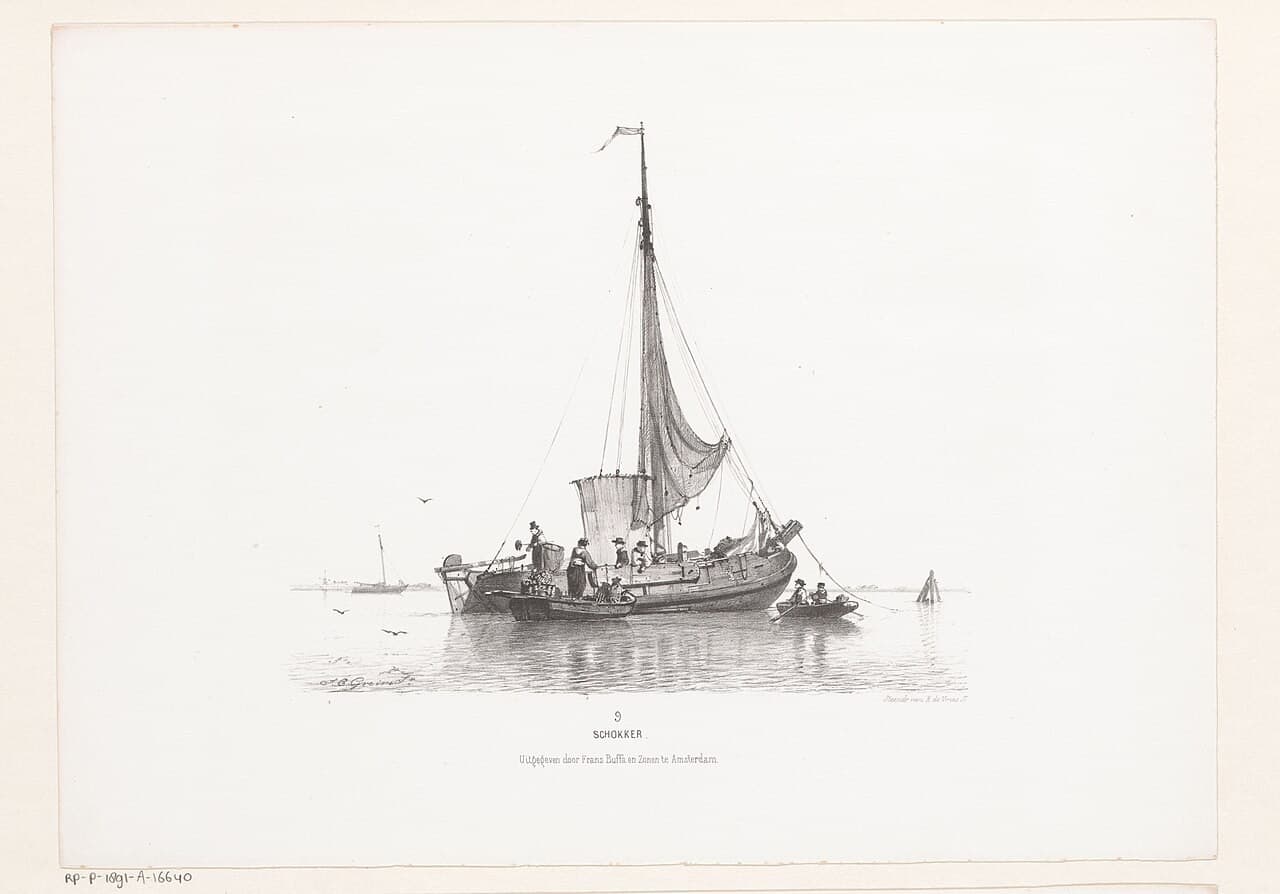
Schokker: an archival print in the Rijksmuseum collection, object RP-P-1891-A-16640.
Rijksmuseum / Wikimedia Commons · CC0 · Image shown uncropped.
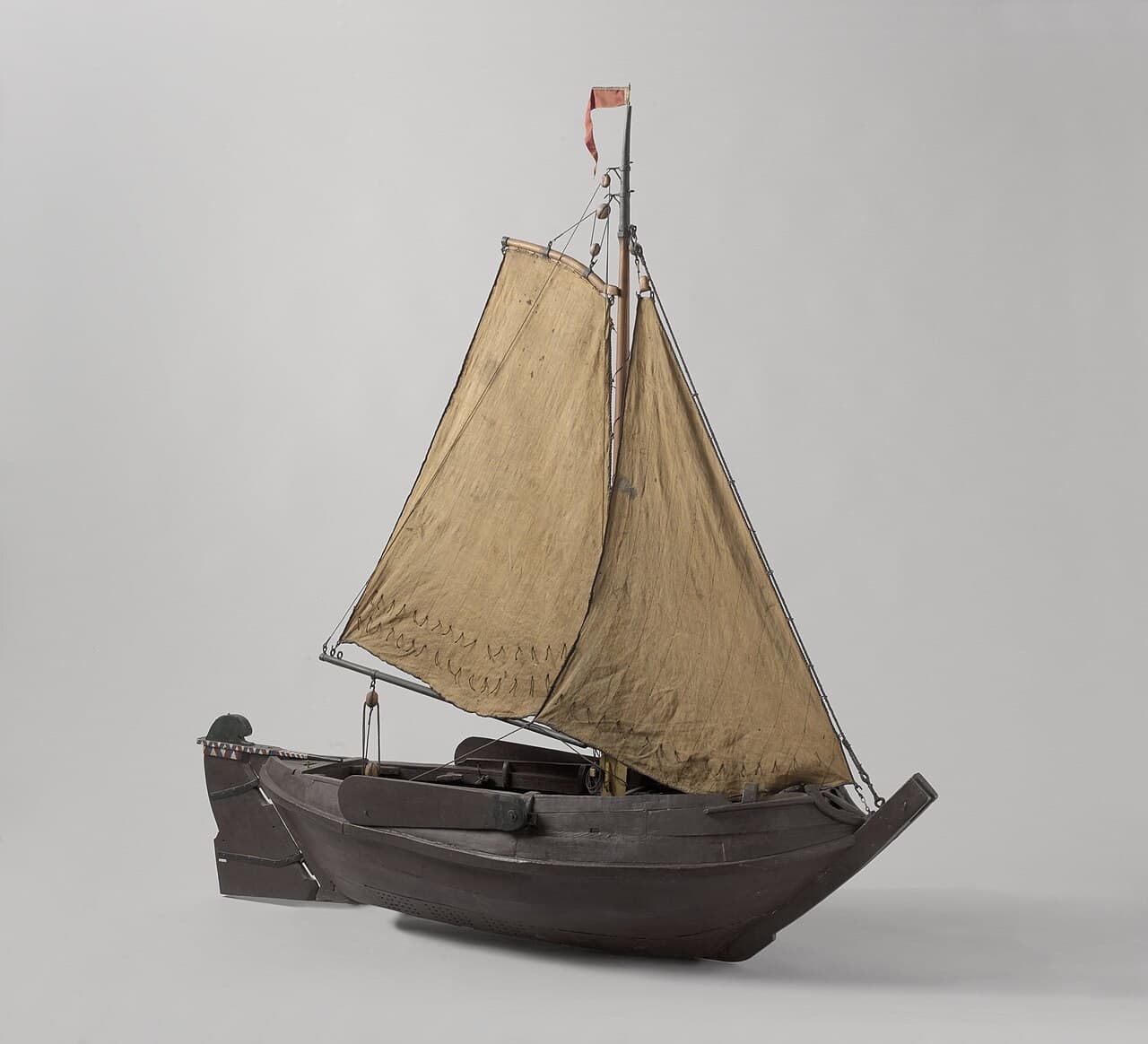
Photograph of a schokker model, Rijksmuseum NG-MC-1183. The model illustrates construction and is not a full-size surviving fishing boat.
Rijksmuseum / Wikimedia Commons · CC0 · Image shown uncropped.
Documented history
An eastern shore
The SSRP locates the development of the schokker on the eastern side of the former Zuiderzee, between Kuinre and Elburg. Its account describes a flat-bottomed fishing vessel with a relatively sharp bow and narrow floor. The type belongs to a wider regional story than the name of the former island Schokland alone. Geography, working waters and construction should all be considered when identifying an example.
Sources: [1]
Variation within the family
The registry distinguishes smaller boats working the eastern shore from larger craft operating farther across the Zuiderzee and towards the North Sea. Its group account also discusses the related bons and pluut. These differences explain why one fixed length would misrepresent the family. Technical measurements in a named-vessel record cannot simply be copied into a general introduction to the type.
What a reconstruction can tell us
The SSRP group description states that no original working schokker has survived. Historical prints, models and later boats consequently need to be read with their dates and purposes in mind. A model can show a proposed arrangement; a later sailing interpretation can demonstrate techniques. Neither should be presented as an untouched surviving fishing boat. Our image captions identify the form of evidence shown rather than allowing the illustration to imply a false continuity.
Sources: [2]
Our reading · Editorial interpretation
Reading the ship and its setting
This is a good subject for learning to compare evidence. Begin with the heavy stem and the relationship between the sides and the narrow floor, then compare a print with a museum model or a later boat. Ask what each representation makes visible and what it cannot establish. The absence of an original vessel does not make the tradition unimportant. It changes the questions: documentary research, measured drawings and the choices behind reconstructions become central to the encounter.
Visit & explore · Editorial recommendation
Follow the story
Use the SSRP's illustrated historical descriptions as a first reference. When visiting a museum or later sailing example, check whether the object is a model, reconstruction or yacht interpretation. Public access and sailing arrangements must be confirmed with its actual custodian.
SSRP — Scheepstype Schokker ↗