Regional ship type · Douro River
Rabelo
Port wine, a mountain river and a boat made to carry casks
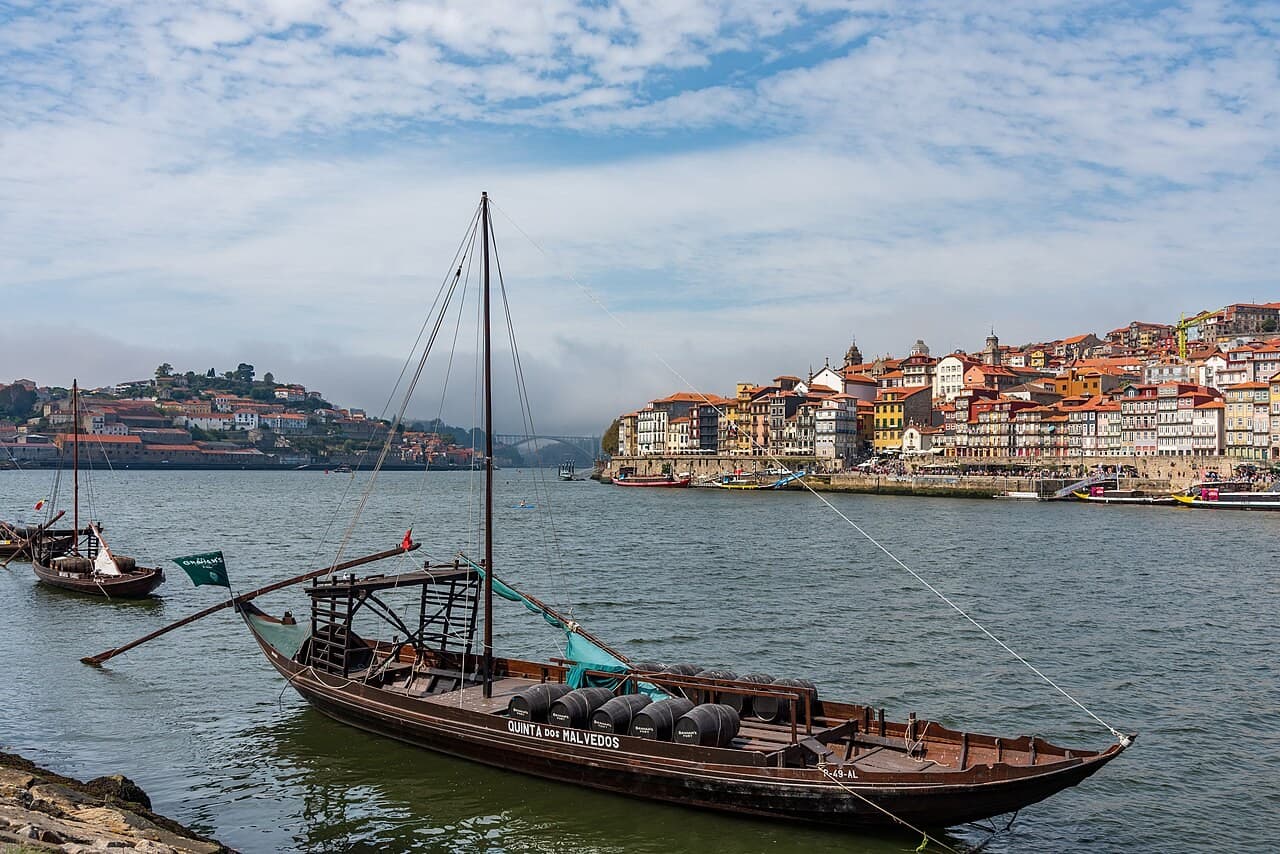
A rabelo at Porto, with casks displayed aboard: a present-day view of a historic cargo tradition.
Joe deSousa / Wikimedia Commons · CC0 · Image shown uncropped.
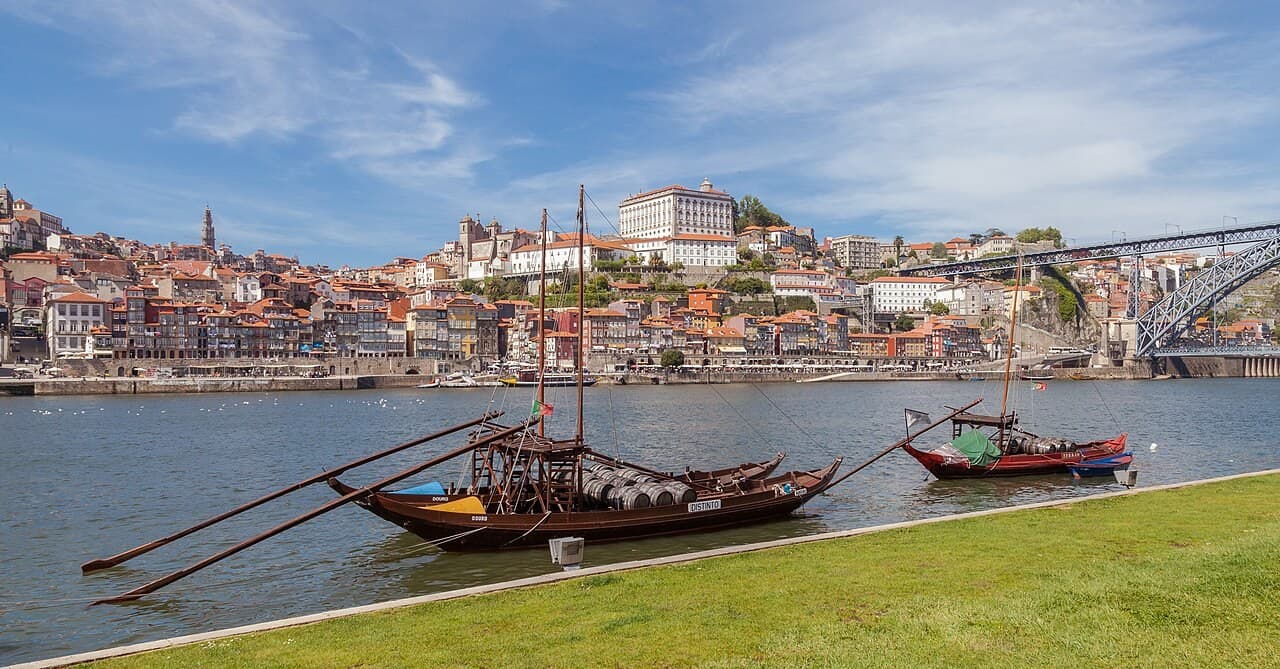
Rabelos on the Douro at Vila Nova de Gaia, photographed in 2012.
Diego Delso / Wikimedia Commons · CC BY-SA 3.0 · Image shown uncropped.
Documented history
A wine landscape with a river route
Associação Douro Histórico describes the rabelo as the characteristic Douro boat used to move casks of Port wine from the vineyard region to Vila Nova de Gaia, where the wine was stored and traded. The river was part of the production landscape, not simply a view beside it. The boat makes that relationship visible: a cargo, a difficult route and a destination shaped the work of the vessel and its crew.
Sources: [1]
A hull and its handling
The association's account describes a flat-bottomed, keel-less wooden craft with overlapping planking, a square sail and the long steering sweep called the espadela. It also records towing from riverside paths when necessary. These details belong to the historical type. They should not be turned into operating advice or copied uncritically onto every modern boat marketed to visitors as a rabelo.
Sources: [1]
Wine history kept afloat
The Portuguese Navy's maritime-museum interpretation places the rabelo within inland transport and connects its history closely with Port wine. The Confraria do Vinho do Porto also documents the contemporary rabelo regatta. Museum interpretation and a modern race offer different ways to encounter the tradition. Neither means that today's river traffic reproduces the conditions of moving working cargoes down the earlier Douro.
Our reading · Editorial interpretation
Reading the ship and its setting
Read the rabelo from the cask outwards. Cargo determines what the boat must accommodate, and the river determines how the journey can be made. Looking at those relationships gives the wine landscape a material history beyond the bottle and the cellar. From Gaia, the vessel can be considered together with the warehouses and the upstream region. That is a stronger cultural encounter than treating a picturesque boat on the water as a complete explanation of centuries of trade.
Visit & explore · Editorial recommendation
Follow the story
Start with the maritime museum and Douro Histórico's historical resources. For the regatta, use the Confraria's current programme; for an excursion, confirm the actual vessel and operator. Historical descriptions here are cultural reference, not instructions for navigating or handling a boat on the Douro.
Associação Douro Histórico — Barco Rabelo ↗