Individual historic ship · Travemünde, Lübeck
Passat
A Flying P-Liner preserved at the edge of the Baltic
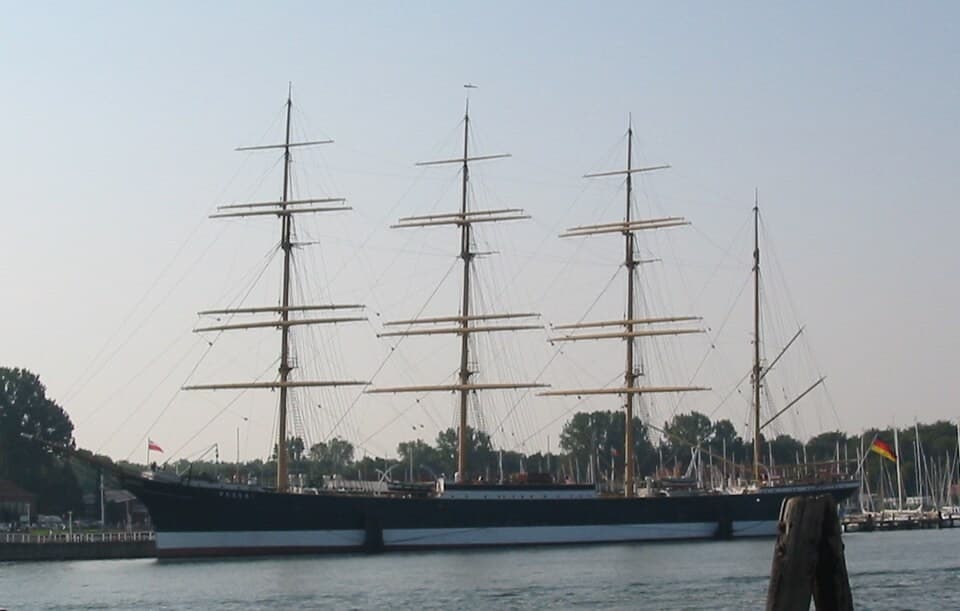
Passat at Travemünde: the individual four-masted sailing ship discussed here.
The original uploader was Asterion at English Wikipedia . / Wikimedia Commons · CC BY-SA 2.5 · Image shown uncropped.
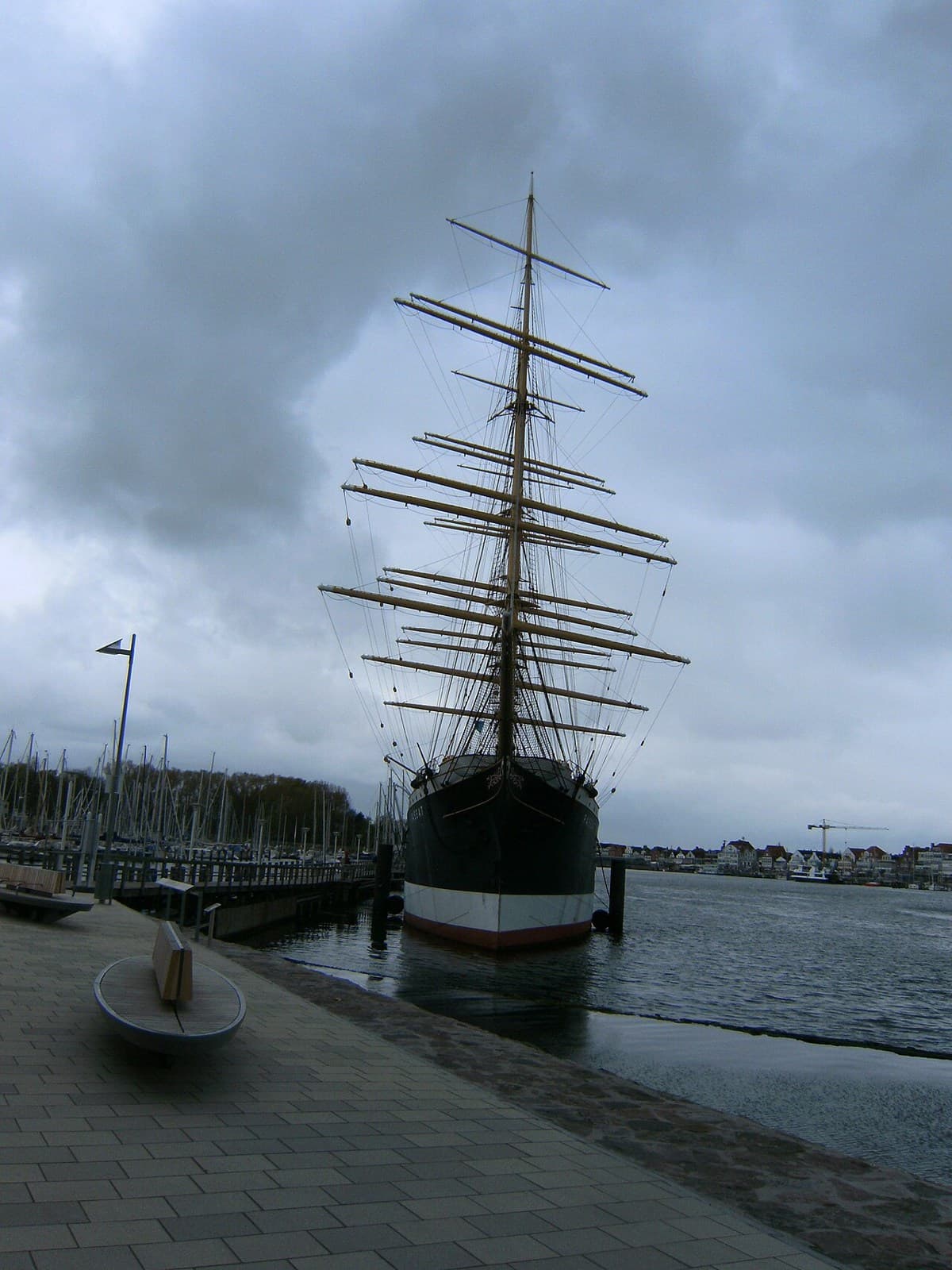
Passat’s rigging and bow at Travemünde: a closer view of the preserved vessel.
Roland.h.bueb / Wikimedia Commons · CC BY-SA 4.0 · Image shown uncropped.
Documented history
A working sailing ship
The City of Lübeck records Passat as launched in 1911 among the Flying P-Liners and sailing commercially until 1957. The municipal account credits the vessel with thirty-nine passages around Cape Horn. These facts locate her in the late era of large working sailing ships. The impressive rig should therefore be read in connection with repeated ocean passages and labour, not simply as an ornamental harbour landmark.
Sources: [1]
The ship as a civic landmark
Lübeck now presents Passat as a museum ship and venue at Travemünde. That is a new relationship between vessel and place: a ship built for movement has become a recognisable part of the waterfront. Its present public uses do not erase the earlier work, but they do affect the way visitors encounter the hull and accommodation. A modern exhibition interprets a history rather than transporting a visitor directly into unchanged working conditions.
Sources: [1]
Historic construction and present access
The city's current visitor guidance locates the ship at the Priwall and explains that its historical construction limits accessibility in some areas. This practical information is part of a responsible museum encounter. A preserved vessel has spaces and circulation routes shaped by an earlier purpose; adapting or explaining them requires choices. Current guidance should be checked directly rather than inferred from photographs or from another historic ship's arrangements.
Sources: [2]
Our reading · Editorial interpretation
Reading the ship and its setting
Read Passat at two scales. From the waterfront, consider the height and extent of the rig; aboard, return to the space occupied by people and work. The change of scale can bring a monumental object closer to everyday experience. The museum setting also invites comparison with Peking and Pommern, each with a distinct biography. Shared appearance or the Flying P-Liner association should start a conversation about relationships, not make the vessels interchangeable.
Visit & explore · Editorial recommendation
Follow the story
Use Lübeck's official Passat page and current visitor guidance for seasonal opening, tours and accessibility. Confirm access before crossing to the Priwall. This dossier does not offer accommodation or event reservations and does not describe Passat as an operational excursion sailing ship.
City of Lübeck — Four-masted barque Passat ↗