Regional ship type · Bjørnafjorden, western Norway
Oselvar
A Norwegian boat tradition sustained through the act of building
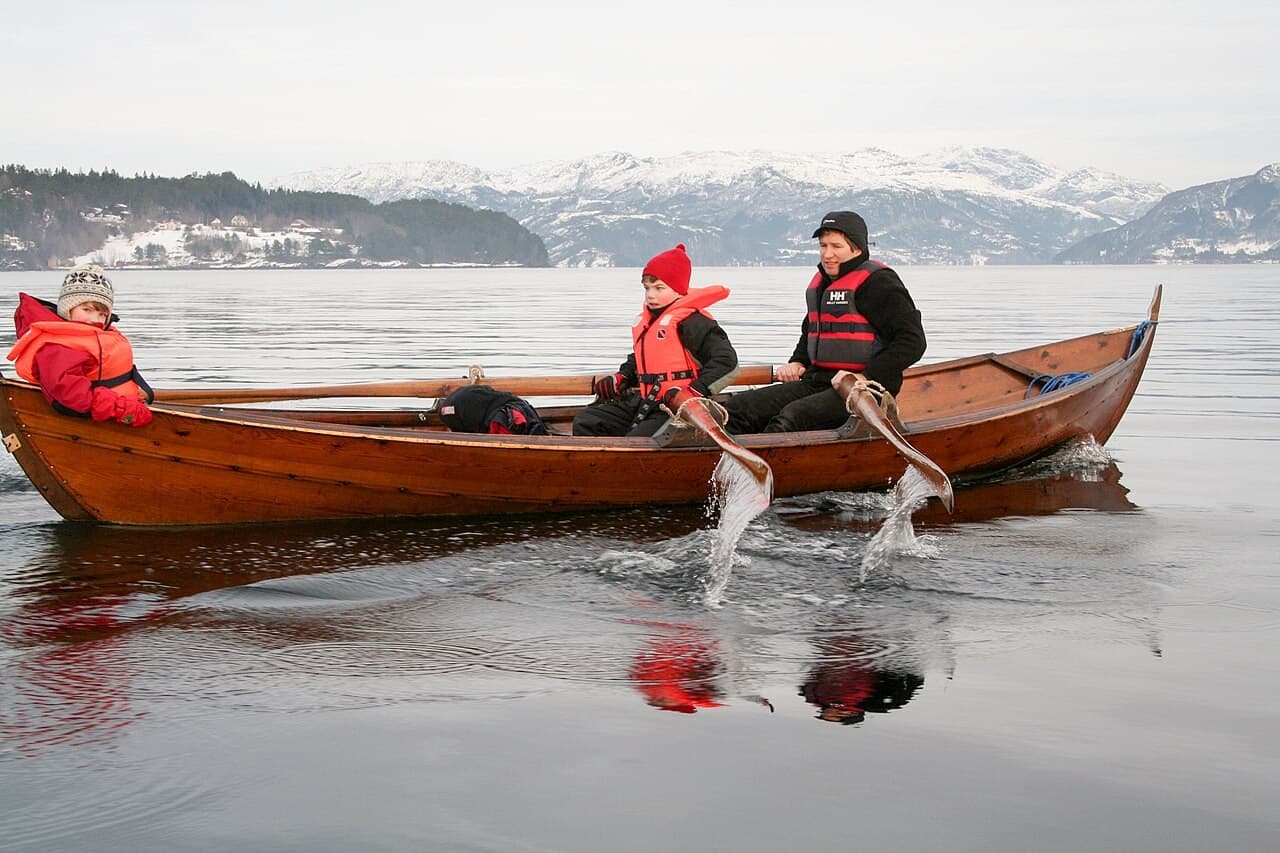
An Oselvar wooden boat: a photographed example of the western Norwegian tradition.
Kjell Magnus Økland / Wikimedia Commons · CC BY-SA 4.0 · Image shown uncropped.
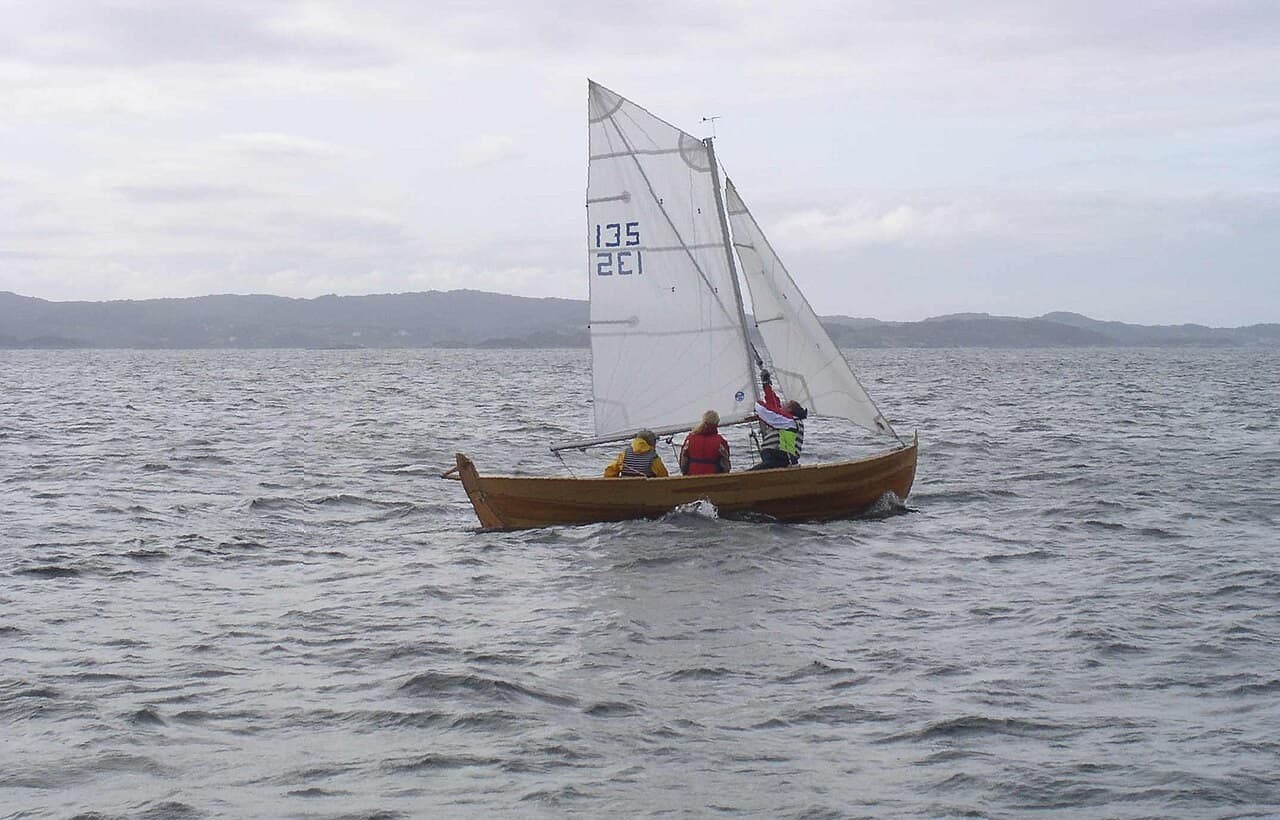
A second Oselvar photograph. The type is distinguished from the individual history of each boat.
Steinar van der Meeren / Wikimedia Commons · Public domain · Image shown uncropped.
Histoire documentée
Overlapping planks and a local craft
Oselvarverkstaden describes the oselvar as clinker-built, with overlapping planks riveted together and a characteristic use of thin, wide boards. The workshop's explanation makes construction central to the boat's identity. This is more precise than treating every small Norwegian wooden boat as the same type. The individual hull, its dimensions and its builder still need to be identified separately within the regional tradition.
Sources : [1]
A boat facing a changed world
UNESCO's account explains how motor boats, changing economics and the growth of road transport threatened a vessel once important for western Norwegian transport and recreation. The safeguarding response was not simply to place an old boat in a display. It aimed to maintain a working process in which skilled builders could teach apprentices, use appropriate facilities and continue to find a place for the boats themselves.
Sources : [2]
What the UNESCO recognition means
The programme associated with Oselvarverkstaden, operating since 1997, was selected in 2016 for UNESCO's Register of Good Safeguarding Practices. This recognises a safeguarding approach; it is not a World Heritage inscription for every oselvar or an individual certificate of a boat's authenticity. Keeping that distinction clear directs attention to the apprenticeship, practice and institutional support that the programme actually documents.
Sources : [2]
Notre lecture · Interprétation éditoriale
Lire le navire et son contexte
The most revealing image of this tradition may be a boat taking shape in a workshop. Look at how a plank's width and curve participate in the form, and ask how the builder decides what the wood can do. A completed vessel then becomes evidence of a process rather than an isolated product. This is also a useful way to understand safeguarding: continued use, teaching and a viable place for skilled work can matter as much as the survival of any one old hull.
Visiter et découvrir · Recommandation éditoriale
Suivre le récit
Begin with Oselvarverkstaden's own information and check whether a visit or demonstration is offered. Respect the workshop as a working environment. Public access, training and sailing activities have separate arrangements; none should be inferred from the tradition's UNESCO recognition alone.
Oselvarverkstaden — The Oselvar boat ↗