Regional ship type · Ria de Aveiro
Moliceiro
A lagoon boat at the meeting of agriculture, painting and local identity
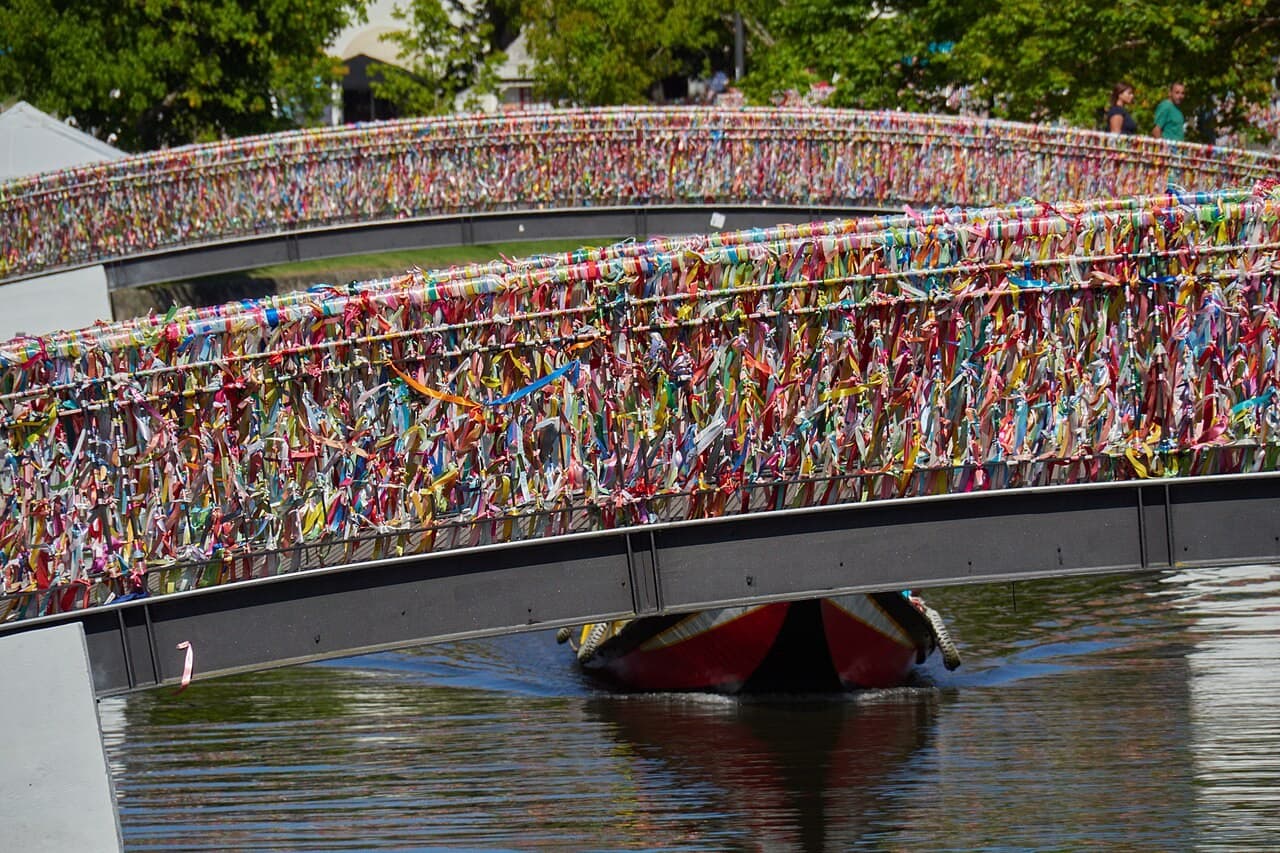
A moliceiro beneath a ribbon-covered bridge at Aveiro: the boat within today’s visitor economy.
lumoplank / Wikimedia Commons · CC0 · Image shown uncropped.
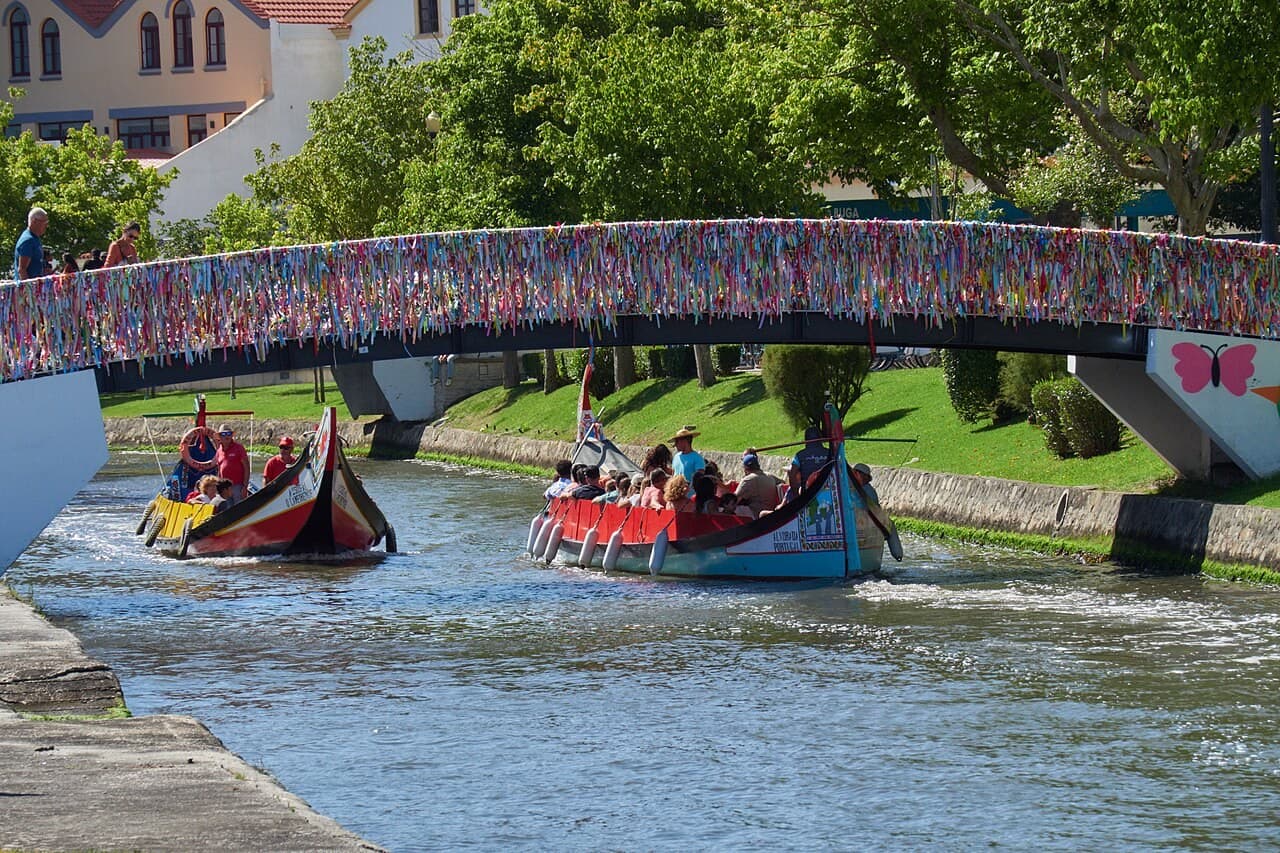
Moliceiros carrying visitors through Aveiro’s canals; their present use differs from the historical gathering of lagoon vegetation.
lumoplank / Wikimedia Commons · CC0 · Image shown uncropped.
Gedocumenteerde geschiedenis
A working link between lagoon and field
Portugal's national intangible-heritage inventory relates the moliceiro to the collection of moliço, aquatic vegetation used to improve the sandy agricultural soils around the Ria de Aveiro. The boat's form developed within that practical task. It joins water and cultivated land in the same story, rather than belonging only to the urban canals where visitors may encounter it today. The original working purpose is an essential part of its cultural meaning.
Bronnen: [1]
A painted surface with its own history
The inventory also documents the decorated panels and the boat's later role as a regional symbol and visitor attraction. Construction and painting are related traditions, but they are not identical activities. A photograph of a brightly painted bow should therefore be read alongside the hull's use and the date of its decoration. A present-day tour boat need not reproduce all the arrangements of a working moliço-harvesting vessel.
Bronnen: [1]
Research beyond the familiar image
The Museu Marítimo de Ílhavo's publication catalogue includes studies devoted to the moliceiro, among them work on its history and the pau-de-pontos. This points towards a deeper documentary and technical literature. The catalogue is used here to identify that research context, not as permission to reproduce its illustrations. The images in this dossier have their own individually linked file records and licences.
Bronnen: [2]
Onze lezing · Redactionele duiding
Het schip en zijn omgeving lezen
Look at the boat as a bridge between two landscapes. What seems to be an ornamental object on the lagoon also recalls the labour of fertilising fields and handling a bulky harvest. Then consider the panels as another layer of authorship: who painted them, when, and for which audience? The question makes room for humour, symbolism and changing uses without reducing the whole craft to a souvenir. A visitor's voyage becomes more interesting when it acknowledges the work that preceded it.
Bezoek en ontdek · Redactionele aanbeveling
Volg het verhaal
Use the national inventory and Ílhavo's maritime museum resources for background. For any lagoon trip, check the actual operator, boat and route. This type dossier does not establish a boat's age or certify that a contemporary excursion follows the historical harvesting practice.
Património Cultural — Moliceiro inventory, 818 ↗