Regional ship type · Catalan coast & the Balearic Islands
Llagut & Vela Llatina
A boat family and a sail tradition along the western Mediterranean
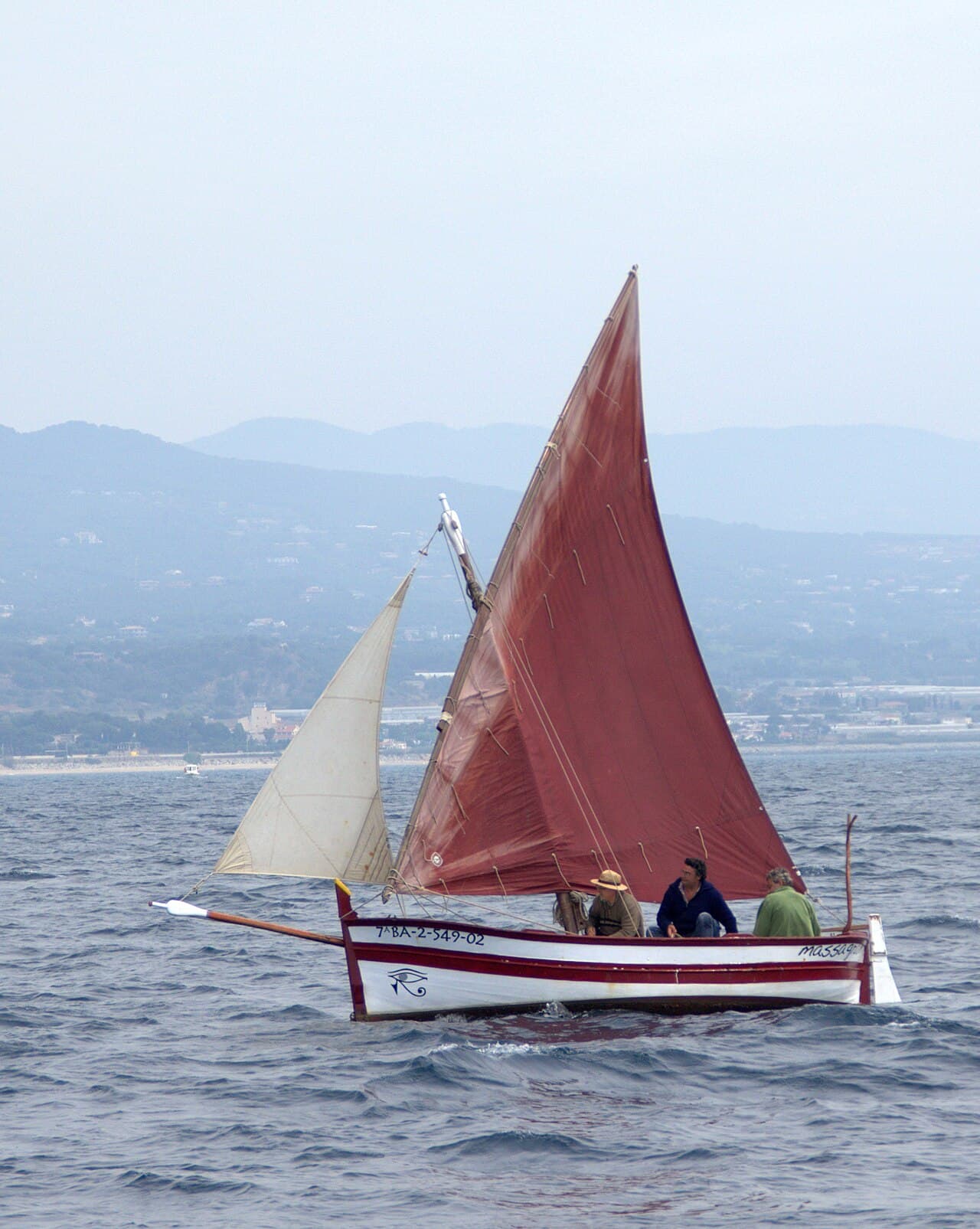
Massagran, a lateen-rigged llaüt, viewed from port. A representative boat; not Far de Formentera and not a claimed Cadaqués-based vessel.
Lgz01 / Wikimedia Commons · CC BY-SA 3.0 · Image shown uncropped.
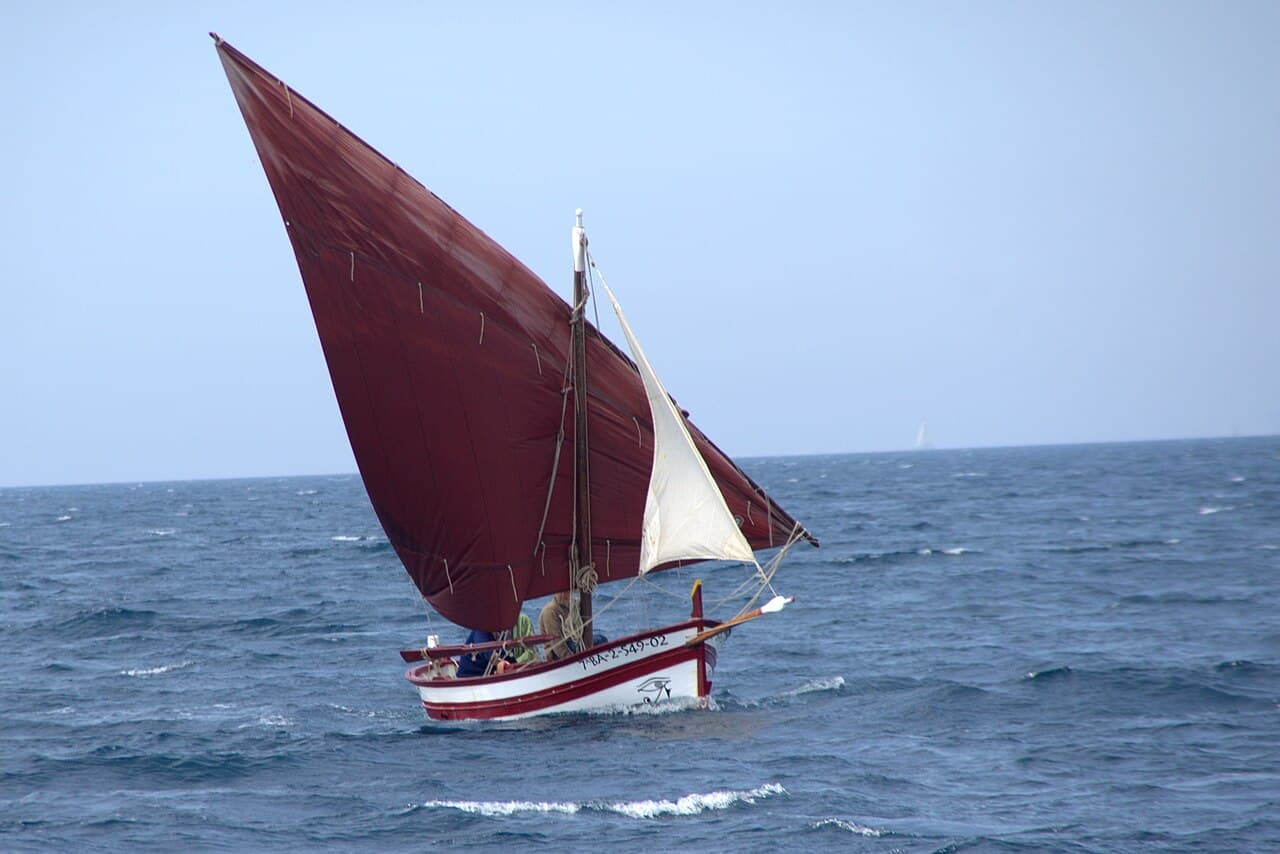
The bow of Massagran: a second view of the same documented boat.
Lgz01 / Wikimedia Commons · CC BY-SA 3.0 · Image shown uncropped.
Histoire documentée
First distinguish the boat from its sail
Vela llatina names the lateen sailing tradition; llagut names a family of boats. The Museu Marítim de Barcelona describes llaguts as traditional western Mediterranean craft whose shapes and sizes adapted to fishing methods, coastal carrying and local conditions. Those distinctions matter. A lateen sail does not, by itself, establish that a boat is a Catalan fishing llagut, and boats from different coasts need not have identical hulls.
Sources : [1]
Evidence in the museum archive
A photograph in the Barcelona museum’s collection records a small lateen-rigged fishing llagut under way in the port in 1905. Catalogued as 2565F and attributed to Joan Vidal i Ventosa, it offers a dated reference for a working tradition. The museum’s record is used here as historical evidence; its photograph is not reproduced in this dossier. The colour photographs instead show the boat Massagran as an example of the broader tradition.
Sources : [2]
A living classroom
The museum’s account of Far de Formentera follows a boat built in Palma in 1922 through fishing, lighthouse supply work and restoration to sailing use. A separate museum educational account describes its place in the floating collection from 2016. It provides a useful individual comparison: a preserved boat can carry several phases of working history rather than represent an unchanging, idealised past.
Notre lecture · Interprétation éditoriale
Lire le navire et son contexte
Begin with the relationship between rig, hull and shore. Looking closely at the long yard and the boat beneath it is more revealing than treating the sail as a Mediterranean emblem. The regional story also invites comparison across coasts without erasing differences between them. In this series, a named boat remains a named boat: Massagran in the pictures and Far de Formentera in the museum account have separate identities. Neither should be assigned to Cadaqués merely because that harbour makes a compelling companion to the subject.
Visiter et découvrir · Recommandation éditoriale
Suivre le récit
Consult the museum’s current floating-heritage and education programme before planning an activity. Our Cadaqués dossier offers a related coastal setting, not a confirmed berth or operating base for either boat mentioned here.
Museu Marítim de Barcelona ↗