Regional ship type · Lemmer & the former Zuiderzee
Lemsteraak
From the northern Zuiderzee fishery to a diverse sailing tradition
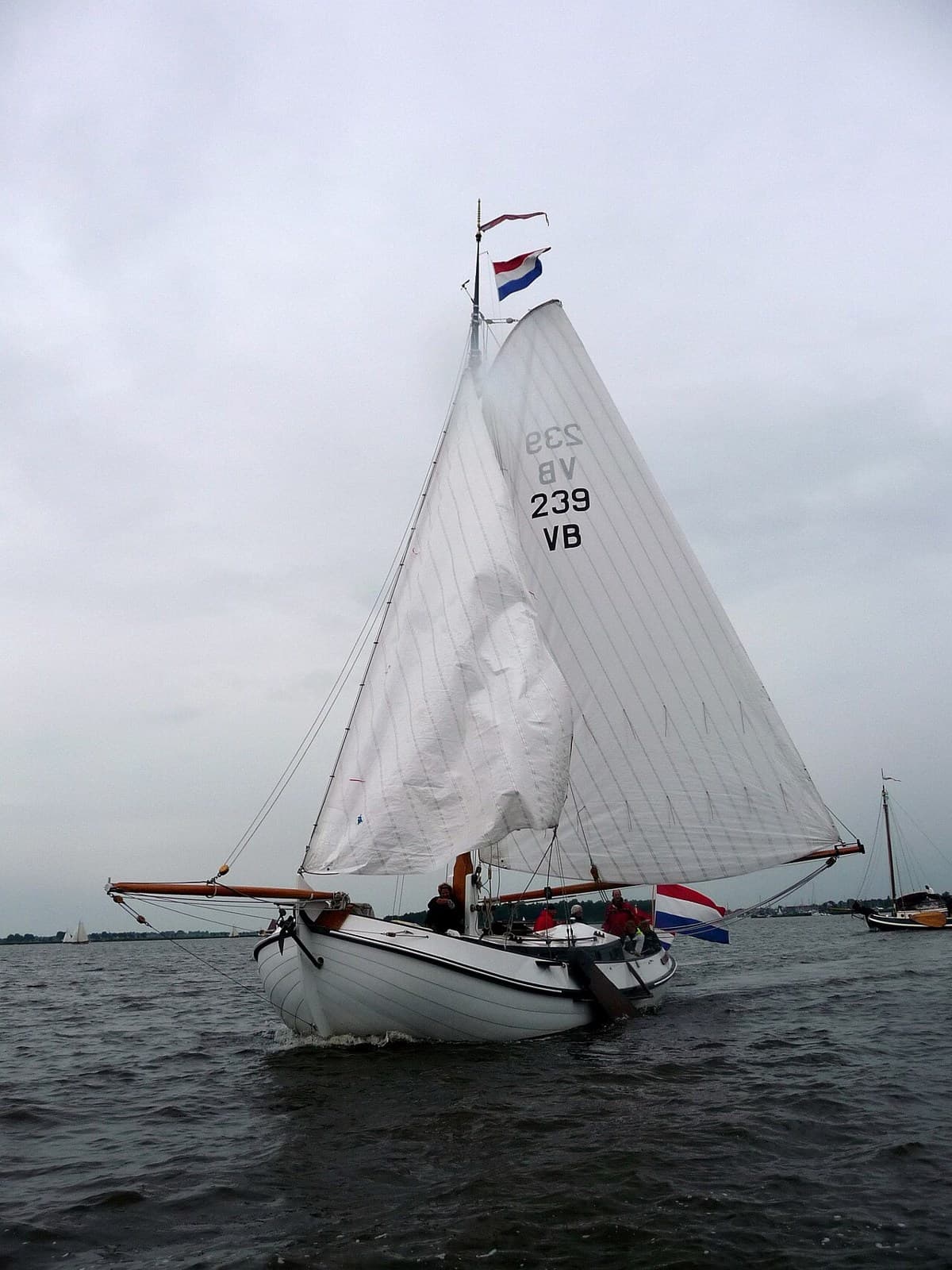
Guillaume d’Orange (VB239), an individual lemsteraak, at the VSRP reunion in 2010.
Merlijn 'valhallasw' van Deen / Wikimedia Commons · CC BY-SA 3.0 · Image shown uncropped.
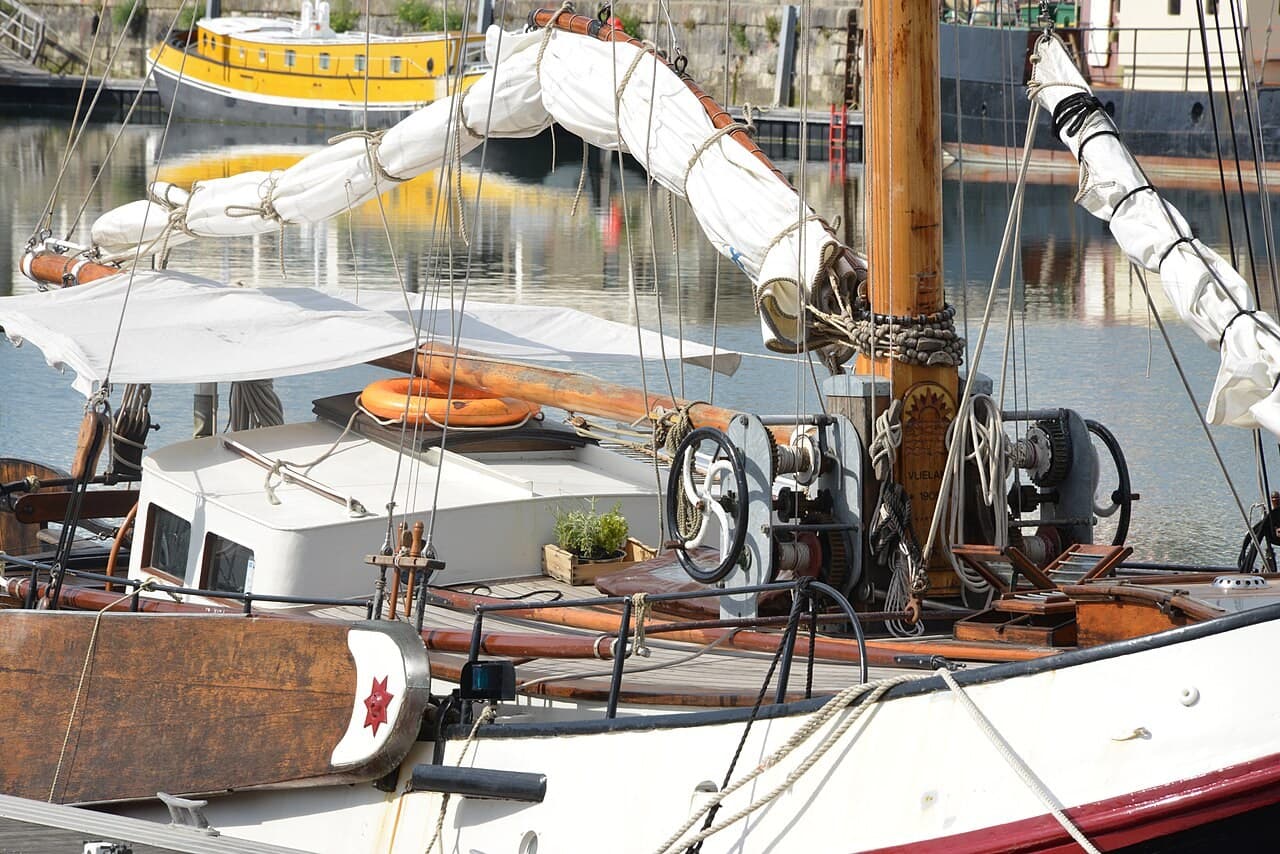
Vlieland: a second named example illustrating the lemsteraak family.
Jean-Pierre Bazard Jpbazard / Wikimedia Commons · CC BY 4.0 · Image shown uncropped.
Gedocumenteerde geschiedenis
A vessel for a particular fishery
The SSRP traces the lemsteraak's development in the second half of the nineteenth century from Frisian fishing craft towards a boat for the northern Zuiderzee. Its account locates those waters between Lemmer and Den Helder. This makes the name a point of entry into a working region. It should not be treated as a universal label for every rounded Dutch sailing yacht encountered today.
Bronnen: [1]
Reading volume and construction
The registry describes a rounded hull with a curved stem, rising foredeck and more volume forward than aft. Early fishing arrangements could include a covered forepart and a well for keeping fish. After 1900, steel became a usual construction material. These are characteristics of a developing family, not a reason to assign identical dimensions or equipment to every surviving or newly built lemsteraak.
Bronnen: [1]
The path from fisherman to yacht
The SSRP's research on the type explicitly questions the idea of one straightforward line from the Lemmer fishing boat to the modern lemsteraak yacht. Designers, builders and owners made choices for different uses. The distinction helps a visitor ask better questions: is this an ex-fishing hull, a yacht built in the tradition, or a later interpretation? The answers belong to the named vessel and should remain visible.
Bronnen: [2]
Onze lezing · Redactionele duiding
Het schip en zijn omgeving lezen
The rounded bow can be admired as form, but its relationship with working volume is the stronger story. Compare the space forward with the arrangement aft before turning to decorative details. A yacht's carefully finished interior may be a later chapter rather than evidence of a fisherman's accommodation. Keeping those layers distinct makes room for enjoyment and historical accuracy at once. It also shows how a living boat tradition can change without every example having the same claim to age or original fabric.
Bezoek en ontdek · Redactionele aanbeveling
Volg het verhaal
Consult the SSRP's type accounts and named-vessel register before choosing a boat to visit. Confirm sailing opportunities with its actual operator. A regional-type entry does not establish the condition, certification or public availability of any individual craft.
SSRP — Lemsteraak ↗