Individual historic ship · Bygdøy, Oslo
Gjøa
A small Hardanger sloop with an extraordinary polar biography
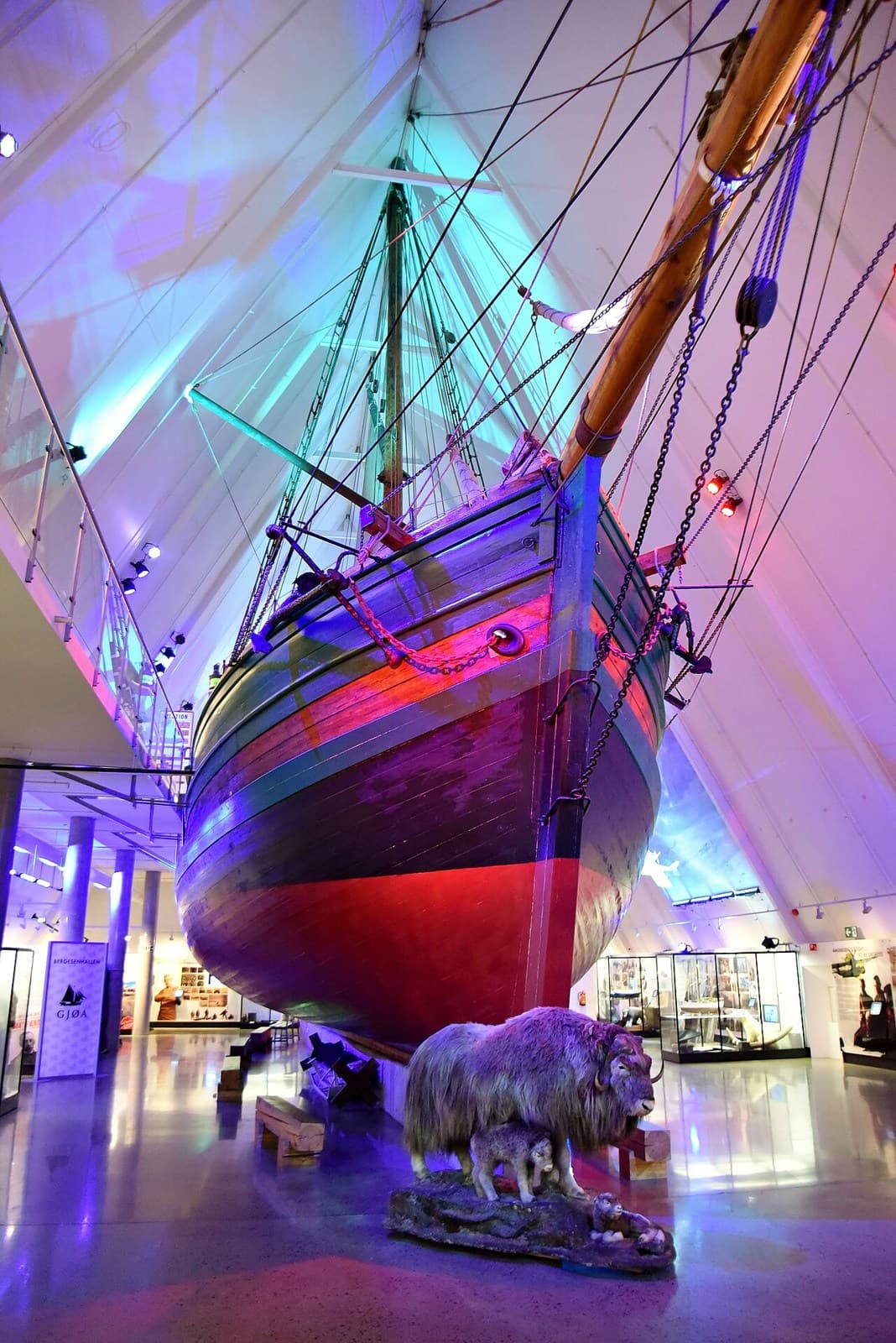
Gjøa in the Fram Museum in 2019: the surviving expedition vessel in its protected setting.
Bahnfrend / Wikimedia Commons · CC BY-SA 4.0 · Image shown uncropped.
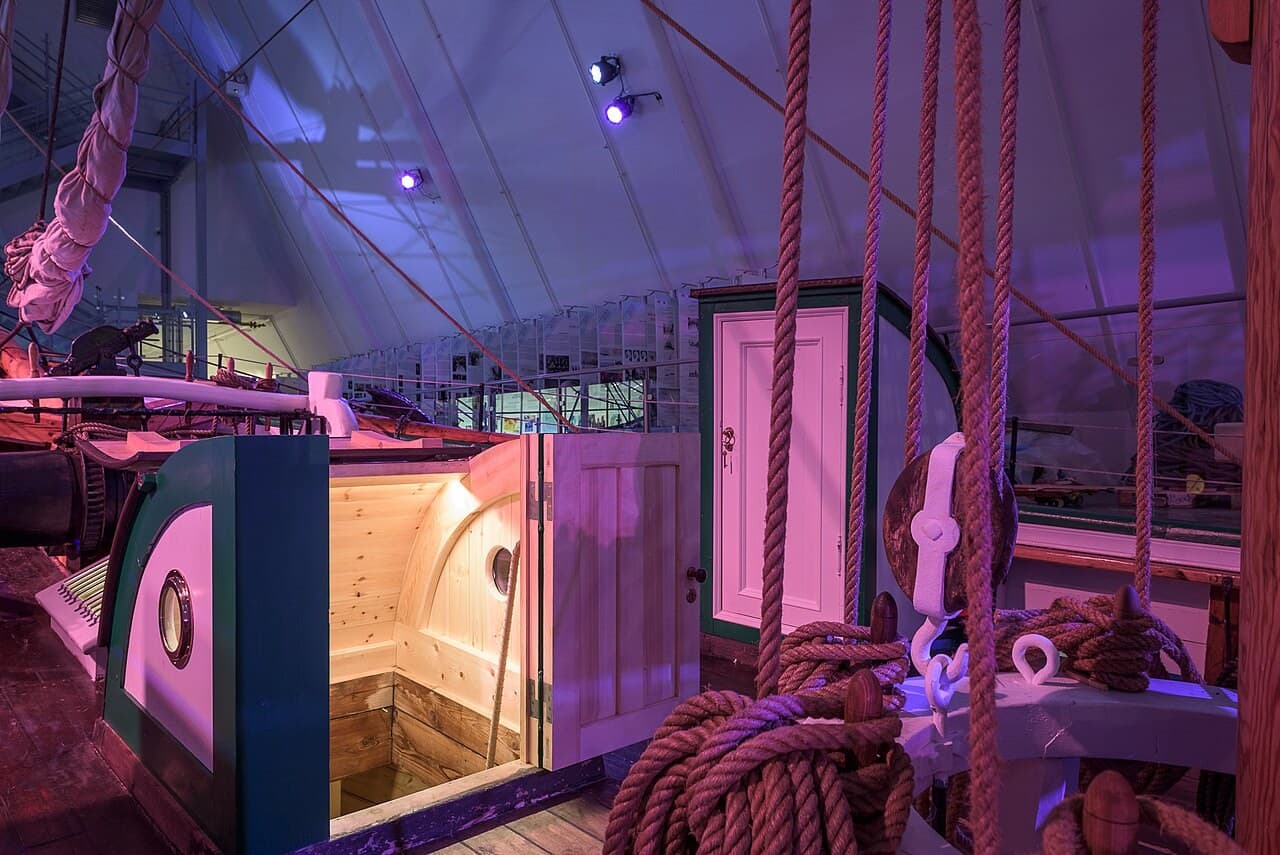
Deck and accommodation detail aboard Gjøa, photographed in the museum.
Tore Storm Halvorsen / Wikimedia Commons · CC BY-SA 4.0 · Image shown uncropped.
Gedocumenteerde geschiedenis
Before the celebrated voyage
The Fram Museum records Gjøa as built in 1872 at Knut Johannesson Skaala's yard in Rosendal, Hardanger, for Asbjørn Sexe. Its account even follows the origins of timber and spars within the surrounding region. This local beginning matters. The vessel was not created as a monumental expression of polar exploration; its later fame grew from the adaptation and use of an already existing small ship.
Bronnen: [1]
An expedition with a particular crew
The museum identifies Gjøa as the first ship to complete the entire Northwest Passage, accomplished by Roald Amundsen and six companions in 1903–1906. Its expedition history records time spent at Gjoa Haven and scientific work, alongside learning from Inuit knowledge and practice. The voyage therefore belongs to a broader human and geographical context than the outline of a route on a map.
From outdoor monument to shelter
After years of display in San Francisco and later return to Norway, Gjøa came under the Fram Museum's care. The museum's exhibition account explains the problems of exposure and the case for a protective building, opened in 2013. Shelter changes the visitor's experience, but it also addresses the material vulnerability of the vessel. The museum setting is part of the ship's continuing conservation history.
Bronnen: [3]
Onze lezing · Redactionele duiding
Het schip en zijn omgeving lezen
The scale is the starting point. Set the small working vessel against the extent of the voyage, then consider the practical spaces occupied by a handful of people. The comparison can reveal more than a heroic portrait alone. The later movement from public monument to protected museum object asks another question: what happens to an expedition ship once its journey has ended? Gjøa makes the work of sheltering and maintaining a famous object as tangible as the story that made it famous.
Bezoek en ontdek · Redactionele aanbeveling
Volg het verhaal
Use the Fram Museum's current programme for Gjøa and the related polar collections. Check interior access and accessibility directly. The expedition account is historical interpretation, not a route-planning resource or a suggestion that a comparable small vessel would be suitable for polar travel.
Fram Museum — The polar ship Gjøa ↗