Regional ship type · Galway Bay & Connemara
Galway Hooker
A west-coast boat connecting cargo, community and sail
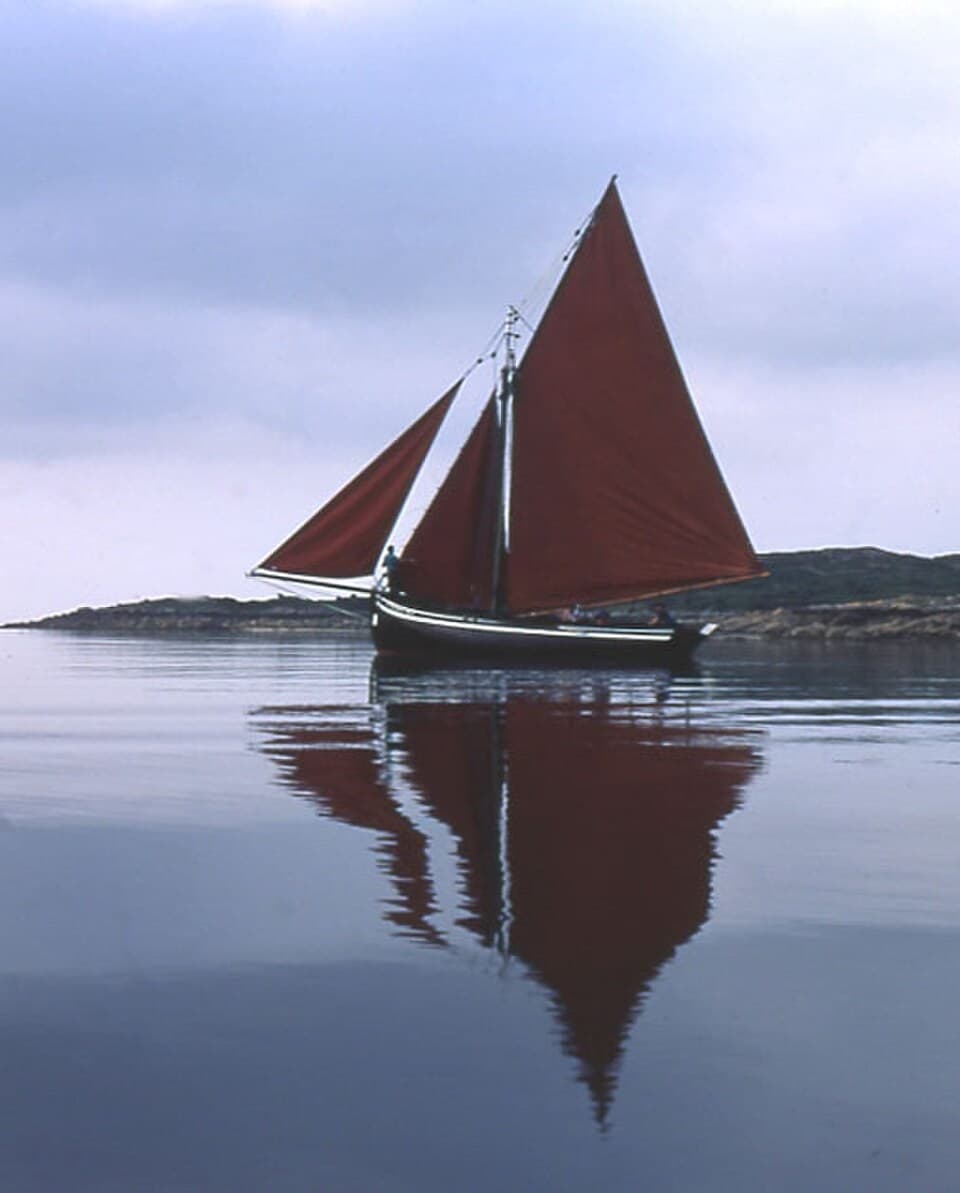
A Galway hooker under sail in July 1999, photographed by Anne Burgess; the file is an improved derivative of her original photograph.
Anne Burgess / Wikimedia Commons · CC BY-SA 2.0 · Image shown uncropped.
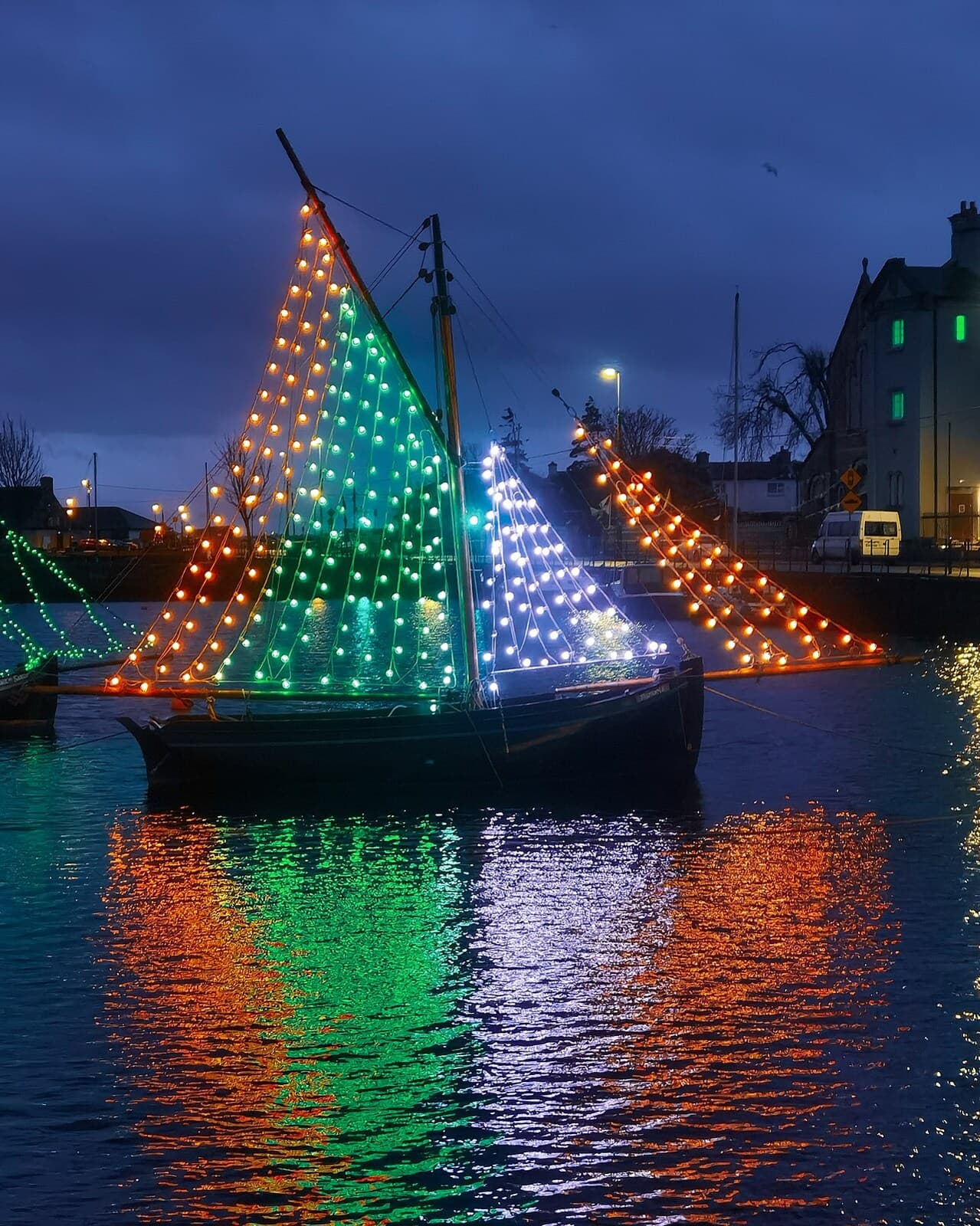
Galway hooker boats illuminated for a night-time gathering.
Michael Deligan / Wikimedia Commons · CC BY-SA 4.0 · Image shown uncropped.
Dokumentierte Geschichte
A boat identified with the west coast
Galway City Museum presents the hooker as a distinctive tradition of Ireland's west coast. Its exhibition brings together objects, film, images and text to connect the history with the living boat culture. That approach is important: the subject is more than a recognisable rig. The regional type includes named boats, builders and local knowledge whose individual histories need to be distinguished rather than condensed into one romantic vessel.
Quellen: [1]
Cargo between coastal settlements
Fáilte Ireland's Connemara interpretation material describes hookers carrying goods from Galway to village shops, peat to the Aran Islands and seaweed associated with kelp production, as well as fishing. The water joined settlements and resources in a working network. This gives the hull a geographical role. Its history cannot be understood only by looking at the sail or by treating all coastal traffic as the same activity.
Quellen: [2]
A tradition with a shore-based memory
The museum links its account with boatbuilding around Galway and the Spanish Arch, including the work of Richard Reney. Shore-based evidence helps explain how boats were made and maintained, not just how they appeared under way. The exhibition's combination of historical objects and living practice also gives a useful model for a type dossier: a boat family has a collective story, while every surviving or newly built example has a separate biography.
Quellen: [1]
Unsere Lesart · Redaktionelle Einordnung
Das Schiff und sein Umfeld lesen
Imagine the shoreline as a chain of destinations rather than a scenic boundary. A cargo boat makes islands, shops, fuel and markets part of the same landscape. Then return to a particular hull and ask which of those tasks its documented life actually included. The hooker's visual strength can invite easy generalisations; careful local interpretation gives the image substance. Listening to a builder or crew explain a working detail can be more revealing than collecting another photograph of sails across the bay.
Besuchen und entdecken · Redaktionelle Empfehlung
Der Geschichte folgen
Begin at Galway City Museum and consult current local organisers for regattas or sailing opportunities. Verify the named boat and its operator before booking. This dossier does not imply that a photographed hooker is available for hire or permanently based at one particular quay.
Galway City Museum — The Galway Hooker ↗