Individual historic ship · Dunkirk
Duchesse Anne
A German-built training ship preserved within Dunkirk’s port history
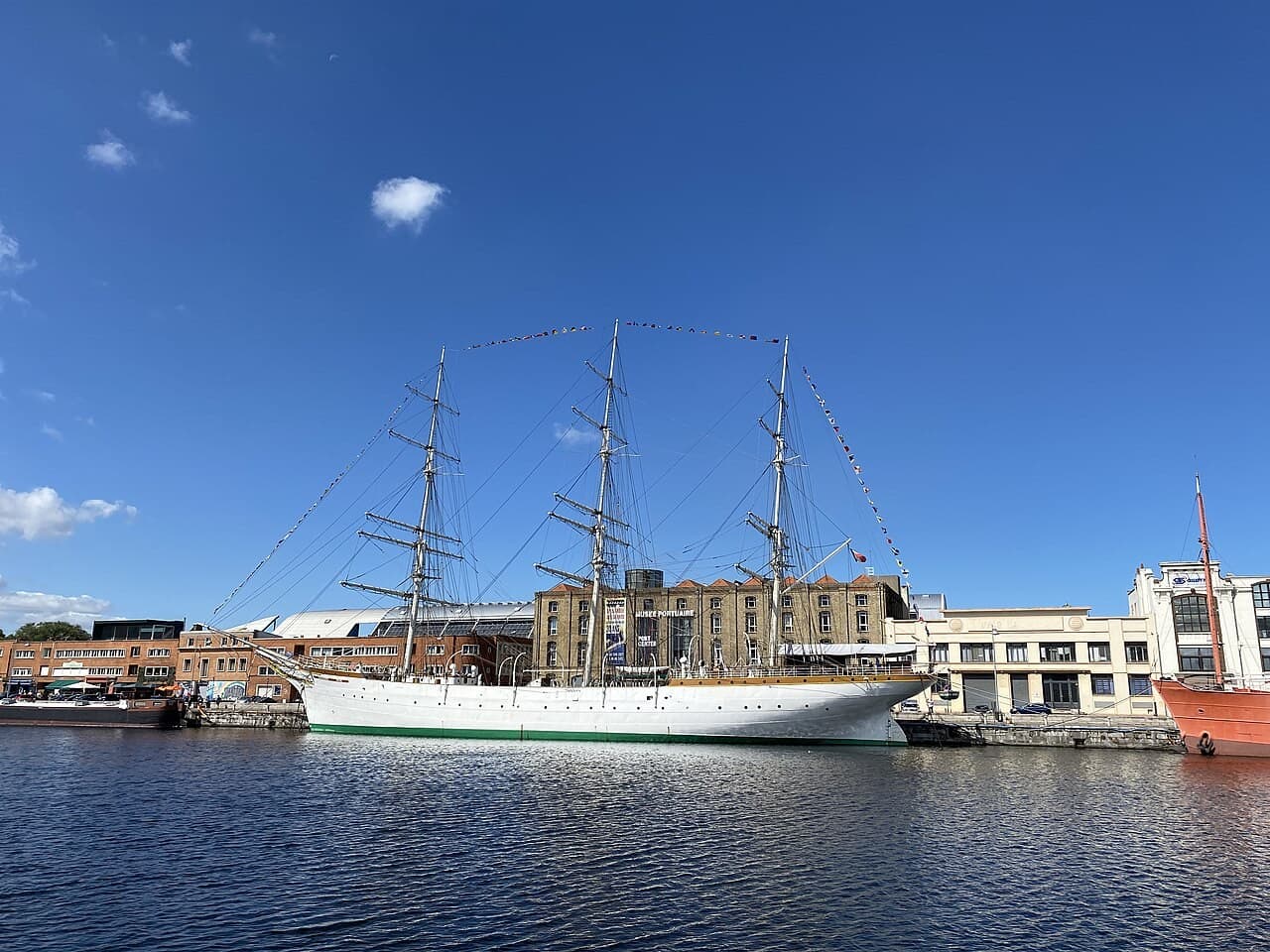
Duchesse Anne at Dunkirk in 2022: the former German training ship in its French museum setting.
NiTenIchiRyu / Wikimedia Commons · CC BY-SA 4.0 · Image shown uncropped.
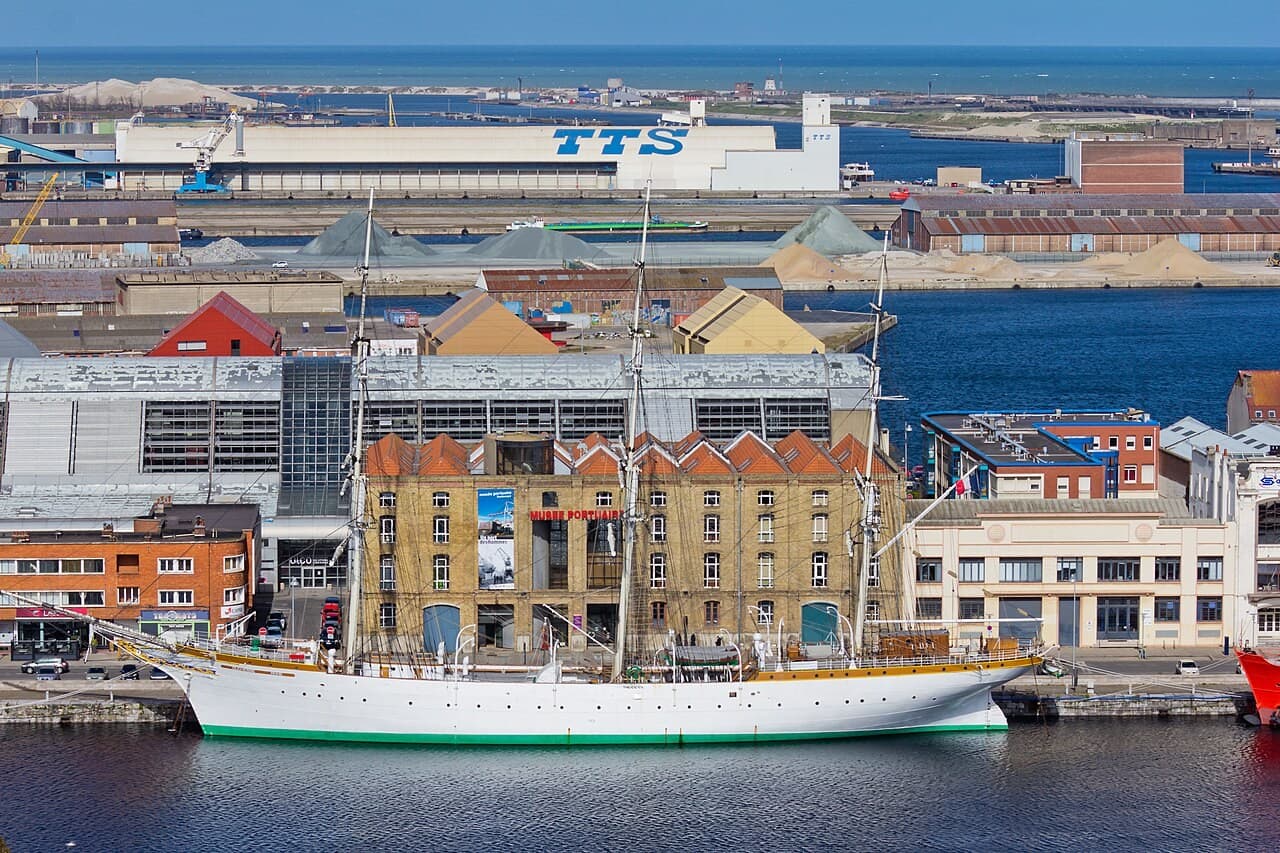
A second view of Duchesse Anne within Dunkirk’s port landscape.
Raimond Spekking / Wikimedia Commons · CC BY-SA 4.0 · Image shown uncropped.
Histoire documentée
A merchant-training origin
Dunkirk's Maritime and Port Museum identifies the ship as built at Bremerhaven in 1901 for German merchant-navy training. The original name, Grossherzogin Elisabeth, belongs to that context. Beginning with this identity prevents the later French name from suggesting a French origin. Training ships connect education with a maritime economy: the rig and spaces aboard supported the formation of working seafarers, rather than existing only for ceremonial appearance.
Sources : [1]
A transfer after war
Patrimoine Maritime et Fluvial records transfer to France in 1946 as war reparations and renaming as Duchesse Anne. Later use as accommodation at Lorient and Brest formed another distinct period. These changes place the vessel within political and institutional history as well as sailing history. The surviving hull therefore carries a transnational biography that cannot be understood through its current port alone or reduced to a single national tradition.
Sources : [2]
Restoration in a port setting
The Dunkirk museum describes a long restoration followed by public presentation in 2001. That account adds the work of preservation to the earlier training and accommodation roles. The port museum setting is particularly useful because it can relate a large sailing vessel to the changing functions of a harbour. Access and continuing conservation are present-day responsibilities, and older accounts of opening should not be mistaken for today's visitor arrangements.
Sources : [1]
Notre lecture · Interprétation éditoriale
Lire le navire et son contexte
Read the changes of name as historical evidence rather than as inconvenient detail. They mark different institutions, expectations and political circumstances around the same ship. Then consider what training at sea required: repeated work, shared accommodation and the organisation of a large rig. The preserved vessel offers a material route into those subjects. Dunkirk provides the setting for the current chapter, while Bremerhaven, Lorient and Brest remain necessary places in the story rather than footnotes to a photogenic waterfront.
Visiter et découvrir · Recommandation éditoriale
Suivre le récit
Consult Dunkirk's Maritime and Port Museum before travelling to confirm the vessel's current accessibility and any restoration restrictions. Check which ship a ticket or guided visit includes. The museum also cares for other vessels; photographs and visitor arrangements should not be transferred between them.
Musée maritime et portuaire de Dunkerque — Duchesse Anne ↗