Regional ship type · Zuiderzee coast
Botter
Fishing, family labour and the changing Zuiderzee
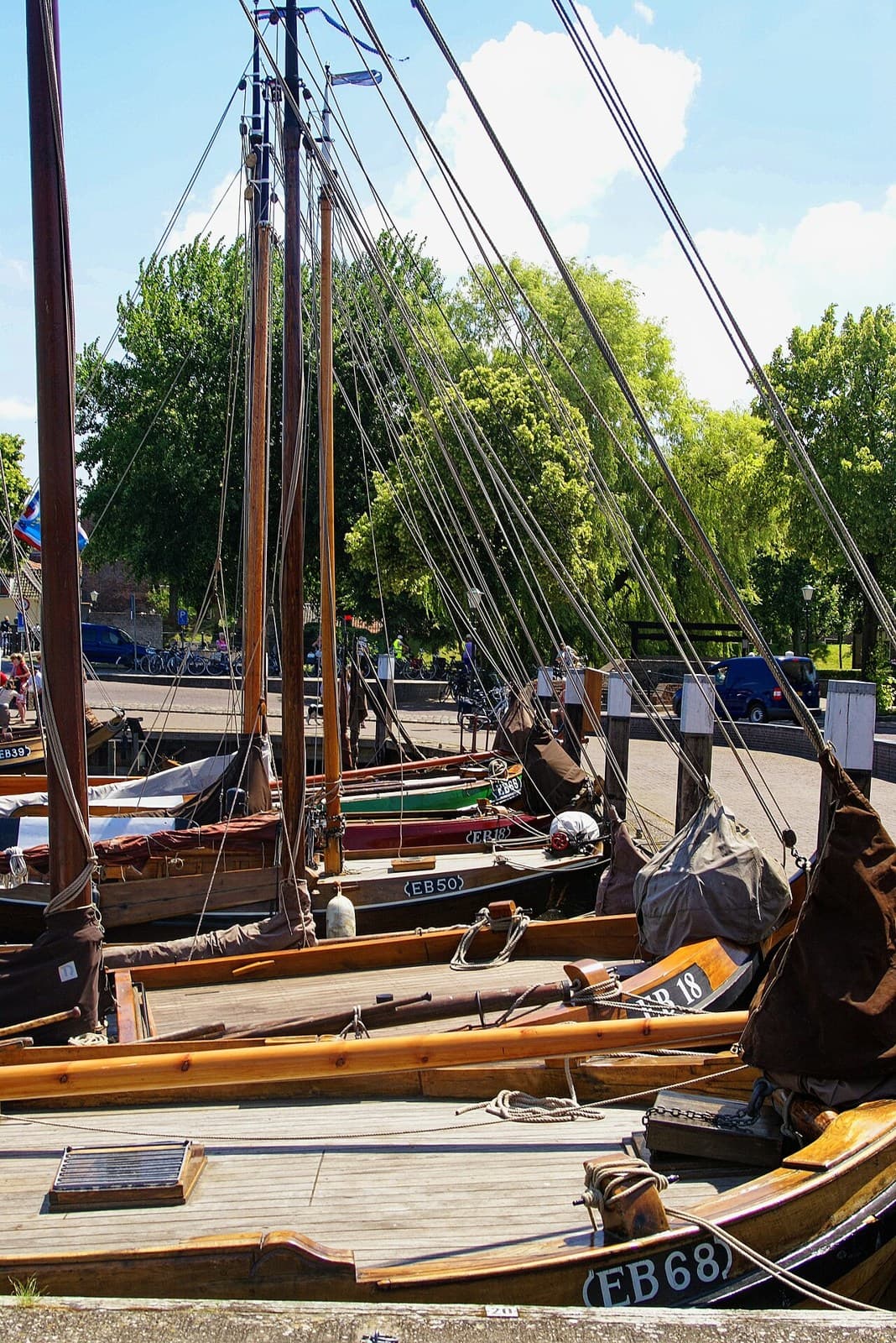
Botters along the Havenkade at Elburg: a harbour setting for the former Zuiderzee fishing fleet.
Txllxt TxllxT / Wikimedia Commons · CC BY-SA 4.0 · Image shown uncropped.
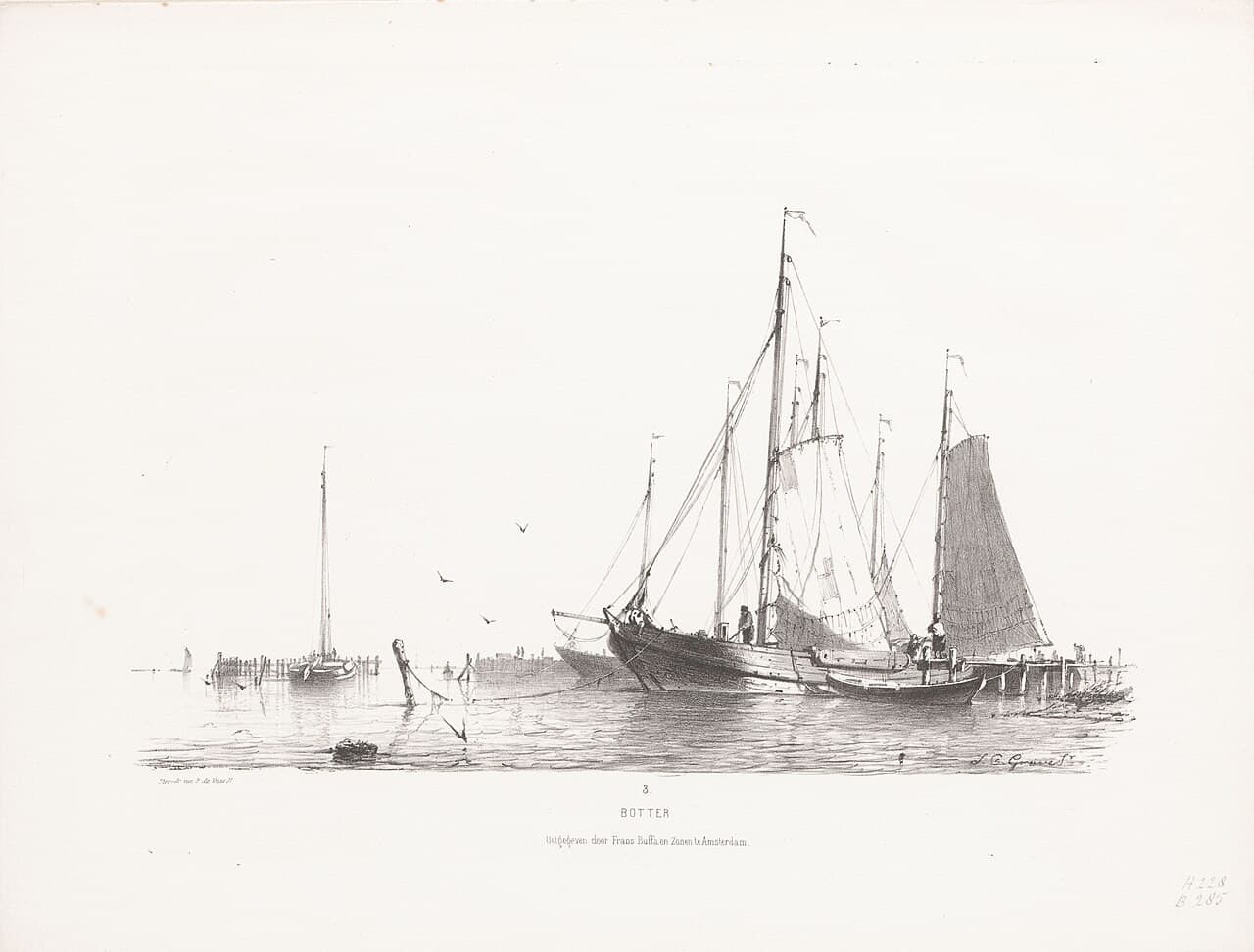
Botter, an archival print in the Rijksmuseum collection, object RP-P-1891-A-16634.
Rijksmuseum / Wikimedia Commons · CC0 · Image shown uncropped.
Documented history
A fishing coast in one hull
The botter is a characteristic working vessel of the former Zuiderzee. Its story belongs to fishing communities rather than to a single designer or launch date. The SSRP places botters in a distinct family among Dutch round and flat-bottomed craft. That classification is useful when comparing boats in a historic harbour: a shared brown sail does not make every Dutch fishing vessel a botter.
Sources: [2]
Keeping more than a silhouette
Vereniging Botterbehoud was founded in 1968 to preserve surviving vessels and the techniques needed to care for them. Its own account, published for SAIL, describes restoring boats towards their original state and communicating the history of the former Zuiderzee fleet. This connects a preserved hull with work, skills and documentation. Conservation is an ongoing activity, not a quality that a boat gains simply by looking old.
Sources: [1]
A harbour as an archive
The association's fiftieth anniversary was marked in 2018 with a major gathering at the Zuiderzee Museum in Enkhuizen. That setting matters: boats, buildings and collections can be read together. A type dossier introduces this network of relationships; the history of any named vessel still requires separate evidence for its builder, ownership, conversion and repairs. The photographs here illustrate the type and should not transfer one boat's biography to another.
Sources: [1]
Our reading · Editorial interpretation
Reading the ship and its setting
Begin at the working edge of the boat. Look for the relationship between open space, the sheltered part of the hull and equipment used to handle the catch. Then turn towards the quay and consider how a fishing harbour organised labour ashore. This is a more useful introduction than a list of picturesque features. Asking who replaces a damaged timber, and how its shape is established, brings the surviving vessel into the present rather than leaving it in an imagined golden age.
Visit & explore · Editorial recommendation
Follow the story
Use the preservation association and the SSRP registry to identify particular boats. Check public access with the relevant harbour or operator; many historic vessels remain privately owned. Our Enkhuizen harbour dossier offers a related setting, not a guaranteed berth for an illustrated boat.
Vereniging Botterbehoud — SAIL heritage account ↗