Bay & coastal landscape · Dugi Otok
Sakarun Bay
A Dugi Otok bay whose pale shore carries evidence of life beneath the water
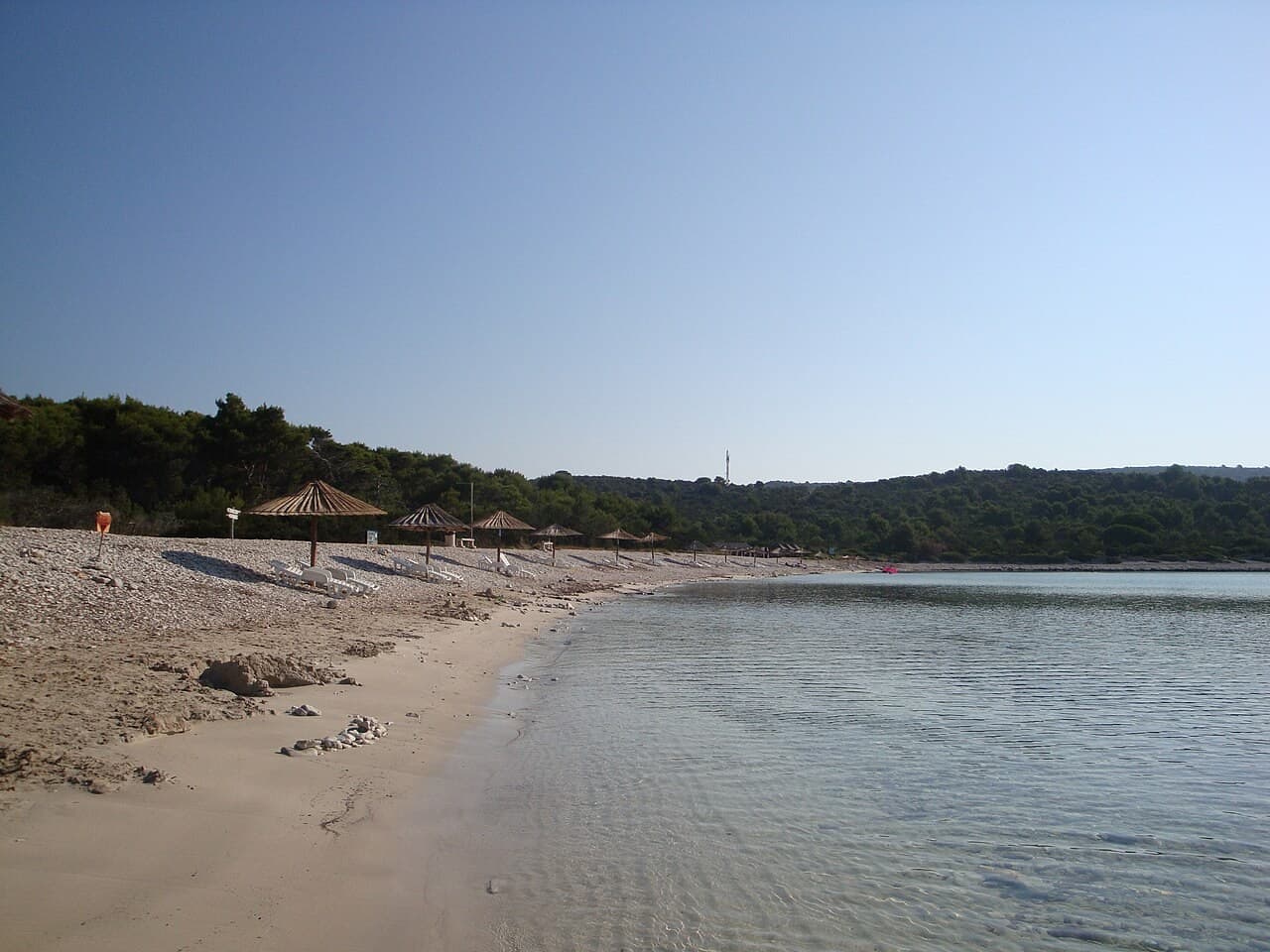
The sandy shore and calm-looking water of Sakarun on Dugi Otok; a photograph does not establish current conditions.
Mich973 / Wikimedia Commons · CC BY-SA 4.0 · Image shown uncropped.
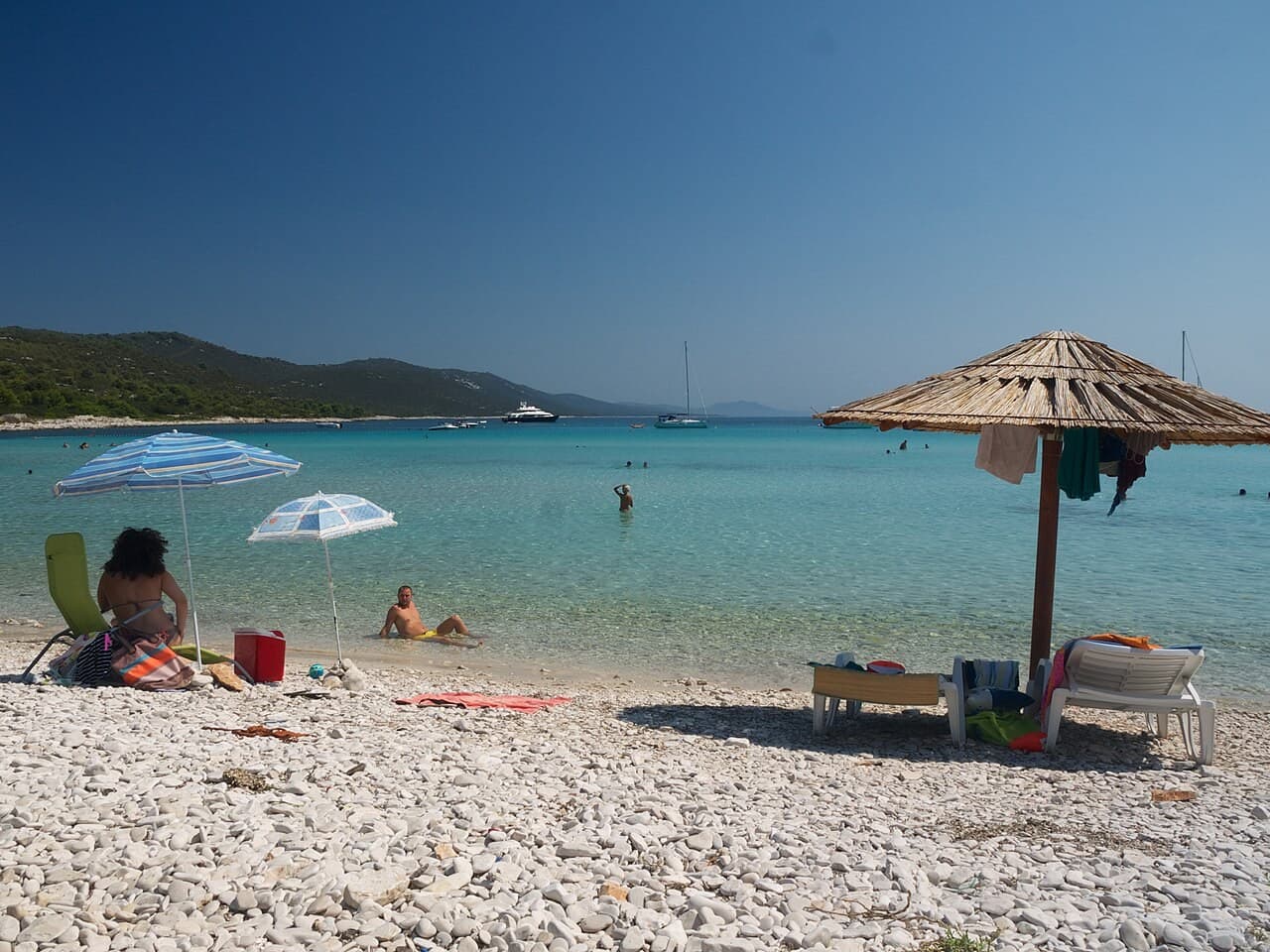
A second shore-level view of Sakarun’s bay.
Laurent de Walick from The Hague, The Netherlands / Wikimedia Commons · CC BY 2.0 · Image shown uncropped.
Documented place & history
An island bay with a local identity
Dugi Otok's official tourism account identifies Sakarun as one of the island's distinctive bays. Its setting belongs to the wider Dalmatian island coast rather than to an isolated resort image. The public description provides a starting point for orientation, while current local information is needed to understand access and activities. The appearance of calm pale water in a photograph cannot establish conditions or permissions for a particular visit.
Sources: [1]
The material of the shore
Natura Jadera's published action-framework report examines the organisms and natural material associated with Sakarun's sand, connecting much of that community with Posidonia seagrass meadows. This gives the beach an ecological story beneath the colour of its water. Seagrass-related material should not automatically be read as dirt or neglect. The shore is part of a living coastal system, and its appearance can change without losing its natural significance.
Sources: [2]
Our reading · Editorial interpretation
Reading the coast and its setting
Look closely at the edge between water and sand rather than treating the whole bay as a single block of colour. Small differences can reveal the movement of natural material and the relationship with life offshore. Sakarun becomes a more interesting place when its beauty includes those details. A carefully managed shore need not resemble a cleaned photographic studio, and the traces of a living sea can be part of what makes the encounter worthwhile.
Visit & explore · Editorial recommendation
Follow the story
Use the island's current visitor information and any notices from the responsible nature institution before planning activities. Stay on designated access routes and leave natural material where it belongs. For a shore visit, allow time to observe the bay at close range as well as from a viewpoint; avoid treating a seasonal photograph as a fixed promise of beach appearance.
Natura Jadera — Action Framework Plan ↗