Historic harbour & citadel port · Southern Dalmatia
Dubrovnik Old Port
A compact harbour opening onto the history of an Adriatic sea power
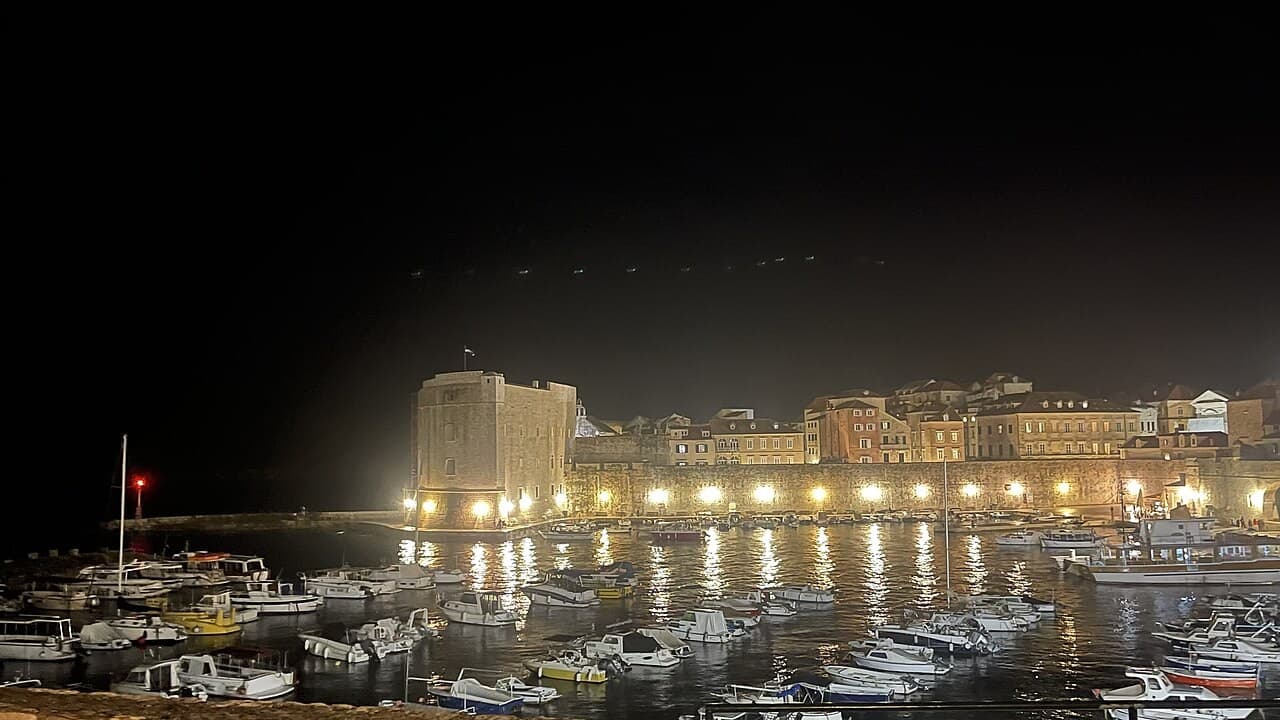
Dubrovnik’s Old Port at night, with the historic waterfront illuminated.
Emperor12345PL / Wikimedia Commons · CC BY-SA 4.0 · Image shown uncropped.

The Old Port and its enclosing structures in a wide panorama.
Soska / Wikimedia Commons · CC BY-SA 3.0 · Image shown uncropped.
Gedocumenteerde plaats en geschiedenis
A city shaped by maritime reach
UNESCO identifies Dubrovnik as a major Mediterranean maritime power from the thirteenth century. The Old City retains a combination of Gothic, Renaissance and Baroque buildings. Its port should be read as an opening within that urban system, rather than as a picturesque basin isolated from the streets behind it. Maritime connections helped make the city significant; the surviving architecture provides evidence of the institutions and wealth associated with that wider history.
Bronnen: [1]
Destruction and the work of continuity
UNESCO records severe damage in the earthquake of 1667 and further destruction during armed conflict in the 1990s. Restoration is consequently part of the city's modern history. A visitor looking across the Old Port sees a place whose continuity has required intervention, not simply a fabric preserved without interruption. The distinction makes the view more informative: walls, buildings and waterfront spaces also carry decisions about recovery and public memory.
Bronnen: [1]
Onze lezing · Redactionele duiding
De kust en haar omgeving lezen
Let the harbour be a threshold. Move from the open view of boats and walls into the more enclosed streets, then return to the water with a clearer sense of the city behind you. This creates a different encounter from collecting a single panorama. It allows the port to introduce exchange, political organisation and the difficult work of repair, while leaving room for the ordinary rhythms of a town used by residents as well as visitors.
Bezoek en ontdek · Redactionele aanbeveling
Volg het verhaal
Use public Old Port walking areas and combine them with a selective Old City route. Confirm wall, museum and excursion access separately through their responsible operators. In busy periods, make space for residents and boarding passengers. Earlier or later visits can offer a more patient reading of the same small waterfront.
UNESCO — Old City of Dubrovnik ↗