Regional ship type · Moray Firth & Scotland’s east coast
Zulu
A Scottish herring boat that combined familiar ideas in a new hull
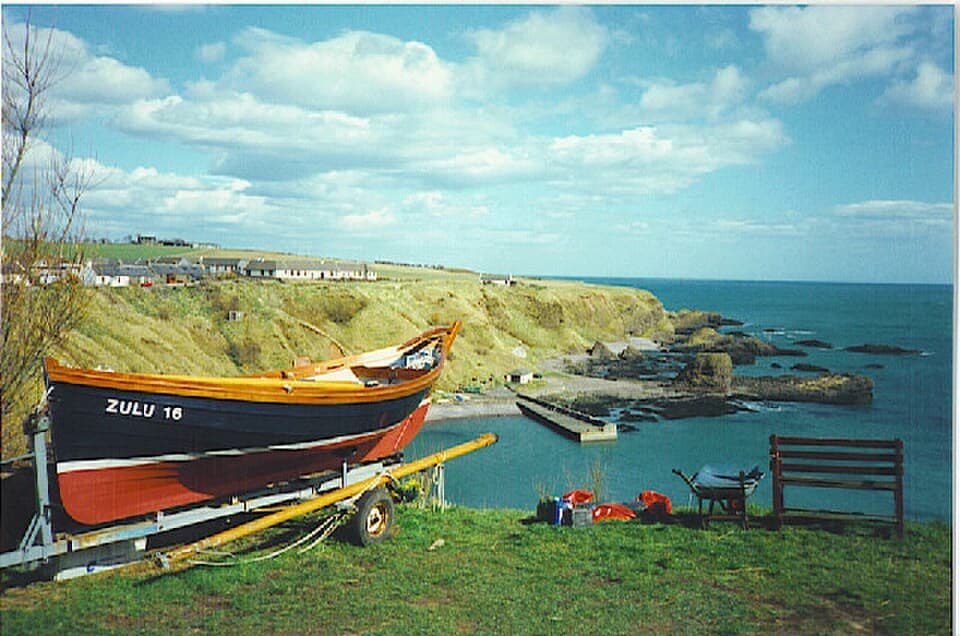
An open boat identified as a Zulu in the photographer’s Catterline file record. This local example is not Research (LK62).
Colin Smith / Wikimedia Commons · CC BY-SA 2.0 · Image shown uncropped.
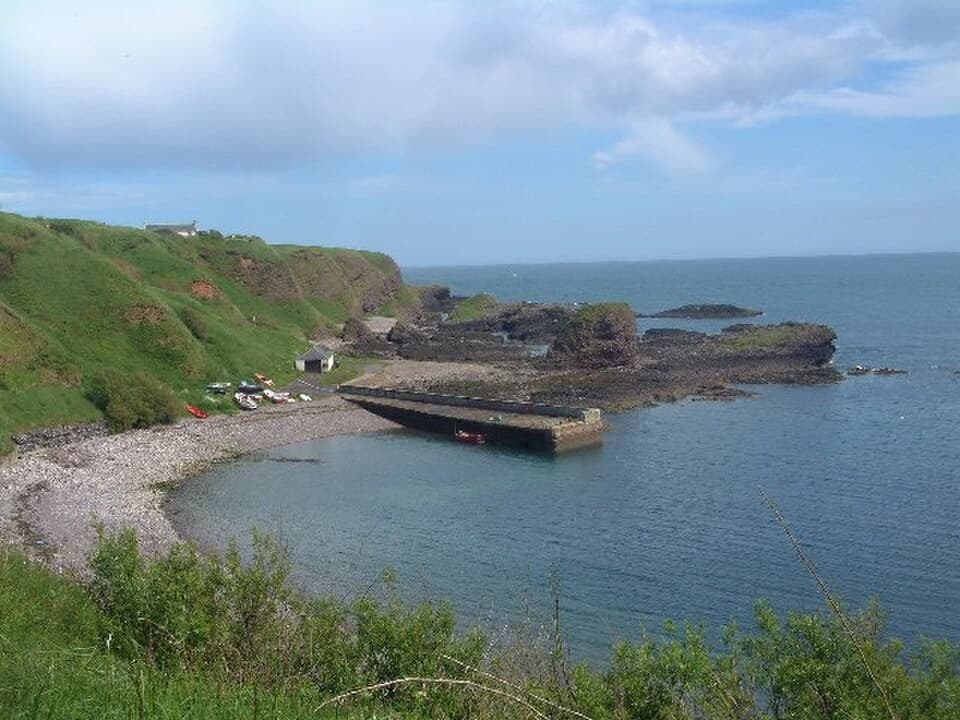
Catterline Harbour: a contextual coastal view. The photograph does not identify every boat as a Zulu.
Bob Jones / Wikimedia Commons · CC BY-SA 2.0 · Image shown uncropped.
Gedocumenteerde geschiedenis
A design named in 1879
The Scottish Fisheries Museum traces the Zulu type to William Campbell of Lossiemouth and his vessel Nonesuch in 1879. Its account describes an attempt to combine features of the Fifie and Scaffie, with a vertical stem and raked stern. The name belongs to the historical context of that year. A type introduction should explain this documentary origin without turning one first boat into a standard specification for all later vessels.
Bronnen: [1]
Growth in sail and handling
The museum's factsheet records subsequent changes, including steam-powered capstans and the adoption of steering wheels. These developments affected how much sail could be managed and accompanied the building of larger boats. The Zulu was therefore a developing working system, not just a distinctive outline. Dimensions, machinery and crew arrangements need to be established for the particular vessel and period being discussed.
Bronnen: [1]
Research as material evidence
The museum's Zulu Gallery centres on Research, built at Banff in 1903 and last used for fishing in Shetland in 1968. Photographs, models, crew testimony and a reconstructed cabin support the account of her working life and preservation. Each kind of evidence has a different role. A reconstruction can make an arrangement intelligible, while a documented surviving component provides another sort of connection with the past.
Bronnen: [2]
Onze lezing · Redactionele duiding
Het schip en zijn omgeving lezen
Set a Zulu beside the Fifie in your mind before looking at the detail. Ask which differences concern fishing work and which belong to later handling technology. That comparison reveals invention within a regional tradition rather than a procession of unrelated picturesque boats. At the museum, move between the hull and the crew's testimony. The relationship between a large working vessel and the people who occupied it gives the subject a human dimension that measurements alone cannot supply.
Bezoek en ontdek · Redactionele aanbeveling
Volg het verhaal
Begin with the Scottish Fisheries Museum's Zulu Gallery and historical factsheets. Check current display and access information before travelling. Images of Research or another named example illustrate the type; they should not be read as a promise that the vessel is operational or available for excursions.
Scottish Fisheries Museum — Boat factsheets ↗