Regional ship type · Northern & central Adriatic
Trabaccolo
An Adriatic working boat read through surviving museum examples
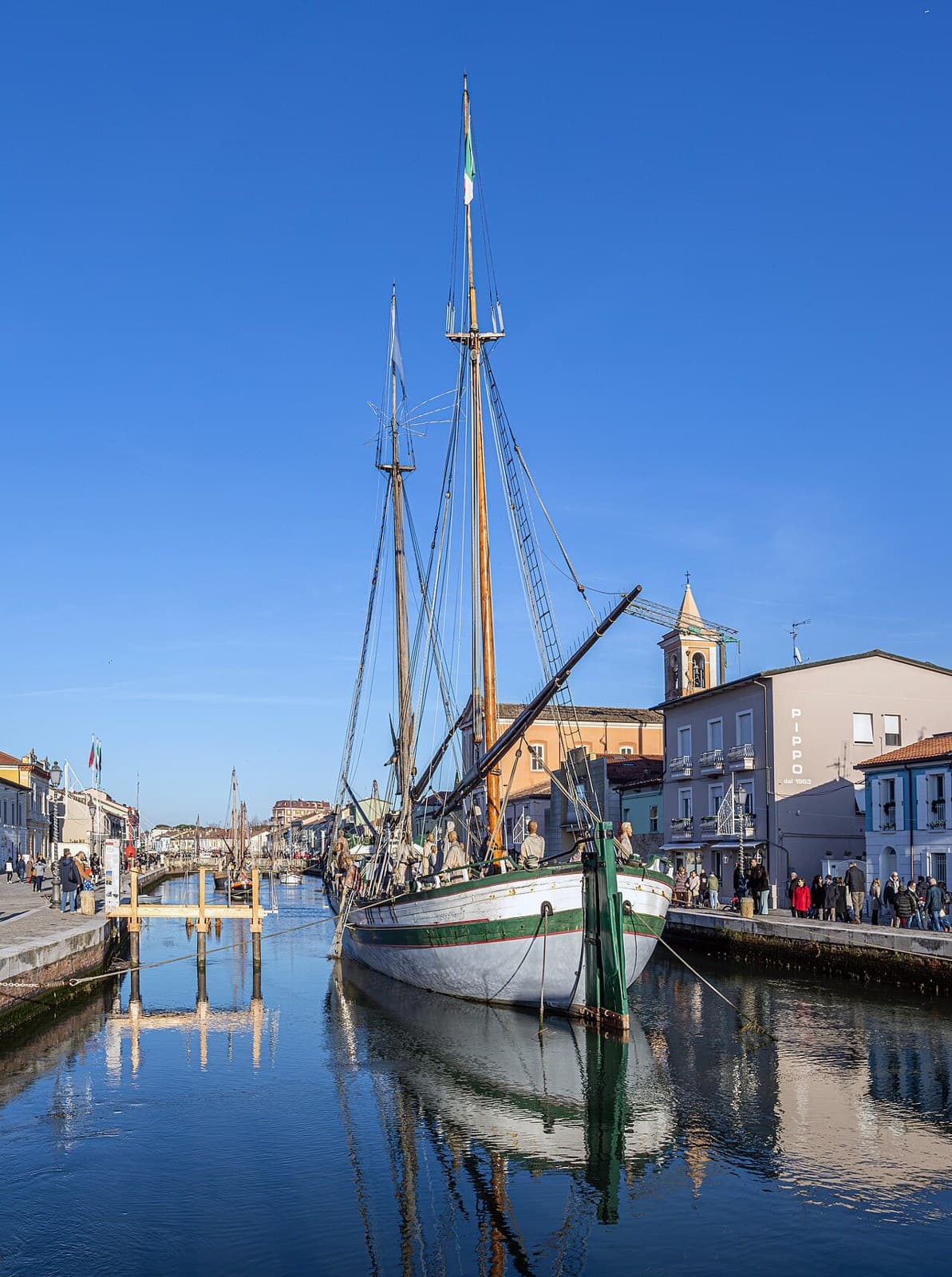
A transport trabaccolo in Cesenatico’s Porto Canale museum setting.
Terragio67 / Wikimedia Commons · CC BY-SA 4.0 · Image shown uncropped.
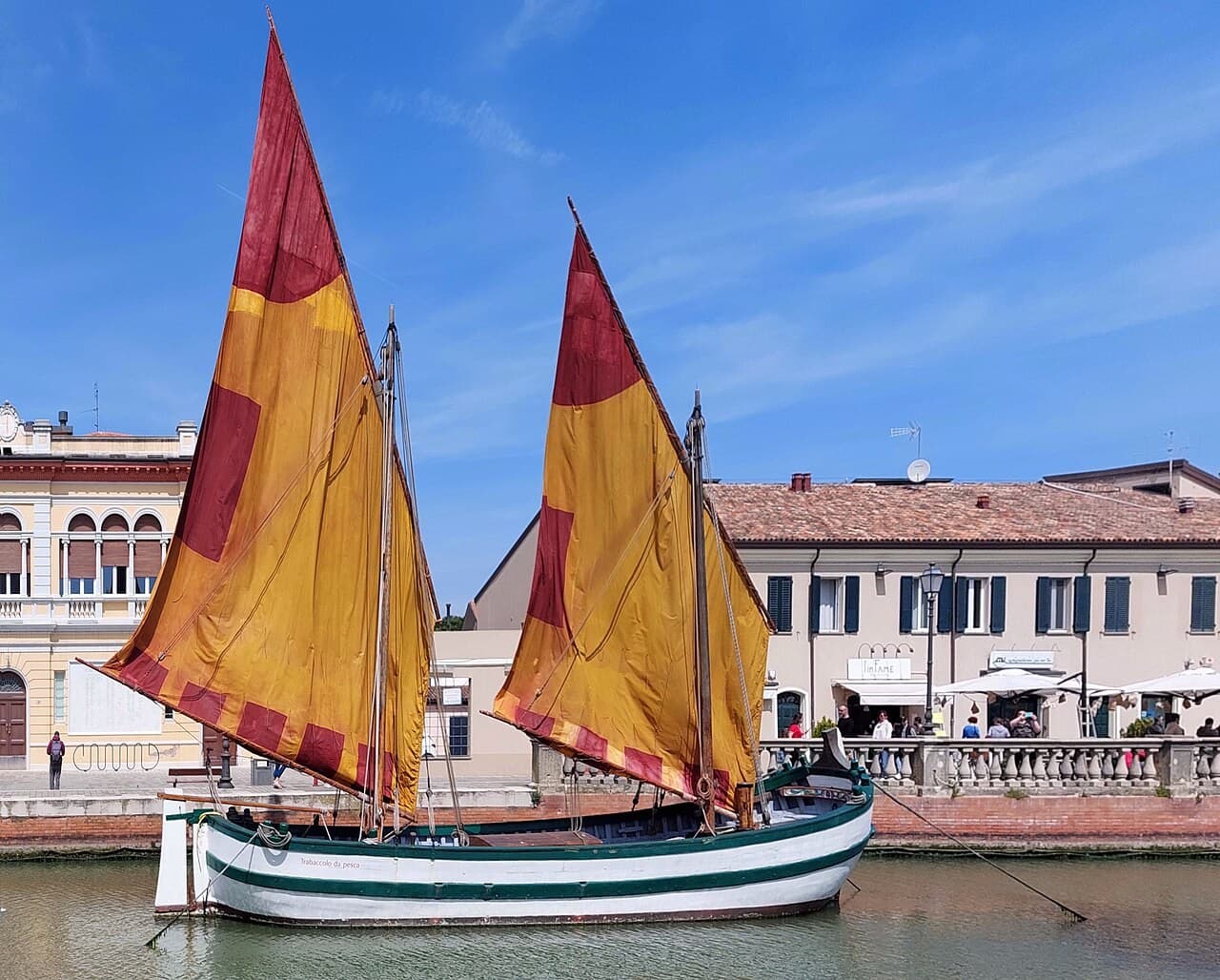
A fishing trabaccolo at Cesenatico: a different working arrangement within the wider Adriatic tradition.
Anna.Massini / Wikimedia Commons · CC BY-SA 4.0 · Image shown uncropped.
Documented history
A boat within an Adriatic family
Emilia-Romagna's museum account presents the trabaccolo alongside the bragozzo as an important traditional vessel of the Adriatic. The distinction matters because boats sharing a harbour and coloured sails could have different hulls and tasks. At Cesenatico, the museum brings together a floating collection and a land-based display, allowing the vessel to be considered with construction tools, rigging and steering equipment.
Sources: [1]
Cidia as a particular object
The regional cultural catalogue identifies the trabaccolo Cidia as one of the two large boats displayed in the museum's land section, together with the bragozzo Vigo. A catalogue record is valuable because it anchors the visible object to a name and a specific museum arrangement. It also prevents a photograph of one boat from being used to imply the dimensions, date or purpose of every trabaccolo.
Sources: [2]
Transport and later preservation
The same regional catalogue records a separate transport trabaccolo, Giovanni Pascoli, including its later acquisition for Cesenatico's floating museum. This introduces another working biography within the type. A fishing example and a cargo example need not tell identical stories. Reading them together opens the subject out from a single attractive hull to the movement of goods, the use of deck space and the choices involved in preservation.
Sources: [3]
Our reading · Editorial interpretation
Reading the ship and its setting
Begin with the working purpose recorded for the individual vessel in front of you. Then compare its arrangement with another boat in the harbour or museum. The contrast can be more revealing than a list of standard characteristics: what needed to be carried, handled or stored, and how did that shape the available space? At Cesenatico, the close relationship between canal, boats and town makes those questions tangible. The museum setting becomes part of the explanation rather than a neutral backdrop.
Visit & explore · Editorial recommendation
Follow the story
Check the Museo della Marineria's current information for the land and floating collections. Ask which named boats are on display and whether boarding is permitted. This regional-type dossier does not imply that all examples are operational or available for public sailing.
Regione Emilia-Romagna — Maritime museum ↗