Regional ship type · Thames & east-coast estuaries
Thames Sailing Barge
Cargo under sail across the estuaries of south-east England
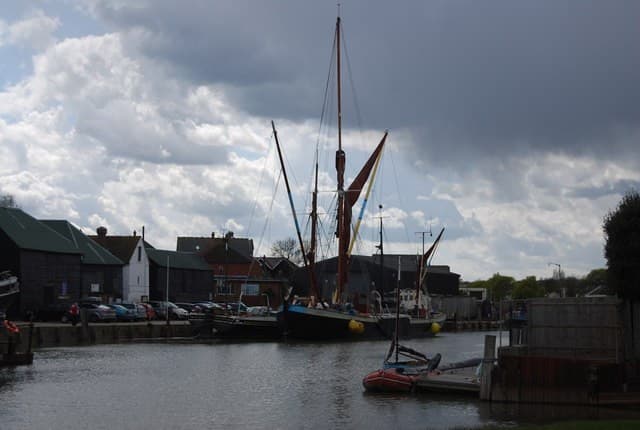
A Thames sailing barge in Faversham Creek: the working tradition within an estuary harbour.
N Chadwick / Wikimedia Commons · CC BY-SA 2.0 · Image shown uncropped.
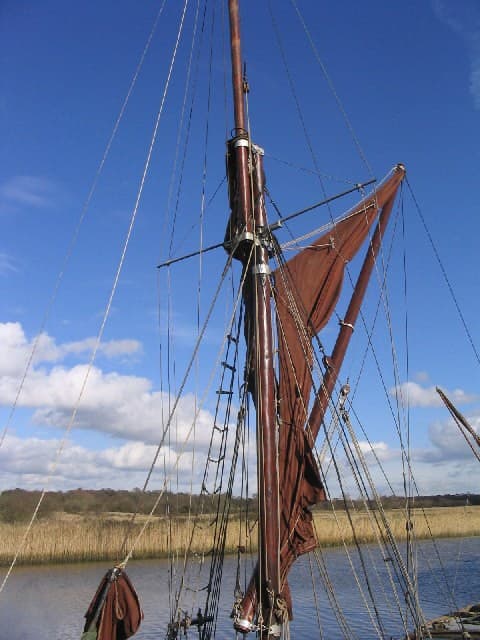
Rigging and deck detail of a Thames sailing barge at Snape.
John Winfield / Wikimedia Commons · CC BY-SA 2.0 · Image shown uncropped.
Dokumentierte Geschichte
A network of rivers and work
The Thames Sailing Barge Trust presents the barge within the history of the Thames and the east-coast rivers. Its educational resources connect the vessel with local trade and the communities around the Blackwater and Dengie. The boat is consequently a way into an estuarine working landscape. A general type account should not be confused with the construction record or present use of any single surviving barge.
Quellen: [1]
Development rather than one model
The trust's introduction to the sailing barge traces a craft which developed in response to changing transport needs. It discusses related inland and coastal forms rather than treating the barge as an isolated invention. For an individual boat, the arrangement of rig, hold and hull should be checked against its own history. A present-day sailing appearance may incorporate repairs and adaptations made long after the vessel's first cargo voyage.
Quellen: [1]
A tradition explained afloat
The trust states that public education is part of its purpose, including work with schools, open days and events. This provides a contemporary route into the tradition alongside archival research. It also shows that preservation involves communication as well as material care. Understanding how a barge worked requires attention to people and handling, not simply the ability to recognise a large sail from the riverbank.
Quellen: [2]
Unsere Lesart · Redaktionelle Einordnung
Das Schiff und sein Umfeld lesen
Read the barge from the shore towards the hold. Imagine the quay as a transfer point and the river as a route linking places that can seem disconnected on a road map. Then consider the relationship between the rig and the labour needed to move the vessel. That approach gives the boat a place in the economy of its estuary. It also makes a modern heritage sailing meaningful without pretending that a passenger trip repeats the conditions of working freight transport.
Besuchen und entdecken · Redaktionelle Empfehlung
Der Geschichte folgen
Start with the Thames Sailing Barge Trust's educational material and current programme. Verify which named barge is involved, its boarding location and the conditions of any trip. This cultural account is not a guide to navigating an estuary or handling a sailing barge.
Thames Sailing Barge Trust — Local history ↗