Regional ship type · Zeeland & the Scheldt delta
Hoogaars
A working hull shaped by the Scheldt delta
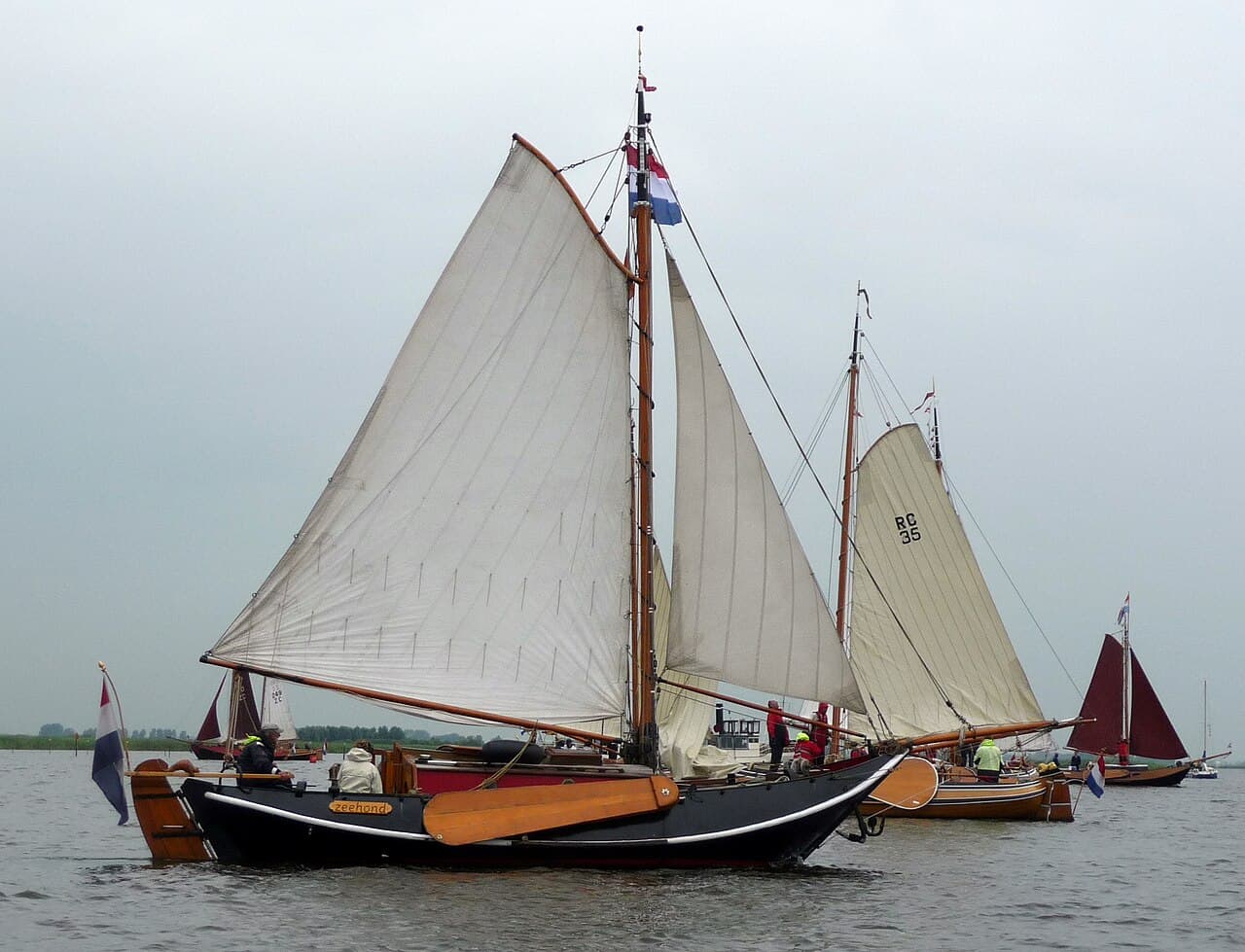
The hoogaars Zeehond at the VSRP reunion in 2010: a photographed example of the type, not the vessel Andries Jacob discussed in the text.
Merlijn 'valhallasw' van Deen / Wikimedia Commons · CC BY-SA 3.0 · Image shown uncropped.
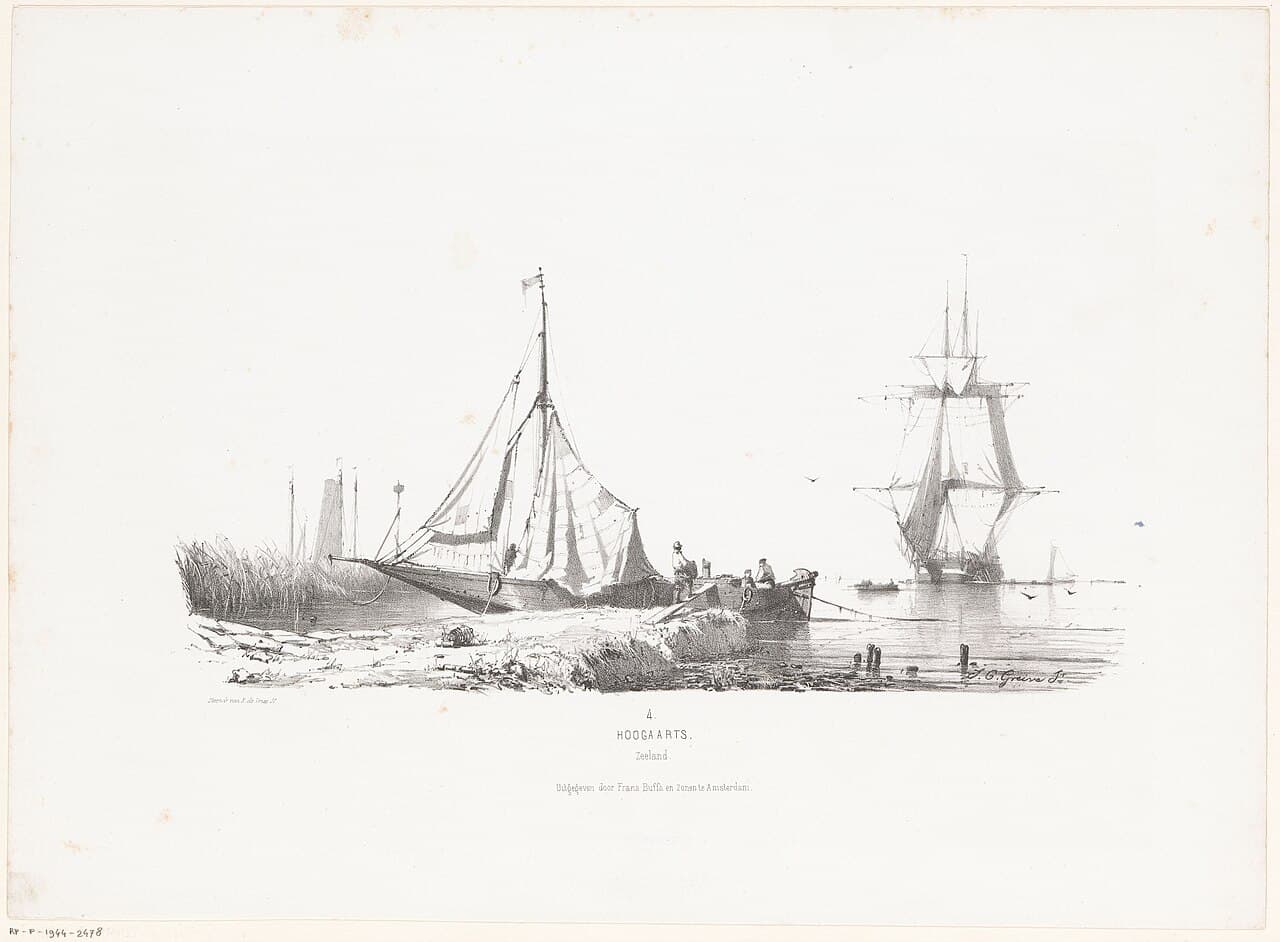
Historical print titled Hoogaars, collection Rijksmuseum, object RP-P-1944-2478. An archival depiction, not a contemporary photograph.
Rijksmuseum / Wikimedia Commons · CC0 · Image shown uncropped.
Gedocumenteerde geschiedenis
A boat belonging to shallow water
The hoogaars belongs to the working history of the Scheldt delta. Stichting Behoud Hoogaars describes wooden, flat-bottomed fishing craft suited to Zeeland’s shallow waters, with the hoogaars recognisable by its high stern. The type should be read alongside the hengst and other regional boats rather than treated as a general name for every Dutch flat-bottomed vessel. Their similarities speak of shared waters; their differences record distinct building traditions.
Bronnen: [1]
A name with a longer history
The SSRP’s historical account follows the name beyond Zeeland’s fishing fleet. Early documentary references concern small craft used for carrying goods, ferrying and other work on Dutch rivers. Nineteenth-century yard records and surviving drawings show a type that continued to develop. A hoogaars is therefore not a single design frozen at one moment: identifying a particular example requires its own date, builder and construction history.
Bronnen: [2]
Conservation as a working practice
Founded in 1990, Stichting Behoud Hoogaars combines documentation with the restoration and maintenance of historic craft. Its rescue of the mussel-fishing hoogaars Andries Jacob, YE36, became an important step from recording the tradition to caring for actual boats. The foundation also describes training and cooperation with educational institutions. Keeping a hull afloat and passing on the shipwright’s knowledge are closely connected parts of this work.
Bronnen: [1]
Onze lezing · Redactionele duiding
Het schip en zijn omgeving lezen
Look at the hoogaars as a connection between a landscape and a livelihood. Its interest lies in the practical decisions visible in the hull, and in the people who keep those decisions intelligible. A polished deck alone tells little. A conversation about repairs, working space or the shape of the stern can turn a harbour visit into a reading of the delta. Our photograph shows Zeehond as an example of the type; it is not a portrait of Andries Jacob, nor evidence that the boats share an identical history.
Bezoek en ontdek · Redactionele aanbeveling
Volg het verhaal
Start with the foundation’s own programme and vessel descriptions. Confirm the boat, departure place and availability directly before arranging a visit or sailing. Veere offers a complementary harbour dossier; it is not a promised berth for the photographed boat.
Stichting Behoud Hoogaars ↗