Regional ship type · Venice & its lagoon
Gondola
The making and maintenance behind Venice’s most familiar boat
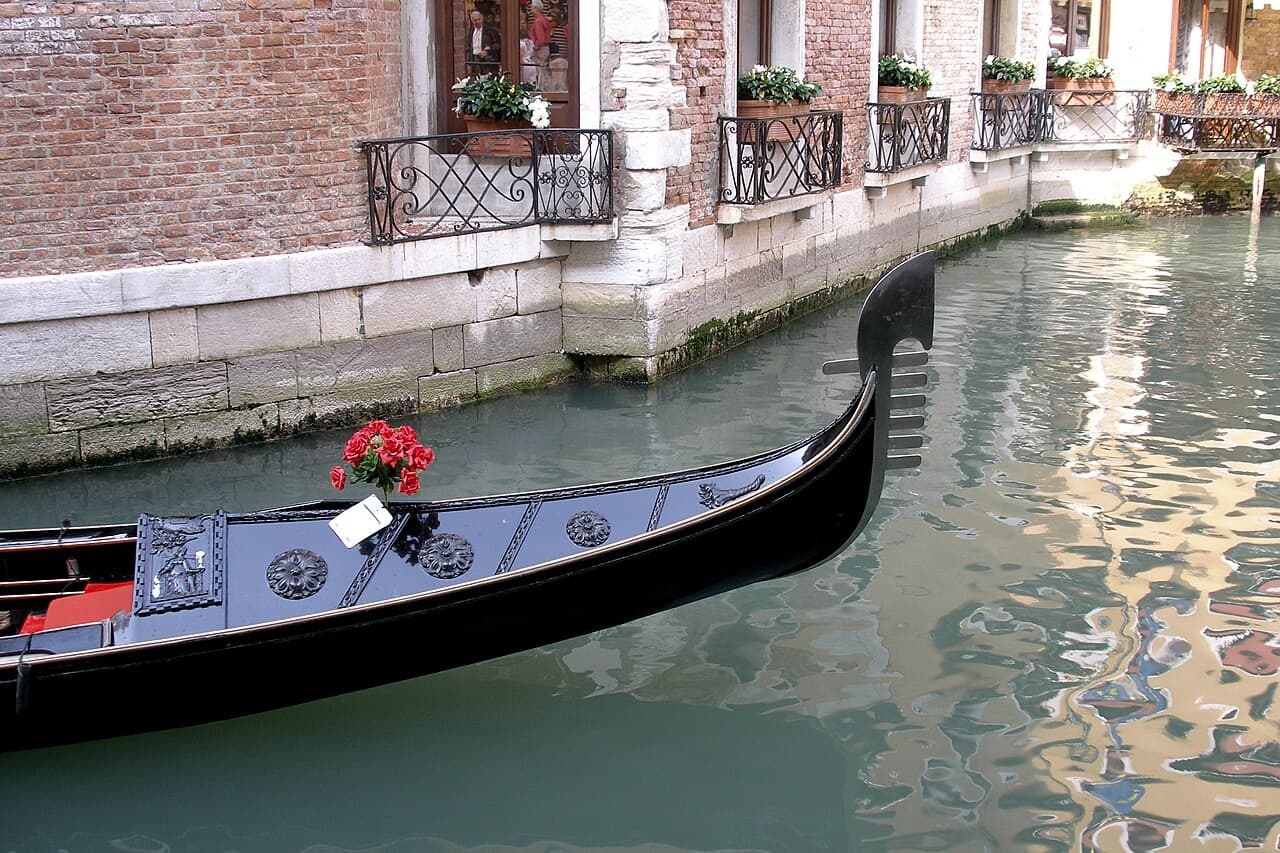
A gondola on a Venetian canal: the hull and the city’s narrow waterways read together.
Vyacheslav Argenberg / Wikimedia Commons · CC BY 4.0 · Image shown uncropped.
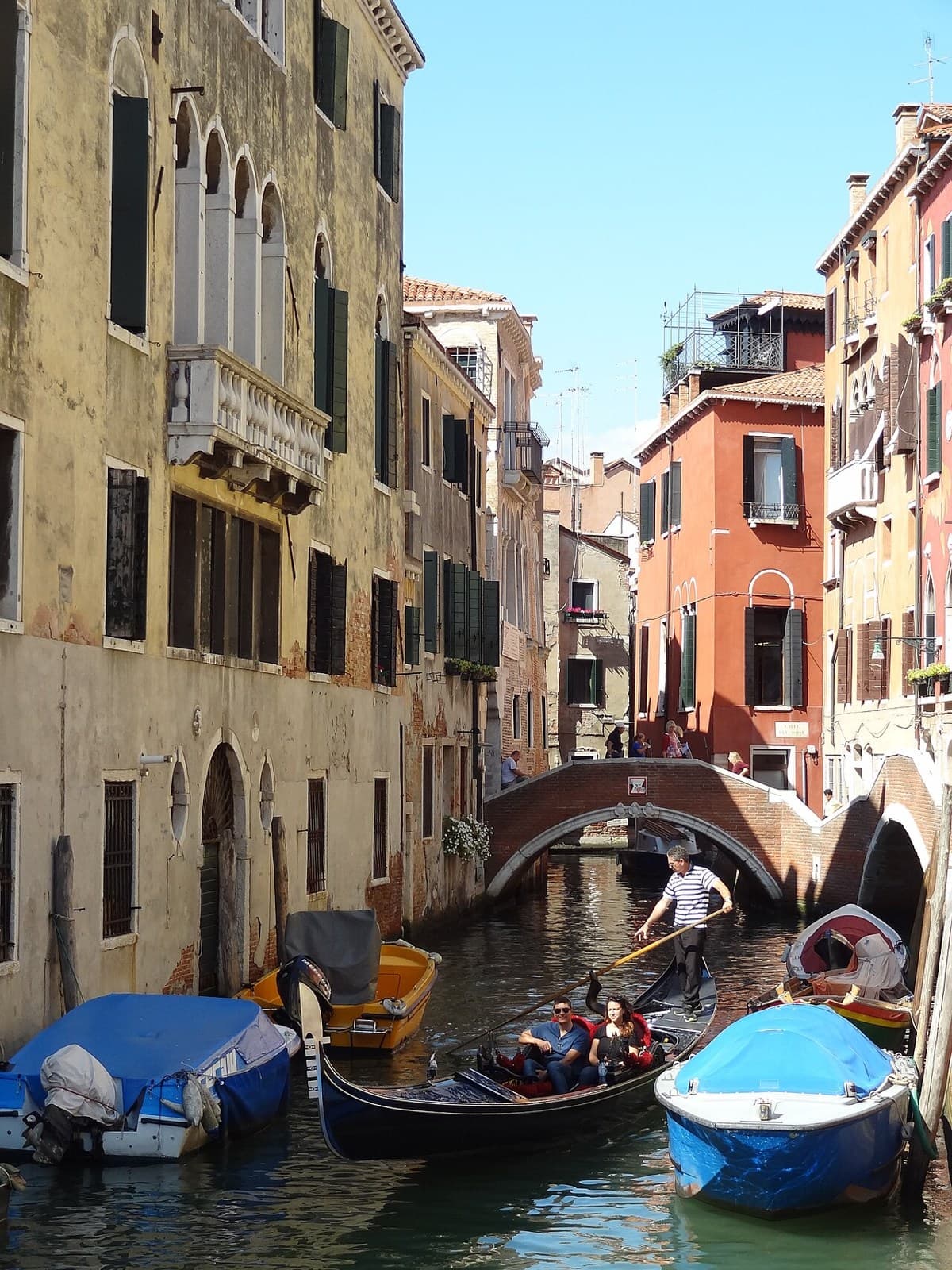
A gondola at Ponte del Paradiso, Venice. The photograph establishes setting, not the boat’s individual age or builder.
Iain Cameron / Wikimedia Commons · CC BY 2.0 · Image shown uncropped.
Documented history
A boat made on shore
Tramontin's account places gondola construction in a working squero and traces the family's activity to 1884. This offers a concrete route into a vessel that is often encountered only as a symbol of Venice. The workshop is part of the boat's identity: a place where materials are selected, forms established and repairs undertaken. It brings the focus back from a familiar image to the skilled labour behind it.
Sources: [1]
Wood, frames and the sequence of building
The builder's construction description begins with the selection and natural drying of eight kinds of wood. It then follows the preparation of frames and the assembly of the hull's structural elements. The sequence explains how a gondola takes shape through many connected decisions. It is not a do-it-yourself guide, and the account of this workshop should not be treated as the production history of every gondola seen in the city.
Sources: [1]
A living yard in a historic city
Venice's official visitor information identifies the Squero di San Trovaso as one of the city's remaining working yards where gondolas are built and repaired. That continuing activity offers a different perspective from a boat ride alone. The cityscape contains places of manufacture and maintenance as well as canals for movement. Access to a yard is a separate question from viewing it from a public route.
Sources: [2]
Our reading · Editorial interpretation
Reading the ship and its setting
Look for the relationship between water-level movement and the work carried out just above it. A city built around boats needs places to care for them, and a squero can make that dependence visible. After considering the finished gondola, return to the timber, tools and order of assembly. The familiar silhouette becomes the outcome of a process. This approach also gives contemporary craftspeople a place in the story, rather than assuming that Venice's boat culture belongs entirely to an unchanging past.
Visit & explore · Editorial recommendation
Follow the story
Use the builder's and Venice's official information to plan any yard visit, and confirm access in advance. Working boatyards are not automatically public museums. For a ride, use an authorised local service and ask about the actual boat rather than inferring its date or builder from appearance.
Tramontin Gondole — Construction ↗