Regional ship type · Cornwall
Cornish Lugger
Sail, fishing communities and a surviving Cornish working tradition
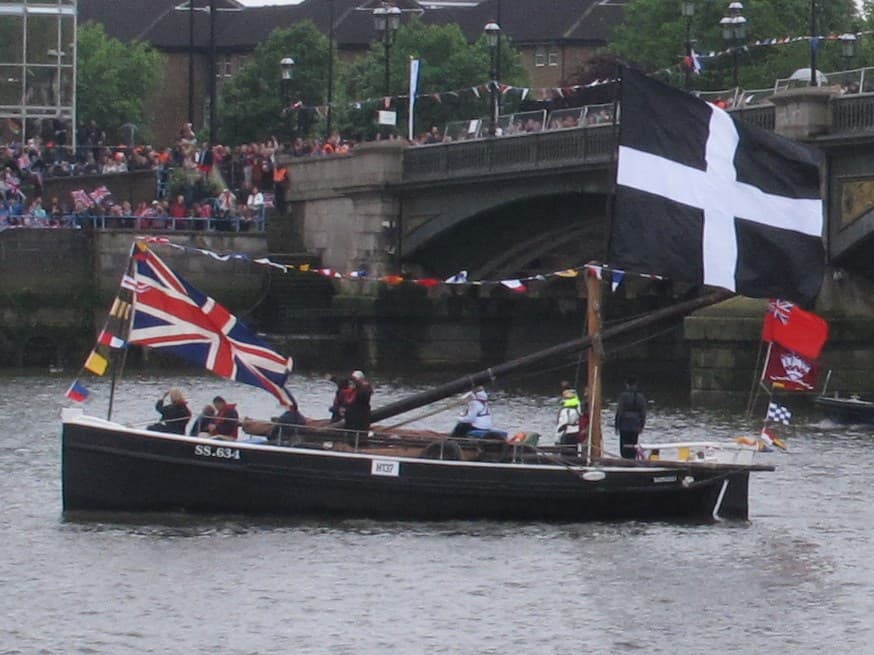
Barnabas, a St Ives lugger, during the Diamond Jubilee Pageant.
David Hawgood / Wikimedia Commons · CC BY-SA 2.0 · Image shown uncropped.
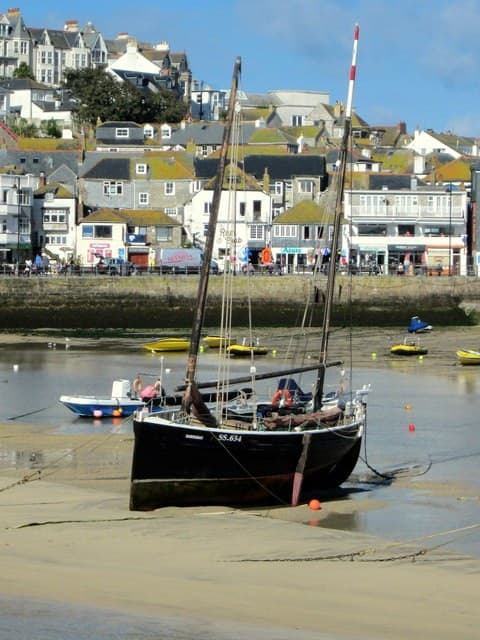
Barnabas (SS634) in St Ives Harbour; a second photograph of the named Cornish example.
Roy Hughes / Wikimedia Commons · CC BY-SA 2.0 · Image shown uncropped.
Histoire documentée
A fishing fleet beyond the postcard
The Cornish Maritime Trust describes Barnabas as the surviving St Ives representative of the large fleet of lug-rigged seine and drift-net boats registered at Cornish ports at the end of the nineteenth century. The statement relates to one documented survivor, not to every Cornish craft. It places the lugger within a fishing economy and a network of ports, where boats were tools for earning a living.
Sources : [1]
A rig within a regional tradition
The trust identifies Barnabas as a dipping lugger, built in 1881. This offers a useful route into the relationship between sail handling and working deck space, while keeping the individual boat distinct from the broader category. The phrase Cornish lugger covers a tradition with local and chronological variation. One vessel's dimensions, later engine arrangements or restoration record should not be treated as a universal description.
Preservation that goes to sea
National Historic Ships documents the Cornish Maritime Trust's work with Barnabas and her participation in heritage activities. Its account also records the boat's use in a modern sail-cargo movement, showing that a preserved working hull can acquire new purposes. Such activity is a contemporary chapter. It should be read alongside the fishing history without suggesting that today's voyages recreate the original trade or conditions exactly.
Sources : [2]
Notre lecture · Interprétation éditoriale
Lire le navire et son contexte
Begin with the relationship between people and sail. The lugger's appeal is not confined to its profile against the coast: the movement of a yard, the division of work and the space left for fishing are part of the story. From the quay, turn towards the town and ask how landing a catch connected boat and shore. A heritage voyage can make those questions tangible, especially when the operator explains what has changed and what has been reconstructed or retained.
Visiter et découvrir · Recommandation éditoriale
Suivre le récit
Consult the Cornish Maritime Trust for its documented boats and current programme. Check departure port, public access and booking directly. A named lugger may be away from her usual waters, undergoing maintenance or operating under conditions different from another vessel of the same tradition.
Cornish Maritime Trust — Barnabas ↗